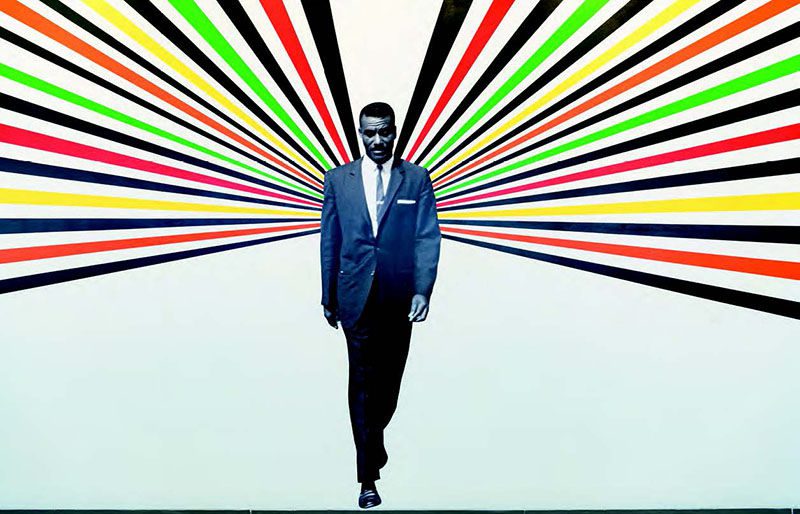
Birmingham-Shuttlesworth International Airport (BHM) uses a long mural that stretches 66 feet along a corridor in Concourse B to honor its namesake. Fred S. features a life-size image of the late Reverend Fred Shuttlesworth, a pivotal leader who helped propel Birmingham, AL, into the national spotlight during the Civil Rights Movement in the 1950s and ’60s.
Brooklyn-based artist Rico Gatson spent two weeks on site painting colorful rays radiating from a giant black and white photo of Shuttlesworth to create the graphic, high-contrast piece. An earlier iteration of Gatson’s creation was exhibited at the Birmingham Museum of Art, but a civic organization called Leadership Birmingham arranged a permanent home for it at BHM.
“We wanted to do something inside the terminal that would serve as a lasting tribute to this great man,” explains Ashby Pate, chairman of the Birmingham Airport Authority Board and member of the 2023 Leadership Birmingham class who spearheaded the project. “We’re thrilled that travelers and visitors to our great city will be able to draw inspiration from the artwork.”
Several of Shuttlesworth’s family members and dozens of political leaders, clergy members, activists and local residents attended the emotion-filled unveiling at the airport. Patricia Shuttlesworth Massengill, one of his three children who came, expressed gratitude and commented about the serious expression on her father’s face in the mural: “It looks just like him,” said the 80+-year-old. “I always told him, ‘Dad, you need to smile’ and he would say, ‘I’m concentrating on the Lord’s work and what I can do for mankind.’”
Some of his most famous work included coordinating boycotts and sponsoring federal lawsuits to end segregation. He also helped organize the Selma to Montgomery marches as part of a voting rights campaign.
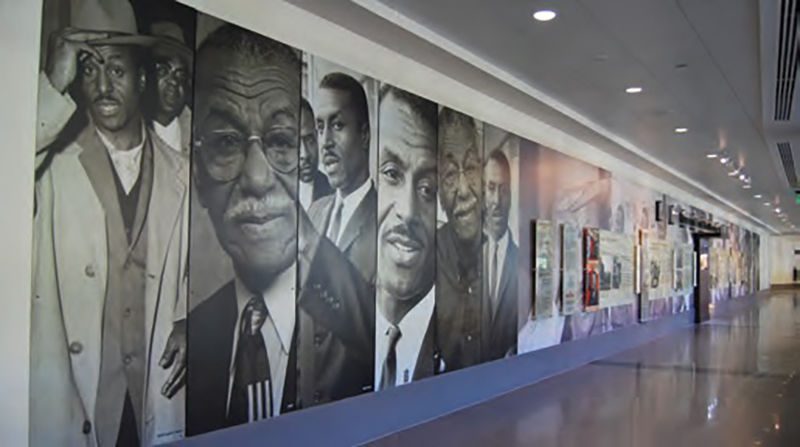
Fred S. works in concert with another exhibit about Shuttlesworth that is located on the pre-security lower level of the terminal. Designed by the Birmingham Civil Rights Institute, it uses photos and large informational panels to memorialize the man Martin Luther King, Jr. once described as “the most courageous civil rights fighter in the South.”