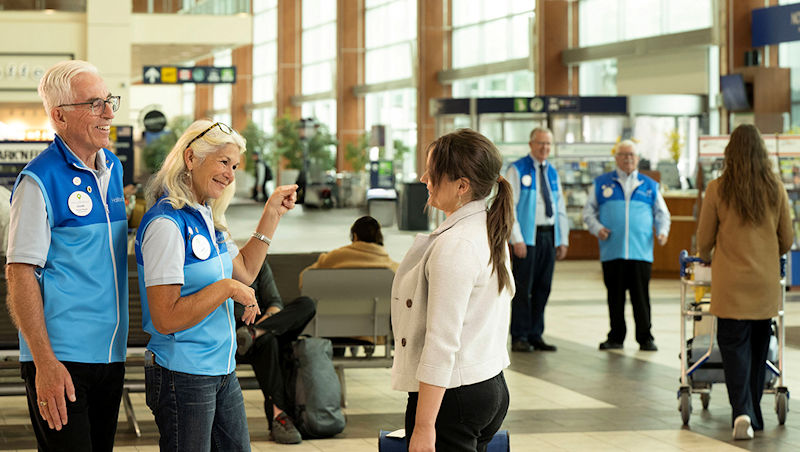
Earlier this year, Halifax Stanfield International Airport (YHZ) in Nova Scotia rebranded its volunteer program with new uniforms and a new name: The Stanfield Wayfinders.
“The name is an homage to our customer service culture here,” explains Melissa MacDonald, volunteer program coordinator, Halifax International Airport Authority (HIAA). “The Stanfield Way [our airport-wide training program] encourages everybody in the airport community to be happy, helpful, caring, courteous and kind.”
The volunteers guide passengers to locations throughout the airport including check-in areas, gates, washrooms, ground transportation, and other service areas. They also assist guests with accessibility needs, offer reassurance to nervous travelers, provide extra support during airport community events, and strive to bring the warmth of Nova Scotian hospitality to life.
| facts&figures
Project: Rebranding Volunteer Program; Adding Accessibility Services Location: Halifax Stanfield International Airport, Halifax, NS Volunteer Program: The Stanfield Wayfinders Volunteers: 40 Accessibility Partners: Atlantic Accessibility Consulting; Autism Nova Scotia; Rick Hansen Foundation Recent Infrastructure Improvements: Visual fire alarms in all staff & public spaces; tactile markings on permanent room identification signs; tactile attention indicators at the top of all stairs & color contrasting strips along the edge of each stair tread; universal changing table in U.S. Departures Accessibility Programs: Autism Aviators practice travel days; Hidden Disabilities Sunflower Program; Airport Familiarization Tours Technology-Based Improvements: The Aira App; hearing loops; American Sign Language added to the translation app used by volunteers & employees Costs: Undisclosed Key Benefits: Making the airport a more welcoming, accessible environment for passengers & visitors; gaining feedback & expertise for future improvements |
HIAA President and Chief Executive Officer Joyce Carter refers to volunteers at YHZ as “the heart of Halifax Stanfield.”
“I am incredibly grateful for our remarkable volunteer community, especially as we mark 25 years of service this year,” Carter says. “While the name and uniform have evolved, the spirit of the program remains the same—to provide assistance and have a meaningful impact on the journeys of travellers from around the world.”
Boosting Visibility
The new uniforms for The Stanfield Wayfinders are designed to be more comfortable for volunteers and more visible to people in the airport. They also convey Canada’s two official languages, with the word Volunteer in English and French, as well as the Mi’kmaq word, Apoqnmuet, meaning “helper” to ensure everyone coming through YHZ understands they are in Mi’kma’ki, the ancestral and unceded territory of the Mi’kmaq.
Volunteers can choose from a variety of shirt options, and the vests now feature a zipper rather than buttons, for accessibility purposes. A sash or tie was previously required; now, it’s optional.
“We added components to the uniform to make it clear volunteers are here representing Halifax Stanfield,” MacDonald says. “We also strategically selected brand colors for the uniform to make sure they stood out in the crowd.”
She says the new royal- and sky-blue vests with light blue shirts underneath are working well, and volunteers report that more people are approaching them when they need assistance.
The program currently has 40 volunteers, but YHZ is in the process of growing its roster. Typically, each volunteer works a single four-hour shift per week.
Service for All
The airport also prides itself on leading the province and airport industry in accessibility.
In 2019, YHZ was the first facility in Nova Scotia to achieve a Gold rating through the Rick Hansen Foundation Accessibility Certification Program, which recognizes organizations that try to remove physical barriers for people with disabilities.
In 2024, the airport once again earned Gold Certification, reaffirming its previous status. While HIAA appreciates the recognition, it considers accessibility a day-to-day expectation.
“It’s never been a question for us,” says Air Terminal Project Coordinator Rachelle Garand. “It’s something that we consider in everything we do.”
Feedback received during the first certification rating process helped the airport plan its next steps to increase accessibility within its facilities.
In 2024, the airport introduced several new initiatives:
- The Hidden Disabilities Sunflower Program is designed for travelers and airport visitors with non-visible or less apparent conditions such as autism, neurodivergence, dementia and many others. By choosing to wear a pin or lanyard with bright yellow sunflowers, guests can subtly signal airport employees that they may require additional support.
- The Aira App allows travelers who are visually impaired to connect with trained professionals on a smartphone for on-demand assistance with visual information or real-time help navigating the airport.
- Hearing loops were added in key areas of information exchange, including check-in and information desks, counters at boarding gates and board rooms for passengers with hearing loss or who use hearing aids.
- Visual fire alarms were installed in all staff and public spaces, and American Sign Language was added as an option to the Language Line translation app used by Stanfield Wayfinders and airport employees.
- Several enhancements for passengers who are visually impaired or low-vision include tactile markings on permanent room identification signs, tactile attention indicators at the top of all stairs, and color contrasting strips along the edge of each stair tread.
 Garand, who led many of these initiatives, was so engaged with the process of viewing design through the lens of accessibility that she decided to pursue designation as a Rick Hansen Foundation Accessibility Certified Professional.
User Feedback
One especially big fan of the airport’s accessibility efforts is Jill Cormier, a certified autism specialist and the inclusion and family support supervisor at Autism Nova Scotia.
As the parent of an autistic child, Cormier has personally participated in Autism Aviators practice travel days at YHZ. The program, which takes place annually, allows pre-registered families to come to the airport, print a sample boarding pass, proceed through security to the gate and ultimately, board an airplane. Cormier’s family participated to help her son acclimate to the airport environment under lower-stress conditions before an upcoming trip, especially regarding predictability and what to expect.
“For a lot of families, it’s their first time flying,” Cormier says. “We were anticipating travel and it was great because it did help with those transition pieces and simplify what [the experience] was going to look like.”
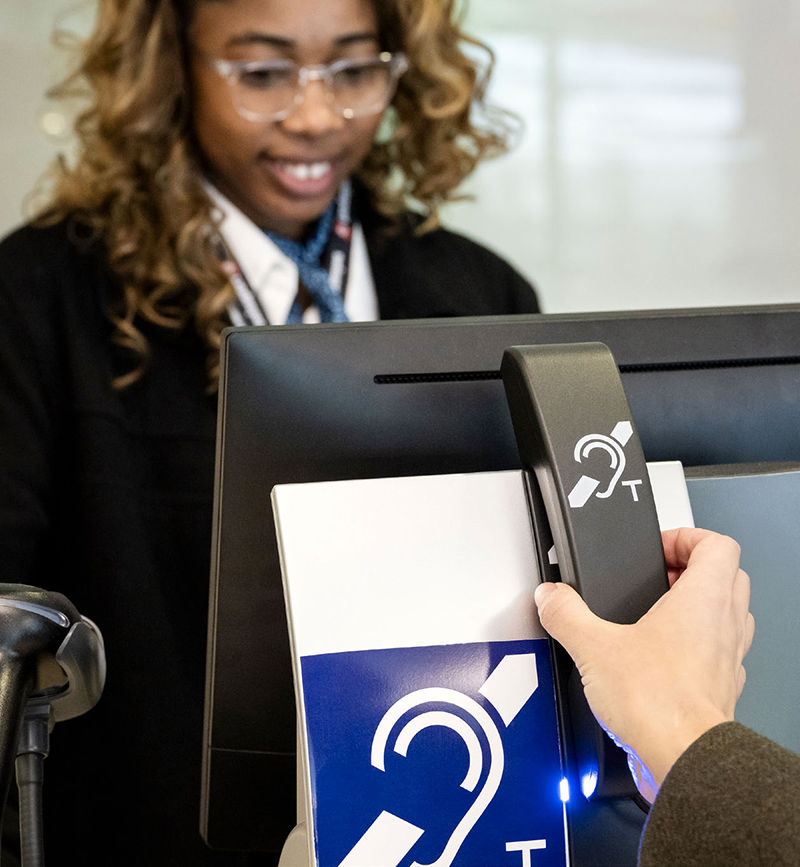
Hearing loops are located at ticketing counters, gate desks and in other key areas.
Now, through her position with Autism Nova Scotia, she helps others benefit from the program, too. “We work with the airport to make sure this walk-through is fantastic for the families,” she says. “They have a celebration afterward where participants receive a certificate at the observation deck.”
Autism Nova Scotia also promotes YHZ’s participation in the worldwide Hidden Disabilities Sunflower Program and encourages travelers or families to pick up a complimentary lanyard or pin onsite or request one online through the airport website prior to travel.
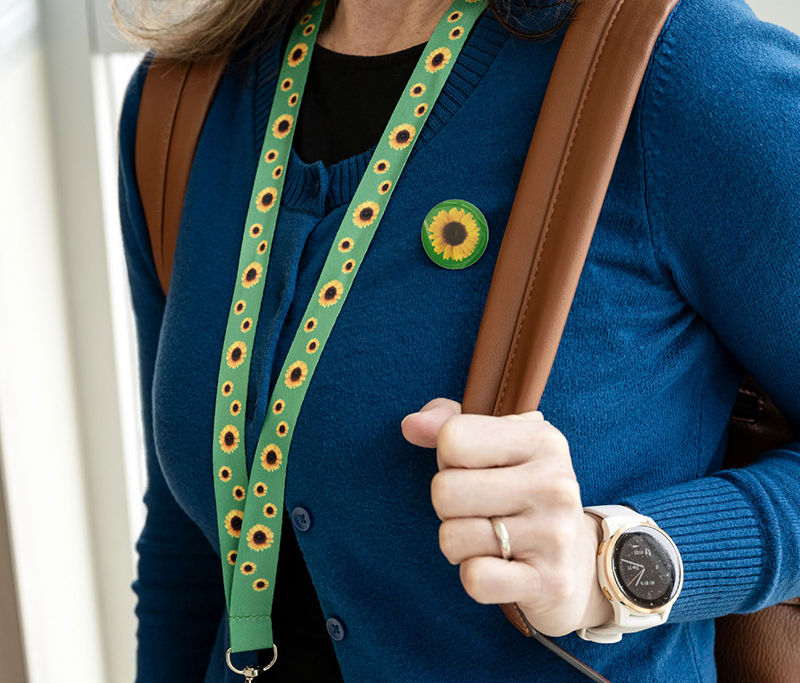
Guests with less-apparent disabilities can wear sunflower lanyards and/or pins to let staff know they might need extra assistance.
MacDonald, who oversees the Sunflower Program at YHZ, reports that use of the lanyards and pins has increased in recent months as more people in the community have become familiar with the program.
“It’s really taken off and empowered people to take that quiet step to advocate for themselves when they’re travelling,” she says.
Between the Hidden Disabilities Sunflower Program and Autism Aviators walk-throughs, Cormier considers YHZ a leader in the industry for proactively addressing the needs of guests with diverse abilities.
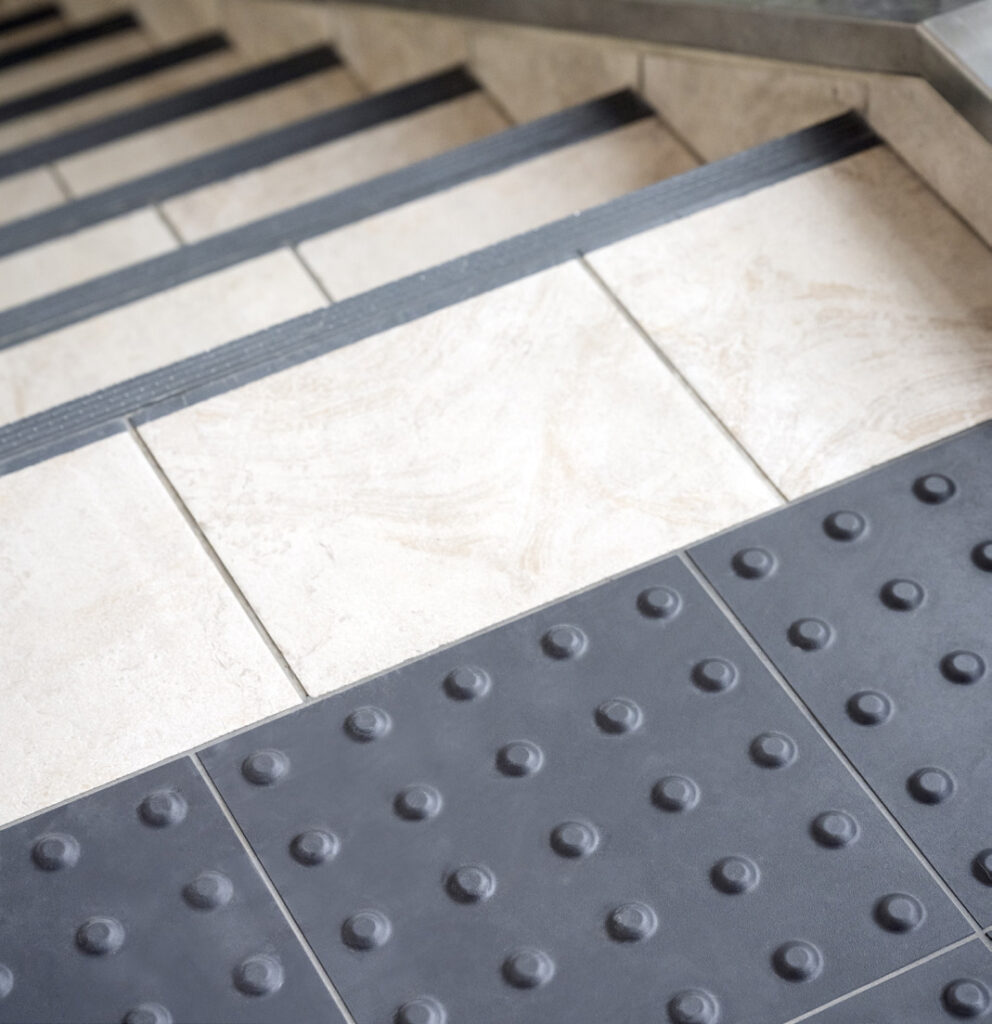
The airport added tactile elements at the top of stairways and contrasting colors on each step to aid visitors with impaired vision.
“They are very passionate about accessibility,” she says. “They’ve done their work, for sure, and we’re privileged that we can partner with them.”
Ongoing Efforts
Nicole Blanchard, HIAA’s airport experience manager, notes that airport employees work on accessibility year-round, and are seeking industry recognition of their efforts by applying for Airports Council International’s Accessibility Enhancement Certification in 2026.
 As part of its requirement to have a multi-year Accessibility Plan filed with the Canadian Transportation Agency, HIAA consults people with lived experience and uses that feedback to continuously make improvements toward a more accessible, barrier-free airport.
Within the airport, employees are encouraged to provide feedback through an Accessibility Working Group. “It’s made up of representatives from every department,” Blanchard says. “We meet monthly to review our Accessibility Plan initiatives and timelines. It’s a great place to share feedback from passengers and our airport community on things that are working well and what could be improved.”
The multi-disciplinary working group was helpful, for example, when a soft launch revealed the hearing loops needed technological adjustments and more information on what types of hearing aids work with them. Knowing that in advance allowed the airport to reach out to potential users ahead of time.

“Technology has really changed the way people with disabilities communicate and experience the world,” adds Roman Romanov, director of Accessibility Advisory Services for the Rick Hansen Foundation. “They [Halifax Stanfield personnel] are definitely leaders in the aviation sector.”
So, what is next? With its second Rick Hansen Foundation Accessibility Certification in hand, YHZ is already working on additional accessibility improvements. Currently, the airport is working to install a universal changing table in the U.S. Departures Area, and plans to add a similar unit pre-security.
“We’re committed to making continuous improvements within the terminal building,” Garand says. “These important updates allow people to travel through Halifax Stanfield in a way that is comfortable, welcoming and accessible.”