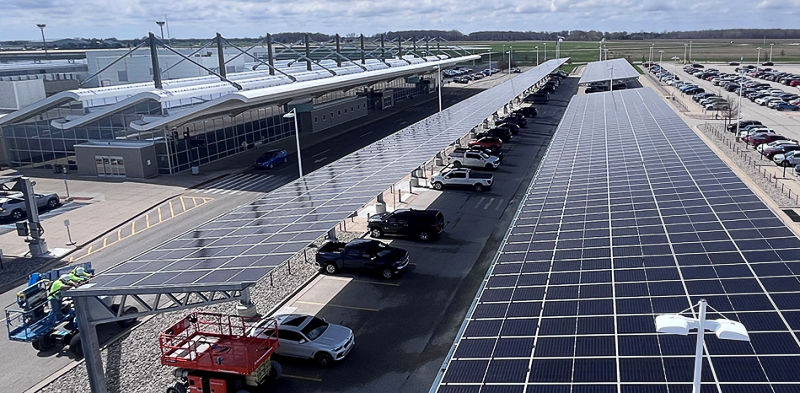
Energy costs for large terminal buildings represent a significant chunk of most airports’ operating budgets, especially in places like central Michigan where winters are bitterly cold and heat is an absolute necessity for comfort. MBS International Airport (MBS)—located near the inside joint of the “thumb” on Michigan’s mitten shape—just completed a nearly $9.6 million green energy project that harnesses solar power to decrease those costs.
With the recent enhancements, MBS also became one of only two airports in Michigan with solar-covered parking. Massive solar canopies now cover nearly 200 premium spaces—an effort that has not gone unrecognized. The Michigan Department of Transportation honored MBS with its 2026 Commercial Airport of the Year award due in large part to this initiative.
However, the solar project will do much more than reduce energy costs. MBS is also looking toward the future and readying its airfield for electric aircraft.
facts&figures Project: Adding Solar Infrastructure Location: MBS Int’l Airport, in Freeland, MI Applications: Solar canopies over rental car & short-term parking lots; solar arrays for administration building & airfield electrical vault Key Benefits: Decreasing traditional energy costs with renewable alternative; providing charging units for electric vehicles; preparing to serve electric aircraft in the future Project Cost: Nearly $9.6 million Funding: $5.28 million in bond proceeds; $3.97 million in mix from airport’s general accounts & $930,000 earmarked for projects associated with rental car activities Project Timeline: Notice to proceed received Dec. 2024; permits submitted to FAA fall 2025; canopies complete Dec. 2025; Level 1 chargers installed May 2026 Solar Modules: 1,486 Level 1 Chargers: 15 Level 2 Chargers: 4 DC Fast Chargers: 4 Electric Aircraft Charger: 1 Energy Services: Veregy FAA Permitting & Consulting: RS&H Power: Consumers Energy Electric Aircraft Charging: Beta Technologies Solar Panels: Heliene Electrical Work: Halligan Canopies: Solar Mounts |
Working with energy service company Veregy, design and engineering firm RS&H and aircraft charging manufacturer Beta Technologies, the airport has equipped its rental car and short-term parking lots with solar panel canopies and charging stations for electric vehicles, and has added solar arrays to provide power for the administration building and airfield electric vault.
Tuned in to Business Travelers
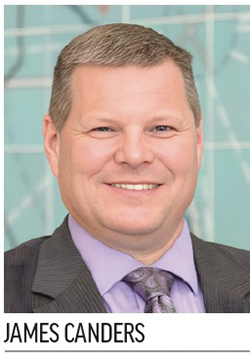
Serving the communities of Midland, Bay City and Saginaw, MBS served almost 230,000 passengers in 2025. Commercial service from Delta Connection and United Express ferries passengers to hubs in Detroit and Chicago, respectively. That gives MBS Airport Director James Canders an especially large set of primary stakeholders: two airlines and three owners (Bay County and the cities of Midland and Saginaw). To move the solar project forward, he had to secure the support of all five entities.
Canders also has pivotal corporate customers to consider. The headquarters of Dow Chemical Company is in Midland, and General Motors has factories in Bay City and Saginaw. These giants and others keep flurries of business travelers flying through the airport. Plus, MBS sponsors a Los Angeles Dodgers major league baseball affiliate, the Great Lakes Loons, which has players, coaches and scouts flying in and out all spring and summer.
A growing number of the airport’s customers drive electric vehicles that require overnight chargers, especially during long trips and when the weather is cold.
“I had seen a lot of EV vehicles in our parking lots, and we had no charging component,” Canders remembers. “It was a bit of a disservice to some of our customers.”
In one case, a passenger parked an electric GMC Hummer in the parking lot for five weeks. When he returned, the battery was dead, and the behemoth was stuck at the airport. “You can’t tow those easily,” notes Canders. In fact, it took two to three days to figure out how to extract the massive vehicle from the airport lot.
That incident and others drove home the point that MBS needed slow-trickle chargers, and Canders started thinking about how to add them. The answer began to take shape when he met Corey Harper, aviation business development manager for Veregy, at the Michigan Airport Executive Conference in October 2023. Harper had presented a session about using renewable solar energy for revenue generation and tax credit incentives, and Canders followed up for more specifics.
“We started talking and I learned that MBS—like most airports—has a lot of utility bills,” Harper recalls. “Airports have big power needs, and energy costs are not going down any time soon.”
After Canders decided to move forward with Veregy, he looped in RS&H, the airport’s primary architect and engineering contractor for years, to handle FAA permitting and Part 77 compliance (Safe, Efficient Use and Preservation of the Navigable Airspace).
“The FAA looks at solar farms for their physical attributes, like how tall they are and where they’re located,” explains RS&H Principal Aviation Engineer David Joye. “FAA also reviews the glare study, which determines whether glare from the solar panels could blind a pilot in the air. We didn’t foresee any issues because the canopies were so far away from the approach path.”
Saving Money, Increasing Revenue
Canders received notice to proceed from the Airport Commission in December 2025. By January 2026, the project kicked off using corporate venture capital and local funds. No financing was needed. In addition, Joye says that between tax credits and reductions in energy costs, the airport will recoup its capital investment in no time.
“COVID hit all of the airports really hard,” he adds. “Flights were dramatically down for quite a few years. One of the things I know James [Canders] was tasked with was finding cost savings or cost regeneration, and this project did both.”
Based on a 2023 energy study, the arrays are expected to save 52% of the terminal energy costs, 80% in the administration building and 99% of the airfield lighting energy usage.
 The solar project was divided into two phases. During Phase 1, the airport installed a solar carport system and infrastructure for up to six Level 2 EV charging stations in the rental car return lot. Avis, Budget, Hertz and Dollar were responsible for purchasing and installing their own respective charging kiosks.
During Phase 2, MBS added solar canopies over its short-term parking lot and solar arrays for its administration building and airfield electric vault. Other key components of Phase 2 were an infrastructure system with Level 1, 2, and DC fast chargers for electric vehicles, and a charging station from Beta for electric aircraft.
Construction on Phase 2 began in June 2025, but the bond that ultimately funded it wasn’t approved until months later in early November. In a mutual act of trust and show of confidence, Veregy and the airport invested money ahead of the bond completion.
“Veregy put a lot of faith in us, and we put a lot of faith in them,” Canders remarks. “It’s good to have a partner that’s willing to work with you and really understand that there’s going to be unforeseen delays and some expected delays. Veregy was willing to put up money and stick their neck out for this project like we were for them.”
As a qualified Energy Savings Company (designated by the U.S. Energy Department’s Federal Energy Management Program), Veregy guarantees the airport it will save a certain amount in annual energy costs—an arrangement Harper compares to having a warranty. The company anticipates annual revenue and energy savings of more than $400,000 for MBS. The window to recoup project costs is estimated at less than 20 years.
Beyond lowering the airport’s electric bills, Canders is enthusiastic about the potential to welcome electric aircraft and increase revenue through shuttle services bringing more passengers to MBS.
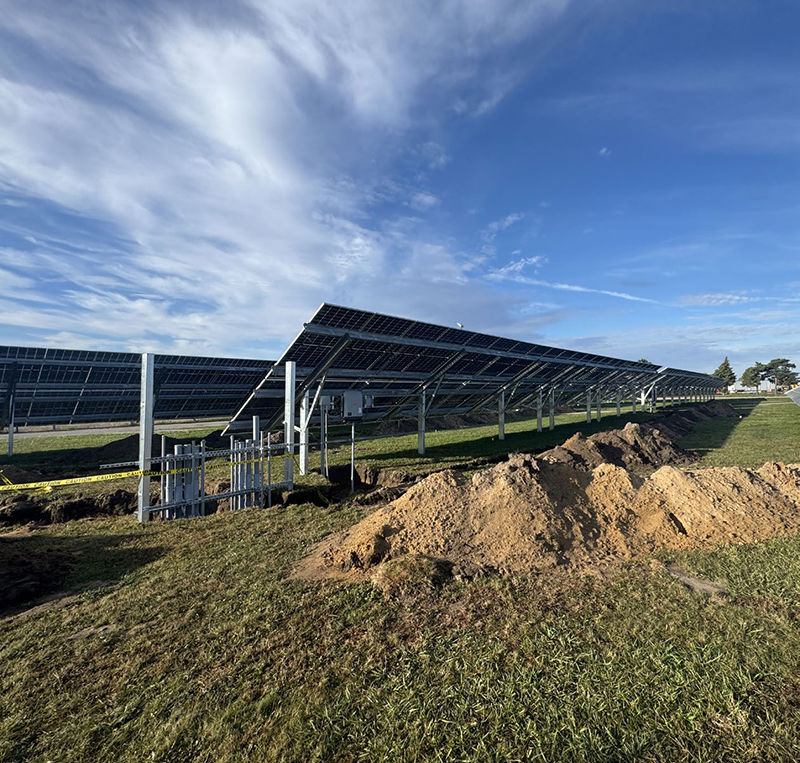
Installations included solar arrays that produce energy for the administration building and electric airfield vault.
“In Michigan, there are four airports that have a Beta aircraft charging system in place, and we’re the fifth,” Canders reports. “We’re starting to see electric aircraft here already, and I didn’t want to be left out of that.”
Parking Improvements
Veregy helped guide MBS through the tax credit process. Harper explains that when the Inflation Reduction Act was enacted in 2022, tax credits were available to all government entities and for-profit private businesses. Under certain guidelines, airports could receive up to 60%, though averages ran closer to 40%, he notes.
However, the current administration eliminated most of those tax credits in the past year, so airports have been on high alert to use their credits before they expire. Veregy estimates that MBS will receive more than $4 million in Inflation Reduction Act reimbursement.
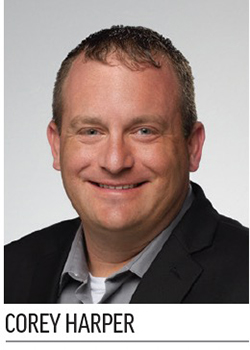 “It’s important for other airports to know this: If you want to take advantage of the Inflation Reduction Act, you must act quickly,” Harper stresses.
As Canders and his team started working through the tax credit process, they also found a way to restructure parking services and increase revenues through the same pathway.
“We’ve renamed our short-term lot the Premium Lot because it’s close to the terminal, it’s covered and it has faster EV charging,” Canders explains. “We’re starting to see an increase in charging usage. In fact, Veregy gave us some pricing models for increasing our parking rates, which we had been considering already.”
Harper reports that occupancy rates in the previously named short-term lot were about 20%, and now they’re up to 65% to 75% percent at key times.
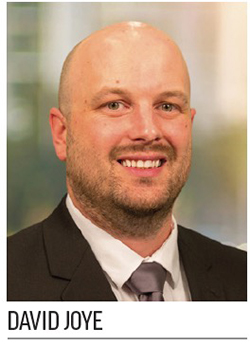 “At MBS, like a lot of airports, short-term parking was underutilized,” Joye says. “Covering it and renaming it Premium instead of short-term gives people the green light to understand they can park there for longer periods of time.”
The airport also changed the name of its “long-term lot” to the General Lot. It’s uncovered, and now includes 15 Level 1 EV chargers.
Last October, MBS was primed and ready to start collecting solar power but has had to wait for Consumers Energy to turn it on. Canders and others are looking forward to the company flipping the switch this summer.