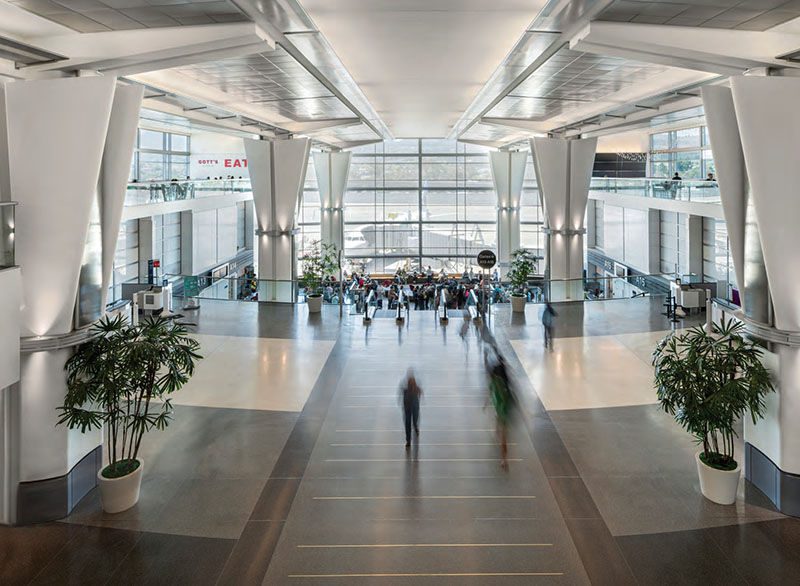
There are more than 100 buildings and 2,200 electric meters throughout the vast expanse of San Francisco International Airport (SFO), plus additional meters measuring natural gas and water consumption. Many have their own building management systems that “speak different languages” than other systems across the campus.
The energy-conscious airport had several ways to measure the efficiency of its heating, ventilation, air conditioning and other systems; but the process wasn’t easy or efficient. And SFO is boldly aiming for Net Zero energy consumption by 2030.
Because buildings were constructed during different eras and governed by equipment installed by different companies, management required multiple systems, passwords and computers, not to mention personnel with great memories.
 facts&figures facts&figures
Project: Energy Management Control System Location: San Francisco Int’l Airport System Provider: Mitsubishi Electric Iconics Digital Solutions Inc. Project Cost: $41.9 million Timeline: Planning began in 2018, paused during COVID pandemic & resumed 2022; skeleton system for majority of campus installed mid-2024; further implementation is ongoing Design-build Contractor: Suffolk Construction Design Partner: WSP Building Management System Consolidation Tech: Iconics Partnering Consultant: OrgMetrics LLC Key Benefits: Consolidating previously disparate facility management systems in 100+ buildings; comprehensive remote monitoring & data analytics; more ability to identify ways to conserve energy & reduce maintenance costs; improved lifecycle management of assets |
If, for example, an alarm went off signaling a space was too hot, too cold or not getting enough air, the airport would use an HVAC integrator to force more air to the area to meet its need. But staff would have to use one computer to reset the alarm and then access another dedicated to the specific building’s operations to execute changes to solve the problem, explains SFO Project Manager Raniel Camacho.
“It was very difficult and inefficient for our Operations staff to maintain the system and maintain comfort for our passengers,” he says. “In a lot of cases, to try to minimize those alarms or discomfort to passengers, we just threw it on full blast. We were using a ton of energy.”
A Better Way
So how does an airport improve a system that sometimes requires stationary engineers across sprawling facilities to log into six different systems to find a problem—not only having to remember what computer houses the controls for a given building, but also what the passwords are and how to access the proper software?
The answer for SFO was installing an Energy Management Control System in conjunction with Iconics Digital Solutions Inc. to manage resource use across the campus. The new system is able to collect data from water, gas, thermal and electric meters, building management systems and other relevant sources. The system’s ability to analyze data and control existing disparate building management systems was a major attraction for SFO executives and Facilities personnel alike.
It solved the forementioned problem “by consolidating all the controls into a single platform, with a consistent look and feel so operators need only to use a single computer,” Camacho says.
The $41.9 million project to implement the new system began seven years ago, when more than a dozen stakeholders met to establish goals about retrofitting all of the airport’s buildings onto a single Energy Management Control System.
The COVID-19 pandemic paused the project for about 18 months and forced a significant revision of its initial mission. But in early 2022, the partners resumed planning, this time focused on one core initial goal: improving automation and function of the fire/life safety system in the International Terminal Building, because the existing components were obsolete.
“You could not replace something if it is obsolete” recalls John McKernan, senior vice president of Operations with Suffolk Construction, the design-build contractor for the Energy Management Control System project. “They would have to evacuate. It was a big deal.”
By mid-2024, SFO, Suffolk Construction, design partner WSP and their trade partners delivered a preliminary Energy Management Control System that was retrofitted into the International Terminal, Terminal 2, the newest part of Terminal 1, the air traffic control tower and half of Terminal 3.
A second phase of the project is underway to update additional buildings, including the rest of SFO’s terminal complex. The airport also intends to continue adding other components, such as the electrical, gas and water meters, that were not removed due to the pandemic-related downsizing.
In addition, SFO is investing in air quality sensors inside and outside buildings to begin incorporating diagnostics there.
 “We reduced the scope to just build a skeleton,” Camacho says. “It’s there now. The plan is to continue to build upon the skeleton to beef it up. There’s still a huge lift, but we’re chopping away at it.”
All new construction also will be added to the Energy Management Control System. This will allow airport personnel to check energy efficiency and other performance metrics from a single device, anywhere on airport grounds.
“We want to invest in and sustain high-performance assets,” emphasizes Amy Nagengast, energy program manager at SFO. “We’re really trying to extend and expand value from capital project investments.”
Camacho describes it this way: “It was about being smarter with how we’re operating and how much we’re spending in our utility bills.”
Environmental Leadership
By stepping up to Net Zero energy and carbon accounting goals, SFO is among world leaders in sustainable and environmentally friendly practices.
“No other airport on the planet would do this,” McKernan asserts. “It would be the first one to achieve this kind of level of energy management.”
The airport has increased its efficiency in recent years by replacing outdated equipment. For example, it underwent an investment-grade audit and identified several big projects, such as installing new chillers in the Central Plant for cooling terminals and other facilities.
But it was difficult to measure the impact, notes Nagengast. Data was hard to come by, and what was available didn’t provide an “apples-to-apples” comparison.
 “It’s hard to manage what you don’t monitor,” adds Gareth Ashley, vice president of Aviation Technology with WSP. “In order to meet energy goals, you have to know about energy consumption, and you have to know where that energy and other resources are used.”
For years, Facilities personnel at SFO had requested a system that would allow them to manage mechanical equipment from a single location. Now they have it.
“A lot of times we were firefighting,” Camacho recalls. “We were being very reactive instead of being proactive. It was something Facilities wanted for a while. We just needed to figure out how to build it, how to contract it, how to see what we wanted.”
Initial Impacts, Future Improvements
The airport has already begun benefiting from the Energy Management Control System and the benefits will increase as the remainder of its buildings and systems are incorporated.
 “I want to make sure additional assets get integrated,” Nagengast says. “The value comes from bringing disparate data sources together, tracking their performance and responding as needed.”
In the meantime, the airport has already used its Energy Management Control System platform to help reduce energy consumption, potentially extend the longevity of assets, and improve operational efficiency.
“I think it’s an ongoing investment as we look to leverage those smart pieces of equipment,” says Nagengast, adding that different users seeking specific insights can create dashboards that will show specifically what they want.
Hurdles to Clear
Naturally, the project did not come without significant challenges. Across SFO’s campus, the terminals have the largest impact on energy use. But Johnson Controls, Delta, Honeywell and other companies had used different building management system technology installed at different times, with different languages, to operate in different buildings.
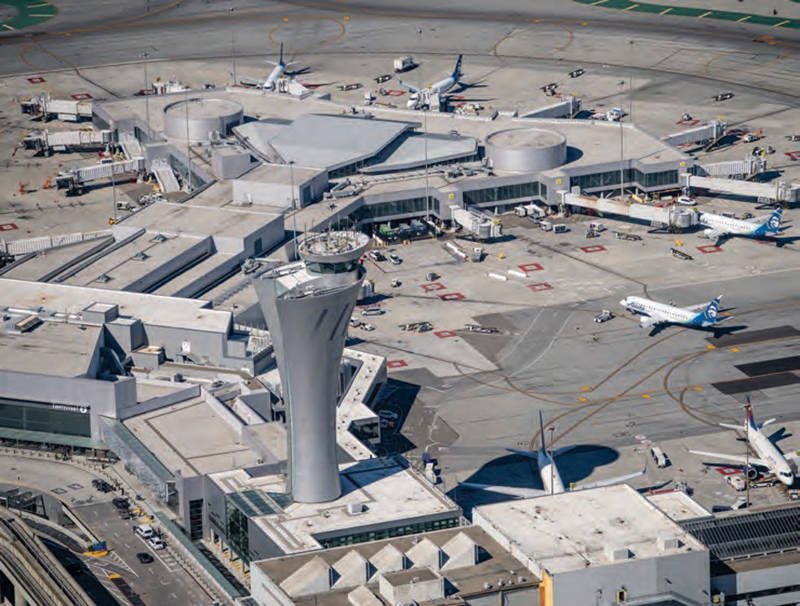
A new system is helping the airport manage energy resources across more than 100 buildings.
“The International Terminal, for example, was completed around 2000, and that was before the big sustainability push and design attention wasn’t given to making those systems accessible,” Ashley recounts. “So, a lot of building management systems are proprietary. They use their own cabling, their own protocols. It was a closed system.”
Various companies posted personnel on-site to manage the technology. But those systems had to be updated to connect with the Energy Management Control System to provide usable data.
“It was quite a lofty goal,” says Ashley.
But SFO and its partners installed the Iconics’ smart airport system into which all of the information from building management systems will feed. It also creates a way to retrofit existing buildings and incorporate new construction into the system.
 “You’re still going to have two base platforms, whether that’s Honeywell or Johnson Controls, but both of those feed into the Iconics system,” McKernan explains. “The benefit is huge. It gives you one platform to monitor. It gives you flexibility in terms of scaling systems to meet it. The screens are easy to understand. It’s modern technology. You can use your handheld device for its numerous benefits. Anytime you do something like this, there’s huge benefits in terms of the return on investment ”
Another challenge that arose during construction was intermittent system interactions between the International Terminal Building and the air traffic control tower or the airport director’s office. Resolving the issue took detailed consultation between several entities to ensure information security and the ability to maintain service while construction continued.
“It’s great if you can just turn it off,” McKernan says. “But SFO is one of the busiest airports in the world—it has to function 24/7—and we are essentially taking out an entire system that operates everything and replacing it without impacting the operations of that facility. That’s the difficult part that takes very close coordination and patience and understanding of how you’re cutting things over and implementing your new systems.
“Everyone was nervous when we were monkeying around with that,” he adds.
Results
In addition to creating immediate returns by lowering energy and maintenance costs, the new Energy Management Control System has shed light on a number of systems that were at or nearing the end of their useful life. This, in turn, prompted new capital work, including select life safety systems.
While SFO does not yet have a specific figure for how much it has saved using the Energy Management Control System, industry estimates suggest that building retrocommissioning can decrease operations and maintenance costs 5% to 15% over time. At SFO, that could translate into savings of up to $2.5 million annually.
“You could be spending a lot of money repairing something when you can just cut the cord and put something new in there,” McKernan says. “It changes the whole dynamic with maintenance and energy-saving efficiencies.”
With funding secured to expand the Energy Management Control System even further, the next phase of work will focus on improving the passenger experience.
“We want to make sure planes take off on time so their turnaround time can be quick at the gate,” Nagengast says. “This next phase is aiming to connect those key gate assets for use by many end users.”
| Partnering, with a Capital P
Planning and implementing an Energy Management Control System at San Francisco International Airport (SFO) was a complex project that spanned seven years and involved a diverse group of entities. One factor many stakeholders cited to explain its success was Partnering, a formal engagement process that requires all stakeholders to meet regularly—first to plan the project in detail, then to update each other and resolve issues as they make ongoing progress. Suffolk Construction, the design-build contractor for the project, was one of many key participants. “I would call it instrumental,” says John McKernan, the firm’s senior vice president of Operations. “We were on a regular cadence of facilitated partnering and it just emphasized and underscored the importance of communication and understanding what everyone’s priorities were. That enabled all of us, especially us [Suffolk], to focus on the priorities and goals of the project.”
On this project, the airport estimates it saved nearly $2.4 million due to the benefits of Partnering, and the associated service costs were less than 1% of the total project budget. Reaugh acts as neutral consultant, promoting collaboration between the airport and other stakeholders to ensure teams work well together. The overriding goal is to enhance the delivery of construction projects. “Because the EMCS was so technical in nature and the scope had to pivot a fair amount, we had to adapt the Partnering along the way to ensure that everybody really understood what the project was and what it wasn’t,” he says. “Partnering offered a forum and a way for the leadership team to steer and to make sure the core group delivering the project and in the weeds every day had the resources or a decision they needed.” All project participants initially met every month, later every other month, and then as needed. The meetings helped create one set of goals regarding safety, schedule, budget, quality, sustainability and how the teams would work together. “Part of the discipline is teasing out what the risks are and what the issues are that are in need of support,” Reaugh says. For instance, fire safety components in the International Terminal Building were a particular focus. “In this project in particular, we had to develop a high level of candor and transparency with the fire marshal,” Reaugh explains. So, it was common for the fire marshal to meet regularly with the design/build team to review plans. Because the project pivoted several times, making sure the entire team understood the new scope was an ongoing topic/goal. Representatives from Johnson Controls and Honeywell were part of the team because their building systems were being upgraded. And Partnering allowed the airport to be one of many interested parties rather than the overseer talking at its project partners. “It’s absolutely intentional and it’s an important aspect of transparent leadership,” Reaugh says. “It’s kind of a profound act.” He considers SFO an industry leader for adapting the system, but his company has also worked with other airports, including Norman Y. Mineta San Jose International, San Diego International, Oakland San Francisco Bay Airport and Kansas City International, among others. The recent project at SFO garnered a John L. Martin Silver Award, Buildings/Public Infrastructure category, from the International Partnering Institute. |
 The process was facilitated by Rob Reaugh, president of OrgMetrics LLC, who has worked in the field of conflict resolution since 2007 with a focus on construction dispute prevention and resolution since 2011. SFO has been a steady client for years and uses his Partnering services on most major projects.