By any measure, Fresno Yosemite International Airport (FAT) achieved many notable milestones last year.
The Central California gateway welcomed more than 2.75 million passengers in 2025—its busiest year on record—while also completing the next phases of a $150 million multiyear capital program that is Fresno’s largest public works investment in a generation.
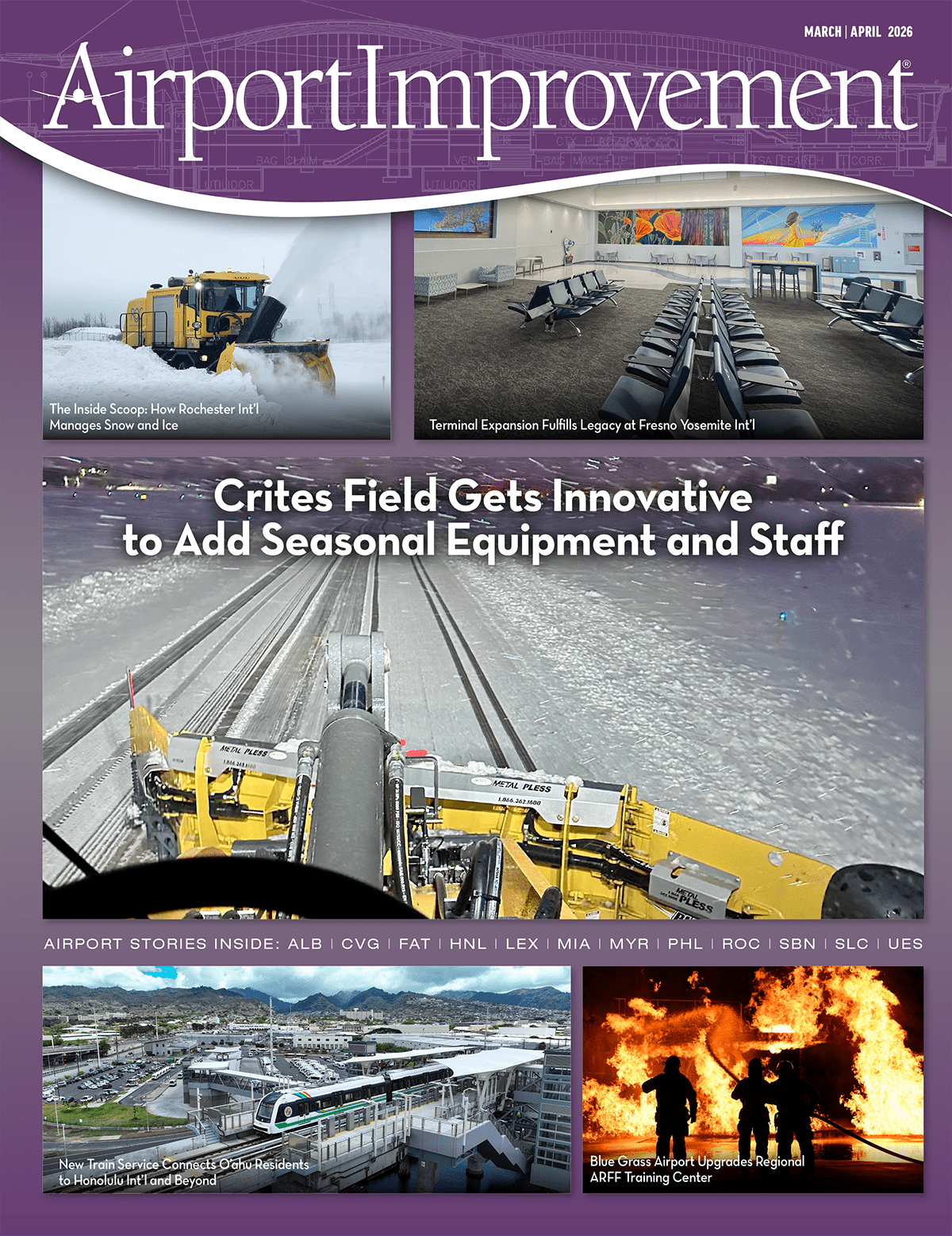
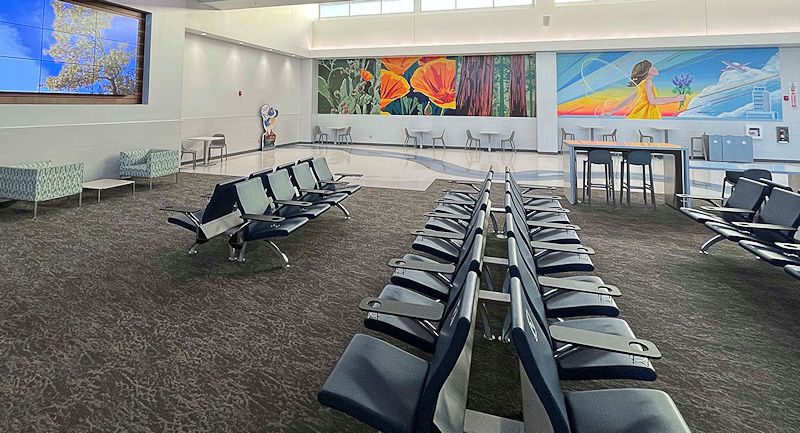
When the dust settled in December, travelers began enjoying FAT’s expansive 98,000-square-foot Concourse B addition that features larger seating areas and more restrooms along with fresh concessions and a thoughtfully curated art program. A pair of new passenger boarding bridges vastly improves conditions for travelers by replacing two outdoor ground boarding/deplaning positions.
The newly expanded 13,000-square-foot security checkpoint exponentially boosts passenger screening throughput, while a new baggage handling system boasts more than one mile of conveyors to shuttle checked luggage to and from TSA screening more quickly. A modernized international arrivals building rounds out the new amenities, with enough room to process visitors three times faster than the facility it replaced.
 facts&figures facts&figures
Project: Terminal Expansion Location: Fresno Yosemite Int’l Airport, in CA Project Size: 98,000 sq. ft. of new space; security checkpoint expanded to 13,000 sq. ft. Highlights: New, larger holdrooms with added concessions; expanded international arrivals facility; inline baggage handling system; 2 new boarding bridges; 5-lane passenger security checkpoint; curated public art program in partnership with local & int’l artists Total Cost: $150 million Funding: Bipartisan Infrastructure Law, Community Project Funding & other federal sources contributed more than $85 million; airport revenue bonds; 1/2-cent sales tax Fresno County assesses to support transportation projects Contractor: Q&D Construction Architectural Design: CSHQA Architecture Subconsultant: Mead & Hunt Passenger Screening Equipment: Leidos Inline Baggage Handling System: Five Star Airport Alliance Explosives Detection System: Smiths Detection Passenger Boarding Bridges: Oshkosh AeroTech New Concessions: Hudson; Los Amigos Mexican Restaurant; Mad Duck Craft Brewing Co.; Einstein Bros. Bagels; Ike’s Love & Sandwiches Project Timeline: Design began in April 2020; groundbreaking in 1st quarter 2023; new checkpoint opened April 2025; terminal expansion debuted in Dec. 2025 Carriers: Aeroméxico; Alaska; Allegiant; American; Delta; Southwest; United; Volaris 2025 Passenger Volume: 2.75 million (busiest year ever) |
Such numbers are impressive. But numbers only reveal part of this story.
Despite the many improvements FAT made last year, 2025 will unquestionably be remembered for one immeasurable loss.
“We’re in the business of emergency preparedness, drills, incident command structures… we talk about continuity plans,” says Francisco Partida, the airport’s interim director of aviation. “But I don’t think I’ve ever heard of a course or a symposium or a breakout session at a AAAE conference that says, ‘OK, No. 2s…What do you do when your airport director can’t show up for work…forever?’”
You’re It
Partida was home with family on a Sunday evening last July when he received a call from Georgeanne White, Fresno’s city manager.
She asked Partida to recuse himself to a quiet place and sit before breaking the news: Henry Thompson, FAT’s director of aviation, had died unexpectedly while on a trip to Las Vegas. He was only 59.
“As of this moment, you’re it,” White told Partida. “You’re running the airport.”
Though shocked and deeply saddened, Partida was also well prepared to take on the larger role. In fact, he’d been an understudy for it since childhood. His father worked for Mexicana Airlines in the 1970s, and Partida admits the aviation bug “bit early.” As a young adult, he trained in San Antonio to become a commercial airline pilot but later transitioned to the business side of the aviation industry.
While employed by a private sector aviation firm based at Brownsville/South Padre Island International Airport (BRO), Partida met Bryant Walker, the Texas airport’s director at the time. They connected over a shared passion for aviation, modernizing airports and elevating the user/customer experience, and Walker offered an unpaid internship even though Partida was well beyond his college years.
While maintaining a separate full-time job, Partida completed an 18-month internship, furthering his knowledge of airport administration, aviation security, customer service, public affairs and more. Along the way, he earned a full-time role in business development at BRO, eventually ascending through the ranks to the role of deputy director of Development and Security before moving to Fresno in 2023 to further advance his career.
“Fresno really stood out, not only for the city and [airport] projects…but for the leadership,” Partida explains of his decision to move west. “[Thompson] was the ultimate airport professional.”
For two years, Thompson ran FAT as the sole airport executive until Partida’s arrival in 2023. As the two developed mutual trust and confidence, and the management team adjusted to an expanded chain of command, Thompson was able to gradually pass the reins to Partida, even if only for isolated weekends at first. When Thompson eventually said he’d be unreachable while away on a weeklong cruise, Partida knew he had earned the complete confidence of his mentor.
“I learned a lot from him, but he also allowed me to continue developing leadership skills,” Partida reflects. “He never second-guessed my decisions.”
And so it went…until the shocking call from White.
The morning after that fateful conversation, Partida personally reflected on Thompson’s prior demonstrations of confidence in his subordinates’ collective capabilities, and his own track record while FAT was briefly under his supervision.
“I told myself, ‘I’ve done it before and I’m going to pretend he’s on extended vacation, initially,’” Partida recalls.
He then convened an all-hands meeting with FAT’s other executive leaders and reminded the team there was still work to be done with a multimillion-dollar capital program nearing completion. Everyone vowed to stay on course, rely on one another and to look after the 150-person workforce that was reeling from the sudden loss of a popular leader.
“Henry [Thompson] poured his heart and soul into making sure [the terminal expansion] was executed,” Partida notes. “We had our marching orders.”
Longtime Aviation Professional
Thompson built a strong reputation in the industry decades before he was hired in Fresno. His career began in the early 1980s when he enlisted in the U.S. Air Force to learn airfield management, later serving as an air traffic control supervisor and trainer.
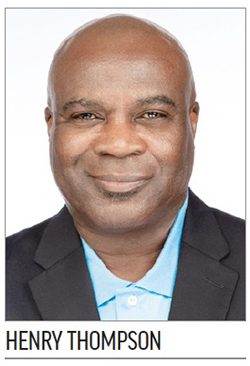 After leaving the military, he spent two years at San Jose Mineta International (SJC), then 18 more at San Francisco International (SFO) before moving to Louisiana to lead the city of Shreveport’s airport system. He returned to California for a three-year stint as director of Santa Barbara Airport (SBA) before accepting the top role with Fresno’s city-managed aviation department in late 2021.
Upon announcing the hire, Fresno Mayor Jerry Dyer highlighted Thompson’s vision, ability to attract more air service and dedication to fostering excellent customer experiences. With FAT’s sizable terminal program already underway, Dyer flatly declared, “Henry is the right man for this job.”
Under Thompson’s guidance, FAT attracted new or increased scheduled service to Atlanta; Chicago; Dallas; Las Vegas; Portland, OR; and Salt Lake City.
Martin Hahle, an architect and principal with CSHQA who has worked on jobs at FAT for more than two decades, notes that Thompson leveraged artwork to create a sense of place while simultaneously providing functional benefits.
 “A lot of airports are trying to make an iconic statement with their exterior designs,” Hahle says. “In Fresno, they’re all about the passenger experience and amenities within the facility.”
He points to a river motif in the new terrazzo flooring as an example. Its meandering pattern references the local San Joaquin River while creating a sense of flow among passengers, Hahle explains. It also blends into a floor medallion by local artist Ruth Soderlund called Valley Harvest, which depicts fruits and nuts grown on farms throughout the nearby region and inspires pride among travelers with ties to the local agriculture trade, he adds.
Elsewhere, a floor-to-ceiling mural titled Fresno Airport – A Welcoming Adventure, by San Joaquin Valley artists Colleen Mitchell-Veyna and Kesley Gilles, is displayed near the security checkpoint, while a multistory mosaic piece called We Have Arrived, by artist Caleb Duarte, was added to the facade of FAT’s parking structure last summer.
“Henry really cared for this terminal and how to give it some identity, how to reflect the flavors and cultures and diversity of the Central Valley,” Partida says, adding that the many murals beautify the holdrooms and bring “really special meanings” to the spaces.
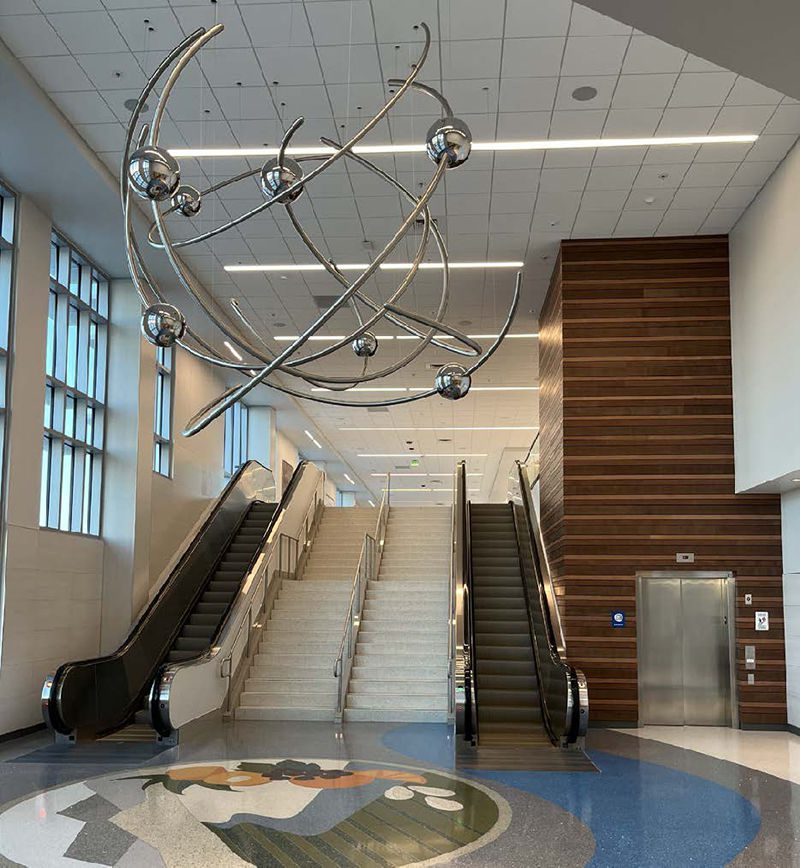
Work from local and international artists figured prominently into the expansion project.
Beyond aesthetic touches, Thompson sought to incorporate authentic local foods into FAT’s expanded dining program. That attracted Mad Duck Craft Brewing Co., a Fresno-based gastropub, and Los Amigos Mexican Restaurant, which runs a 2,000-square-foot eatery through a licensing agreement with SSP America, the airport’s food and beverage concessionaire.
After Thompson passed away, Mayor Dyer told a local news outlet that Thompson had done more for the airport in a short period of time than anyone he could recall.
That sentiment was echoed by White, the Fresno city manager, who said Thompson’s focus on improving the travel experience and advancing the airport’s long-term goals “left a lasting impact.”
U.S. Rep. Jim Costa, who has served the San Joaquin Valley in Washington, D.C. for more than 20 years, praises Thompson for being instrumental in strengthening the region’s transportation infrastructure.
Adds Partida: “I can stand on Henry’s shoulders because he set the pace and set the plans.” After Thompson’s death, he told the team, “The only thing that’s going to change is how empty we feel when he’s not here.”
Growing a Global Gateway
The airport’s terminal and checkpoint projects were led by general contractor Q&D Construction, with Boise-based CSHQA acting as prime architect on the design-build program. Hill International provided construction management oversight, with consulting firms Deol Data and MySmartPlans helping streamline the workflow.

In addition to expanding the terminal, the airport added two new boarding bridges from Oshkosh AeroTech.
As a subconsultant to CSHQA, Mead & Hunt provided specialized design and programming support for the new Federal Inspection Services facility, where U.S. Customs and Border Protection officers now process arrivals from the Mexican cities of Guadalajara, León and Morelia.
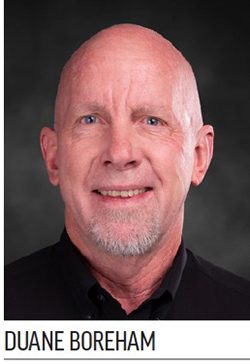 Duane Boreham, co-owner and president of aviation projects with Q&D Construction, notes that a heavy emphasis was placed on hiring local subcontractors, with approximately 80% of the workforce residing in or near Fresno. At peak activity, up to 260 people from nearly 50 subcontractors and 30 vendors were on the projects.
While passengers readily notice the expanded spaces, Boreham says the new inline baggage screening system will actually make the biggest difference for the airport and its tenants. On a personal level, he was most excited to work on the new Customs area—a first such project for Q&D.
It was desperately needed. Over the years, FAT built a successful following among Mexican visitors, serving nearly 434,000 passengers headed to or from south of the border in 2025 alone. Until recently, however, processing for international arrivals occurred in an undersized modular facility designed to handle just 150 passengers per hour. The facility was inadequate for the 186-seat and 212-seat aircraft Aeroméxico and Volaris respectively use at the airport.
The airport’s new larger Customs facility can process up to 450 arrivals per hour.
Boreham notes that older airports tend to feel tighter and smaller, but FAT’s growth was well-planned from its gates and holdrooms to the Federal Inspection Services facility itself. “It flows so much better,” he reports.
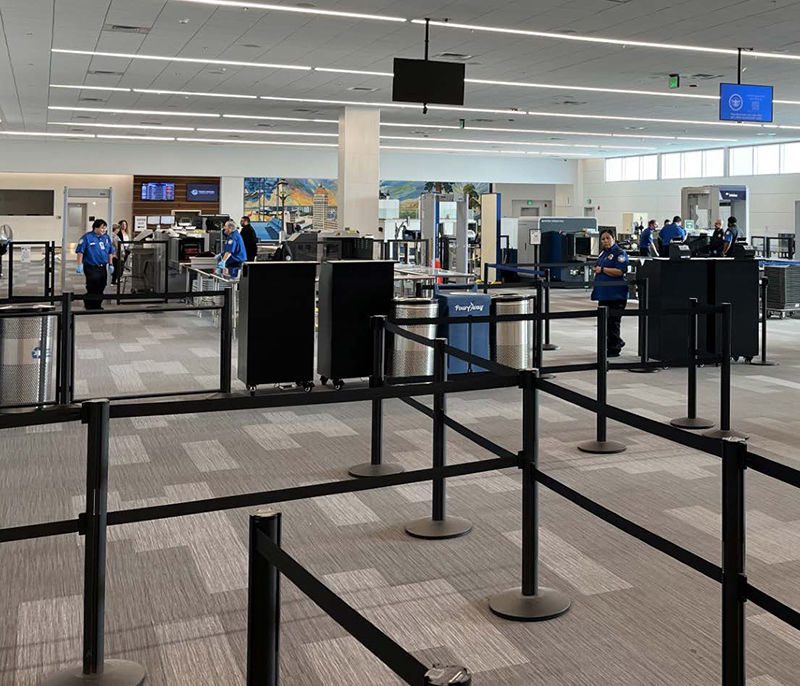
The TSA checkpoint was expanded to 13,000 square feet.
Speaking from an architect’s perspective, Hahle says behind-the-scenes changes bring notable differences in security that benefit travelers, airlines and airport staff. Checked bags were previously loaded for screening by hand, but the airport’s new inline system by Five Star Airport Alliance is fully automated moving bags through Smiths Detection’s state-of-the-art explosive detection machines.
The existing passenger checkpoint at FAT grew from three cramped lanes into five more expansive lanes with full-length Leidos screening equipment that adheres to current TSA best practices.
“One lane now does more than it could before,” Hahle explains. “And we made it a nice experience so you don’t feel you’re being jammed through a tunnel.”
The airport kept its popular Sequoiascape in the central lobby of the terminal and Hahle says efforts were made to let daylight inspire connectivity to the natural beauty that attracts so many visitors to Fresno each year. The new sterile corridor in Concourse B has windows that allow guests to see the Sierra Nevada mountains along the horizon.
Forward, Pause, and Forward Again
Although initial design work began behind the scenes months earlier, the airport’s largest-ever capital program was officially unveiled to the public in September 2020 under the cheeky branding “FAT Forward.” (The three-letter FAT code was derived from Fresno Air Terminal, the airport’s name from 1948 to 1996.)
Billed as a multiyear expansion predicated on years of pre-pandemic traffic growth, FAT Forward’s first project was a four-story, 917-space garage. It was funded through a $35 million loan from the California State Infrastructure Bank, a key Golden State economic development arm.
When announcing the new garage, airport leaders emphasized the project would create hundreds of jobs during a period when it was “important to put people to work.”
By the time the garage opened in fall 2021, however, FAT had already screamed back to life as Fresno and other smaller U.S. destinations enjoyed a rapid resurgence following COVID-19 lockdowns. FAT and similar airports were able to capitalize on “revenge travel” from cooped-up Americans whose recently accumulated savings fueled their pent-up demand to go somewhere, anywhere.
Given its proximity to the outdoor wonders of Yosemite, King’s Canyon and Sequoia National Parks, FAT became the aviation gateway to some of the most buzz-worthy post-pandemic attractions in the United States.
The airport also benefited from a surge in move-ins, as growing work-from-home opportunities prompted many residents to leave the Bay Area and Southern California for more affordable living situations in the state’s Central Valley.
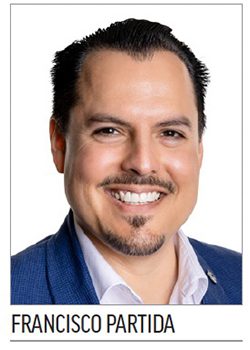 “Fresno is the fifth-largest city in the state and it has a solid economy,” Partida explains. “But of course, we are also the closest commercial airport to those three national parks.”
And just like that, a market that was once down suddenly found itself way—way up.
Boreham, from Q&D Construction, says he always believed that FAT would rebound quickly. In addition, he lobbied airport clients to use the downturn of 2020 to perform as much construction work as possible, because projects would be easier with fewer people flying.
The city of Fresno, which owns and operates FAT, took a more cautious approach given the magnitude of the costs involved, notes Partida. Ultimately, such pauses weren’t significant enough to affect travel demand, he adds.
FAT’s checkpoint and terminal became one of the first projects Q&D Construction undertook using videoconferencing tools such as Zoom and Microsoft Teams. Ironically, the firm received its notice to proceed for design work on the same day the city of Fresno shuttered its offices to protect staff from potential exposure to coronavirus.
“Had we been an hour later, we would have missed it altogether,” Boreham jokes.
While work progressed despite the pandemic, FAT Forward encountered other serious challenges. Soon after the new garage had welcomed its first vehicles, Director of Aviation Kevin Meikle retired in late 2021 following a nine-year run as the airport’s top official. His retirement, followed by Thompson’s untimely passing last year, at first raised questions of potential voids in direction for FAT and its project stakeholders.
“A leadership change can really affect how we progress,” Boreham notes. “It’s tough enough doing it once, and in Fresno we did it twice.”
Such concerns proved unwarranted as teams stayed on task amid the turmoil. Boreham praises Partida, FAT Construction Manager Luis Garcia, Project Manager Jarred Garza from the city’s Airports Division, and his design-build team led by Senior Project Manager Brian Mills for keeping everyone united during a most difficult time.
“They did a really good job,” he says. “We had a lot of historical knowledge with the airport team. We actually didn’t miss a beat.”
“Preventable Anxiety”
An aligned approach and shared vision are precisely what air carriers want from airport leadership whenever capital improvement programs are discussed—especially after significant changes at the top of an airport’s organizational chart, says Steve Sisneros, founder and principal of Las Vegas-based consultancy Sisneros Advisors.
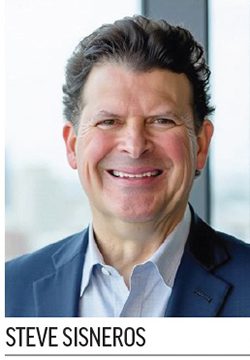 “Change within executive ranks at airports is not uncommon,” he notes. “But it’s imperative upon executive leadership to make sure that delegation and a buy-in of vision are there; so if something changes, that vision just continues on.”
Once an airport team is aligned, he says the next step is ensuring support from airlines and other stakeholders, because these parties are often expected to bear sizable portions of capital program costs.
“If the carriers feel like they’re not part of the process, there can be more churn than necessary,” he adds, referring to such situations a “preventable anxiety” for all involved.
Sisneros gained insight into how capital programs unfold at U.S. airports during his seven years as vice president of Airport Affairs with Southwest Airlines. Before he retired from the company last July, his portfolio included more than 100 airports, including FAT after Southwest began service there in April 2021.
Now a consultant, Sisneros specializes in helping clients and their stakeholders successfully navigate major infrastructure projects. In addition, he serves as an executive advisor on airport-related projects for the Paslay Group, a Fort Worth-based airport consulting firm offering executive program management for complex capital development programs.
Sisneros points out that early engagement “can go both ways,” with airport leadership initiating some capital improvements and airline tenants driving others. Gone are the days, he says, when carriers routinely rejected any large-scale capital expenditure due to concerns about associated increases to fees or rental rates.
“Airlines, by and large, are willing to make those investments, especially if it improves operational continuity or customer experience,” Sisneros contends. He acknowledges there may be disagreements along the way, but believes mutually beneficial conclusions are likely if there has been honest engagement.
“Putting together capital programs is really challenging. Recognizing that these are complex problems to solve, giving yourself the time to solve them [is key],” he says. “Ultimately the goal is to get a deal.”
The Next Harvest
Almonds and raisins aren’t the only things growing in San Joaquin Valley.
Partida says more travelers living in nearby counties are choosing FAT, some from as far north as Stockton and Modesto to as far south as Bakersfield. Doing so allows them to escape the frequent congestion on highways leading to larger airports in the Bay Area or greater Los Angeles.
With further growth in mind, FAT Forward rolls on.
Two additional gates are already in design for Concourse B, and Kimley-Horn is at work on designs for a planned $130 million rehabilitation of the airport’s 9,000-foot primary runway. Bids were released last year though a construction contractor has not yet been selected to replace the asphalt surfaces of 11L-29R with sturdier concrete.
An upgraded $100 million air traffic control tower complex is also in the works to better serve travelers flying through what’s quietly become one of California’s fastest growing regions. In early January, FAA released a Finding of No Significant Impact on the environment and Record of Decision, clearing the way for the city to proceed with a new 150-foot-tall tower and supporting infrastructure.
Shortcomings of the existing 1960s tower include temperature issues, leaky ceilings and elevators that can be down for weeks while awaiting custom replacement parts.
“We owe it to the National Airspace System and our local controllers and radar approach [personnel] to give them a better place to work,” Partida says.
City and airport leaders are optimistic that recent upgrades may soon lead new or existing airline partners to add service after more guests have experienced the latest iteration of FAT.
“We’ve unlocked a lot of possibilities,” Partida says. “Take that chance and skip the hub—that’s what’s next.”