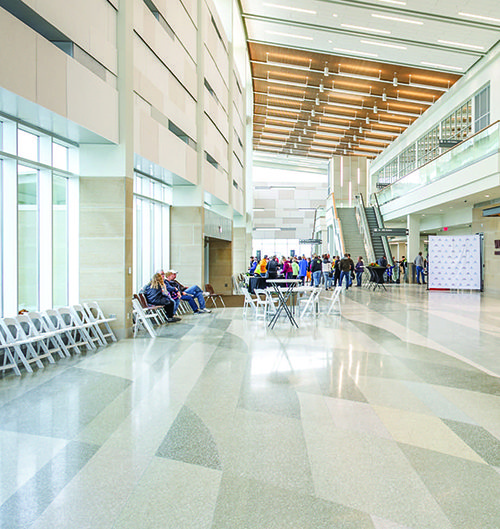
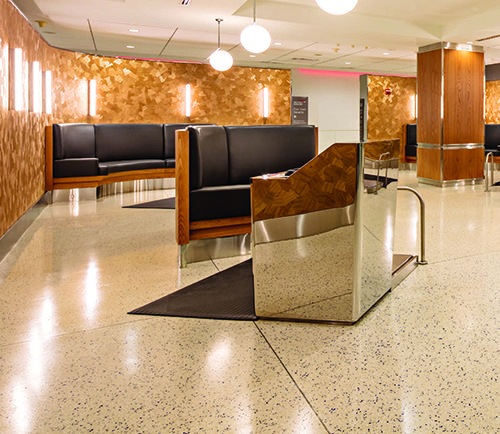
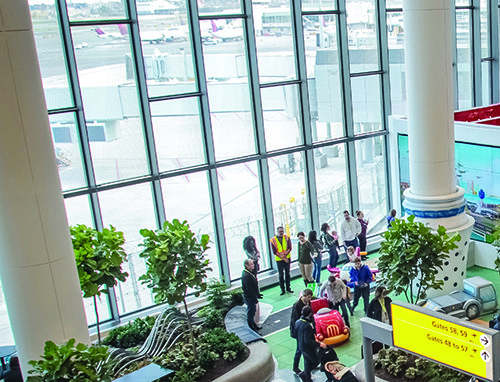
An updated common-use lounge at Pittsburgh International Airport (PIT) is now even better equipped to offer first-class treatment to more passengers. In June, The Club at Pittsburgh International doubled in size and gained 60% more seating capacity.
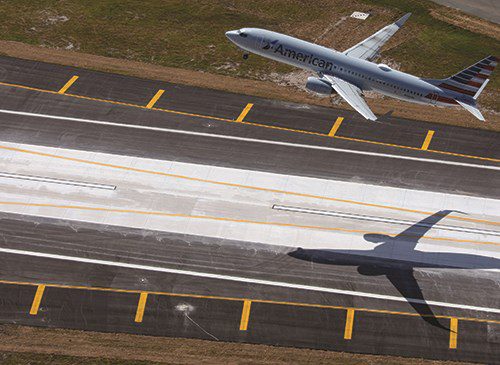
Last summer was all about opportunity for Fort Lauderdale-Hollywood International Airport (FLL) in Florida. Its primary runway, 10L-28R, needed to close for 120 days while crews performed a complete rehabilitation; so management took the opportunity to improve several other airfield assets as well.
Booming. Surging. Growing. Like oil production in the Bakken formation, that’s what is happening to communities in the northwest corner of North Dakota. In fact, a brand new $275 million airport, Williston Basin International (XWA), opened in October to keep up with the unprecedented economic expansion.
When Philadelphia International (PHL) wanted to upgrade its asset management system to a more robust tool, the project team talked with personnel at other airports about their experiences. As the Pennsylvania airport continues to deploy its upgrade, PHL Enterprise Asset Manager Milton Robinson is sharing his department’s experience to help other airports reap similar benefits.
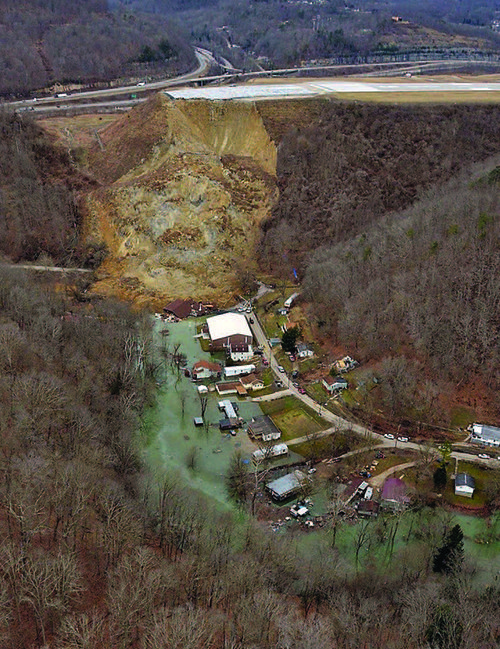
Four years of passionate perseverance, determination and hard work paid off on July 19, when Yeager Airport (CRW) finished the $25 million reconstruction of its runway safety area. Completing the project was an important milestone as the West Virginia airport continues to recover after a massive airfield landside that occurred on March 12, 2015.
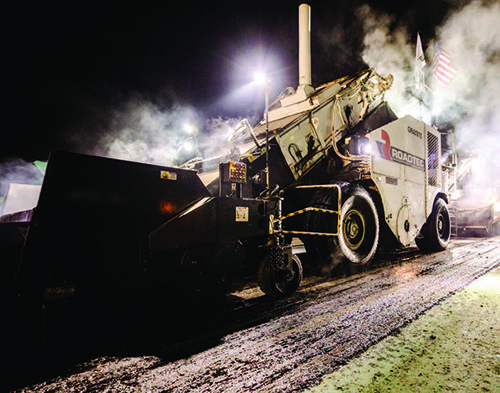
As the busiest single-runway airport in North America, San Diego International (SAN) must plan and execute any airfield work with precision and efficiency. The recent full-length rehabilitation of its 9,401-foot runway was an especially critical project.
British Airways’ $64 million renovation of Terminal 7 at John F. Kennedy International Airport (JFK) represents a premium upgrade’and not just for premium passengers. The changes are tangible for more than 150,000 customers who travel through the terminal every month.
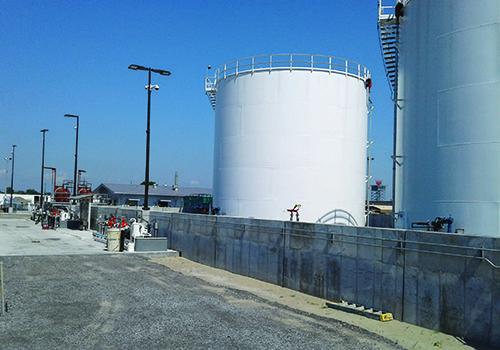
While a striking new 972,000-square-foot terminal typically gets the glory when it comes to recent projects at Louis Armstrong New Orleans International (MSY), there’s more going on than the $1.029 billion capital improvement program. When operations move to the north side of the airfield this fall, a new hydrant fueling system and fuel farm will begin operating to support them.
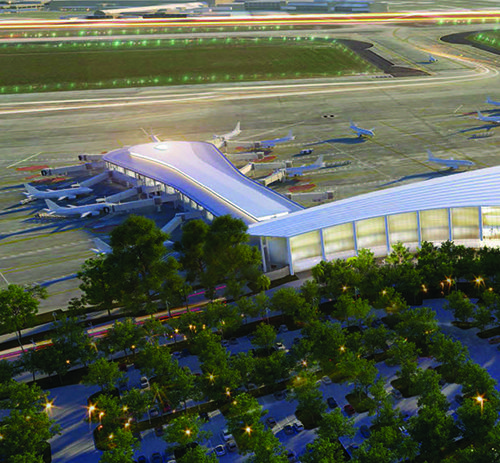
Not that New Orleans needs a reason to party, but the opening of the new terminal at Louis Armstrong New Orleans International (MSY) will surely merit some hearty celebrations. After nearly four years of construction and four delays of the opening date, the new 35-gate facility is scheduled to open this fall. But before the music plays and confetti flies, the airport has to make the move to its new home on the north side of the airfield.
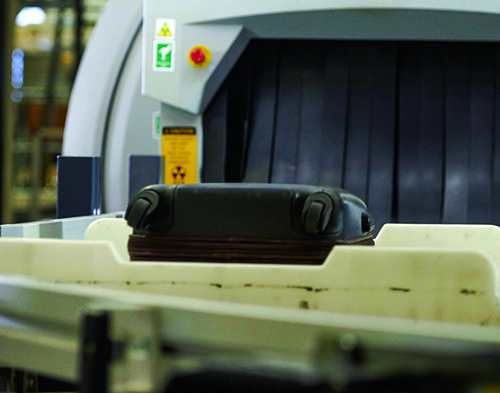
In late 2018, Dallas Love Field (DAL) wrapped up an $8.8 million renovation to ease congestion in its Checked Baggage Resolution Area (CBRA). Looking beyond traditional fixes, the project team deployed Mobile Inspection Tables to speed the area’s flow and improve conditions for the TSA personnel who work there.
When the Western Concourse is completed, Terminal B will include a total of 35 gates and feature dual pedestrian bridges that span active taxi lanes and connect the main departures and arrivals hall (known as the headhouse) with the two island concourses. In all, there is 1.3 million square feet of new space. The larger project also includes a central hall, central heating and refrigeration plant, parking garage, associated airside development, roadway/bridge infrastructure serving the entire airport and utility upgrades.
Like many other airports throughout the industry, Denver International (DEN) was unnerved when Hartsfield-Jackson Atlanta International (ATL) experienced a massive power outage in December 2017. In addition to causing an 11-hour blackout at the nation’s busiest airport, the outage impacted air travel throughout the country and prompted airports around the globe to take a second look at their own power systems.
Passenger traffic has been on a steady rise at Oakland International (OAK) over the last five years, and airport officials are working to make sure the facilities can meet current and future demand. Recent projects have targeted structural integrity and the customer experience as top priorities.
Have you met Annie the Astronaut’ Can you spot Fred the Fish’ Annie and Fred are just a couple of the creations that Orlando International Airport (MCO) presents to visitors on a digital ecosystem that so far includes 1,231 high-definition displays.
The central location of Dallas Love Field (DAL)’just seven miles northwest of the downtown business district’is a double-edged sword. While ultra-convenient for travelers, the airport is surrounded on nearly all sides by residential developments, which presents myriad challenges when it comes to ‘keeping the peace.’
Fort Lauderdale-Hollywood International Airport (FLL) recently completed a $333 million renovation of Terminal 1 to improve the experience for travelers and offer more operational capacity and flexibility.
With passenger volume expected to reach 85 million by 2037, Toronto Pearson International Airport (YYZ) is taking steps to ensure its facilities are ready to meet the needs of passengers well into the future.
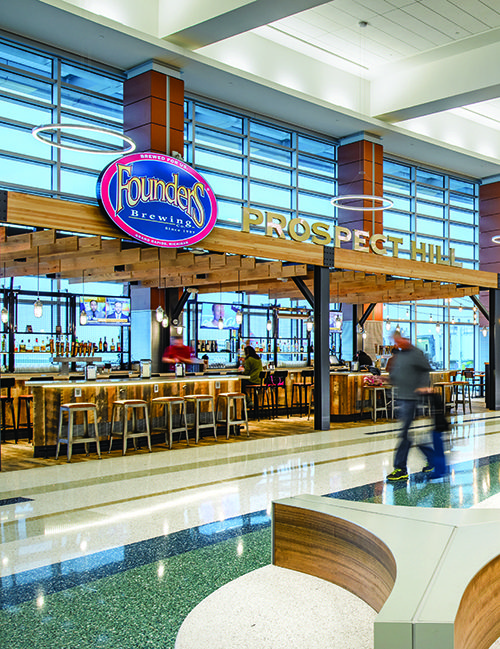
Jim Gill, president and chief executive officer at Gerald R. Ford International Airport (GRR), is the first to admit that he uses the word ‘collaboration’ a lot when talking about the Grand Rapids, MI, airport’especially its $45 million Gateway Transformation Project. But with $17 million of the total cost coming from private donations, it is difficult to find a better descriptor.
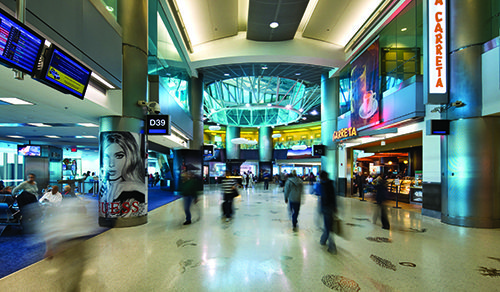
Blockchain is the buzzword in information technology today, and airports such as Miami International (MIA) are paying attention. ‘It’s our charter as IT executives to look at technology and see how we can insert it into our ecosystem to improve processes,’ says Maurice Jenkins, information systems and technology director at MIA. ‘Some work, some don’t. You never can tell until you see how well you can actually apply it.’
Valentine’s Day was extra sweet for Tampa International Airport (TPA) this year. The growing Florida facility opened two substantial new pieces of infrastructure to the public: a $323 million consolidated rental car center and a $412 million automated people mover. Both projects were designed to reduce curbside congestion at the terminal, improve customer service and pave the way for future passenger growth.
Since 2006, Detroit Metropolitan Wayne County Airport (DTW) has been incrementally transitioning its airfield lighting from incandescent to light emitting diode (LED) technology. Dave Garrett, the airport authority’s electrical department manager, explains that the switch has several benefits, including energy savings, product longevity and’to a certain degree’reduced maintenance.
Prior to the Great Recession in the early 2000s, officials at Tucson International (TUS) were making plans to expand their aging two-concourse terminal to accommodate growing traffic. But as the economy took its toll on the airline industry by way of consolidation, they realized that expansion was no longer necessary at the origination/destination airport.
Most terminal connectors are simple structures’enclosed hallways without much additional utility or aesthetic flourish. The five-level connector that opened at Los Angeles International Airport (LAX) in 2016 is an entirely different story. The new, modern facility that joins Terminal 4 and the Tom Bradley International Terminal includes a checked baggage inspection system, an interline baggage transfer facility, its own TSA passenger checkpoint and a public plaza with outdoor seating.
After four years making do with an alternate landing surface, Northwest Arkansas Regional Airport (XNA) is pleased to be operating with its primary runway back in business. Pronounced and accelerating damage caused by an alkali-silica reaction in the original pavement prompted XNA to close Runway 16-34 for a complete rehab in June 2012 and now the airport is addressing the same issue on the rest of its airfield.
Like other airports in Canada’s northernmost territory, Iqaluit International Airport (YFB) on Nunavut’s Baffin Island plays a vital role connecting the region to the rest of the world. The airport’s new 9,800-square-meter terminal, which opened in August, will also keep far-flung residents connected to one another, as it includes a central gathering space that will be used for local meetings and civic events as well as arrivals and departures.