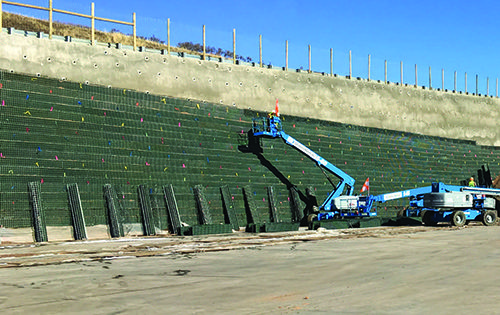
The recent rehabilitation of an aging levee will help protect Harrisburg International Airport (MDT) from flooding for decades to come. In the meantime, the $22 million project also offers a valuable lesson about the benefits of planning ahead.
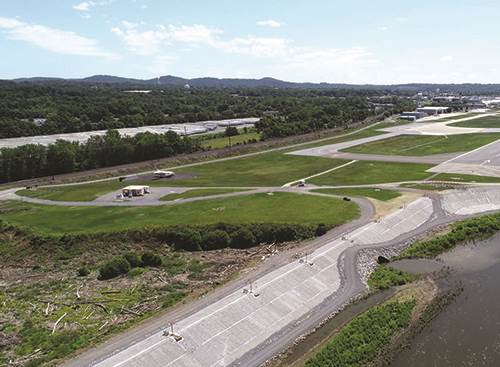
Cincinnati/Northern Kentucky International Airport (CVG) suffered a significant financial blow a little more than a decade ago when Delta Air Lines dropped the airport as one of its primary hubs. But in true make-lemonade-out-of-lemons fashion, airport leadership charted a new course, based on a simple premise: A multi-legged stool is more stable than one with a single leg.
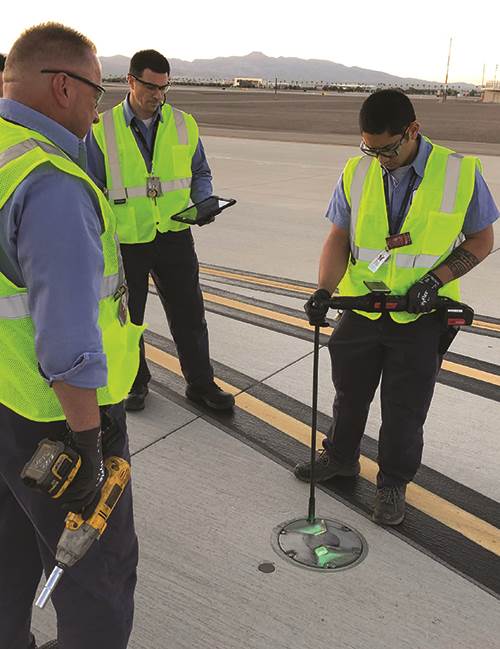
Maintenance personnel at McCarran International Airport (LAS) no longer put pen to paper when they log maintenance performed on runway lights. Instead, a digital asset management system uses GPS technology to track the work performed and pushes the information to a cloud-based platform to enhance the accuracy of maintenance records.
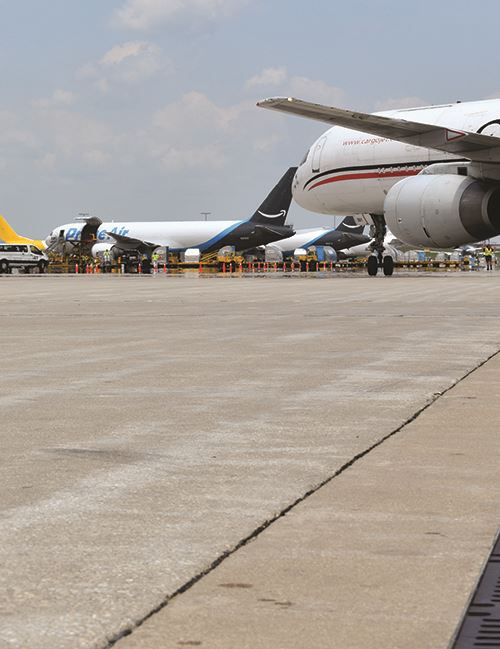
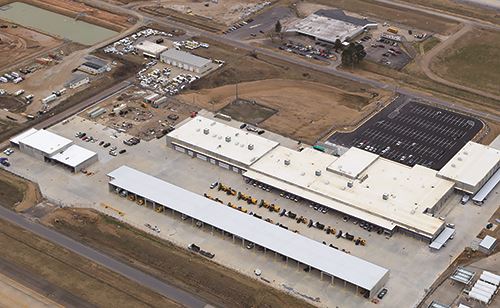
Memphis International Airport (MEM) recently addressed several separate, but related, facility issues in one deft move. By constructing a new nerve center for operations and maintenance, the Tennessee airport not only substantially increased its own efficiency, it also accommodated the expansion needs of its largest tenant, FedEx.
When Orlando International Airport (MCO) opens its new South Terminal Complex in early 2022, the facility’s gleaming glass façade, airy environs and high-tech features will no doubt impress passengers. But largely invisible technology will also be working on the tarmac to enhance their experience: a virtual ramp control system designed to minimize gate delays.
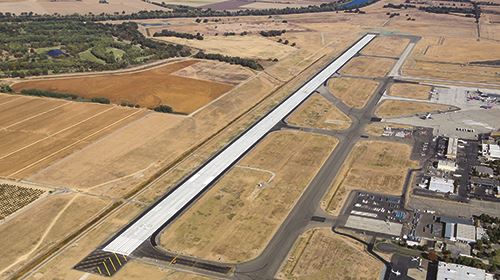
Despite surprising underground discoveries and a limited construction period due to impending seasonal fog, Sacramento International Airport (SMF) opened its critically important new $30 million concrete runway on time.
The maintenance team at Minneapolis-St. Paul International Airport (MSP) is well-known for its expertise in snow removal. But after the snow stops flying, crews quickly turn their attention to a myriad of other duties. Much of the off-season work centers on landscape management to help deter wildlife on the airport’s 2,930-acre campus.
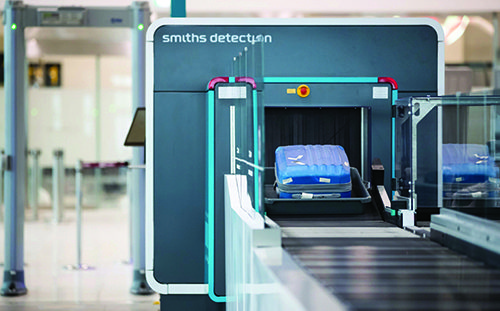
The same high-tech scanning technology that’s used for medical imaging and screening checked baggage is gradually transitioning to passenger checkpoints at dozens of U.S. airports. As of mid-July, TSA had installed 123 computed tomography (CT) scanners at 41 airports around the country, with even more installations slated in coming years. The upgrade represents a considerable step forward in the technology used to screen passengers’ carry-on bags and other items.
Minneapolis-St. Paul International Airport (MSP) recently completed a roughly $3.5 million project designed to prevent the glycol used to deice planes from potentially seeping into groundwater. By sealing select sections of concrete storm sewers with leak-proof liners, the airport avoided the higher cost and disruption associated with excavating and replacing pipes.
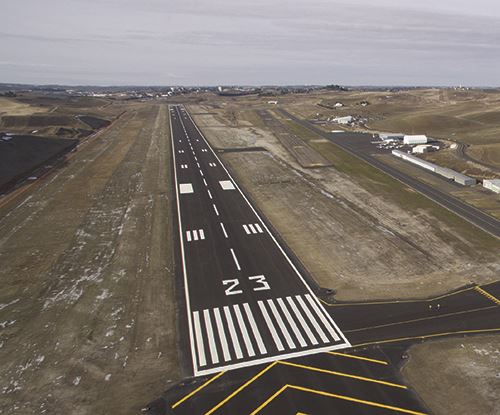
When Pullman-Moscow Regional Airport (PUW) in Pullman, WA, cut the ribbon on its new $154 million runway last October, officials celebrated much more than a major capital improvement. They celebrated one of the last steps in a complicated venture that spanned more than 10 years and required cooperation among a long list of key stakeholders.
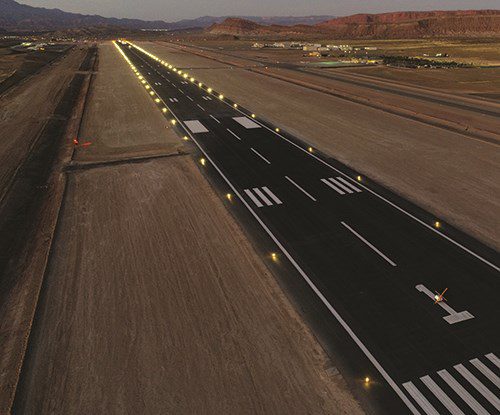
The newly rebuilt runway at St. George Regional Airport (SGU) doesn’t look at all unusual. But its routine appearance belies what’s hidden below: a clever feat of engineering and earthwork designed to stop the pavement heaving that doomed the original runway.
A new $1 million ground transportation management system is dramatically reducing paperwork and helping John Glenn Columbus International Airport (CMH) more accurately account for fees paid by ride-share services and commercial operators that pick up and drop off passengers at the terminal. At the same time, the Ohio airport is enjoying more efficient and orderly taxi dispatching from the holding lot, which minimizes wait times for airport guests.
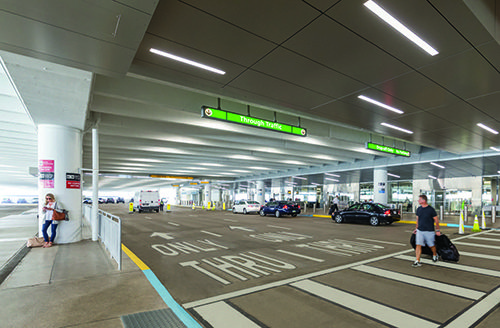
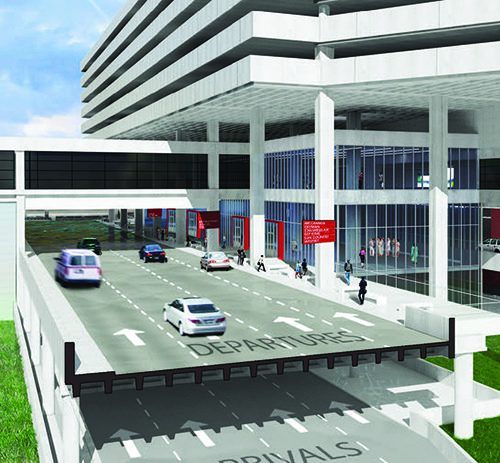
Prompted by heavy traffic caused by vehicles dropping off and picking up passengers during peak travel times, Tampa International Airport (TPA) is overhauling its curbside operations. The strategy: express curbsides that provide departing passengers with only carry-on bags a direct path to TSA checkpoints and airline gates’no stops at the ticketing/check-in lobby required.
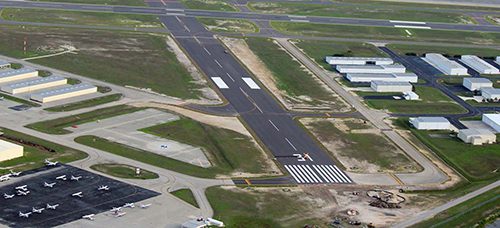
There’s never a good time to close runways and taxiways for rehab work. But thanks to an intense coordination effort, Page Field (FMY) in Fort Myers, FL, completed a nearly $30 million airfield project last year with minimal disruptions to flight operations. Crews repaved the airport’s two runways, upgraded several taxiways and installed a new airfield lighting system in 19 months, despite imposing weather challenges that included Hurricane Irma in September 2017.
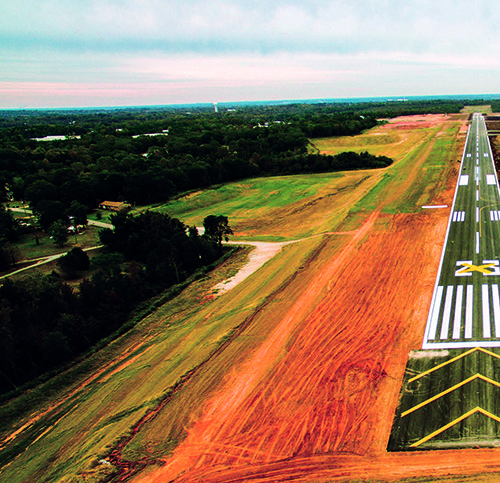
South Carolina’s historic Spartanburg Downtown Memorial Airport (SPA) has undergone an extreme makeover of sorts in the last seven years to enhance its economic development role and help it better compete with neighboring airports. The multi-project effort was capped by a $30 million runway rehabilitation and extension that opened in October 2018.
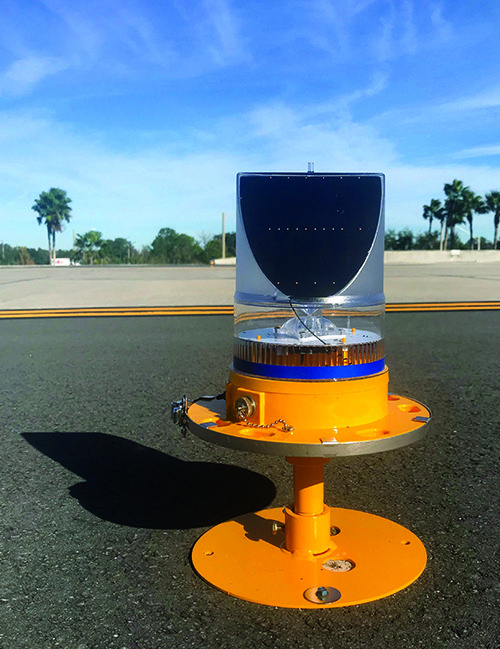
Faced with the prospect of an unacceptable delay to reopen a newly repaved taxiway, Orlando International Airport (MCO) got creative. Instead of waiting two or three months for new centerline lights to arrive, the project team pressed ahead last July and used temporary, portable solar-powered edge lights to make the major taxiway functional in just a few hours.
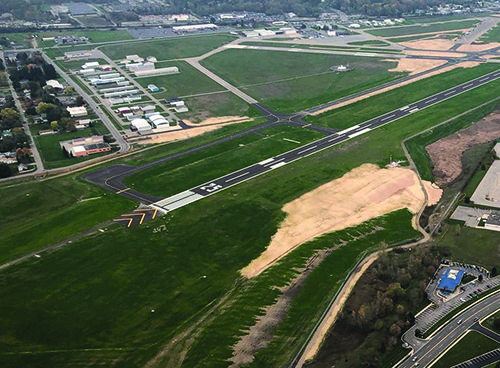
Officials at Jackson County Airport/Reynolds Field (JXN) in Michigan are pleased with the results of a $49 million runway project completed last fall, because they see it improving operational safety, creating new opportunities to generate more revenue and bolstering the airport’s position as a local driver of economic growth.
Early last year, Greenville-Spartanburg International Airport (GSP) opened Cerulean Aviation and joined the growing ranks of commercial airports that run their own fixed base operators (FBOs). The South Carolina airport took the strategy one step further by also opting to provide cargo handling and ground support services for commercial charter flights.
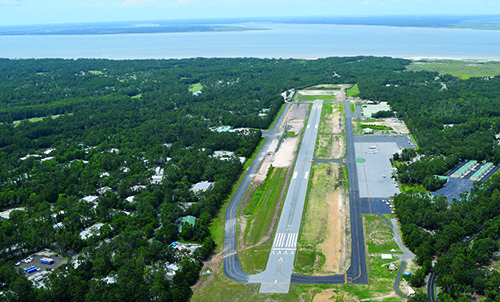
A $14.1 million runway extension project at Hilton Head Island Airport (HHH) will enhance safety and allow the South Carolina airfield to accommodate larger aircraft. At the same time, the project also offers a practical blueprint for how to address local sentiment that runs counter to FAA recommendations.
Patrolling the perimeter fence at Savannah/Hilton Head International Airport (SAV) is a difficult task, thanks to about 400 acres of swampland’and the alligators, snakes and other wildlife that live there. But it’s an easy job for a camera-equipped drone. That’s why the Georgia facility is striving to become one of the first commercial airports in the United States to integrate drone flights into some of its routine safety and security operations.
A growing number of U.S. airports are replacing their fossil fuel-burning courtesy buses with electric vehicles, spurred by the promise of smaller carbon footprints and lower operating costs. FAA grants that subsidize emission-free technologies and a smoother, quieter ride for passengers also sweeten the deal.
Video-relay sign language interpreting for travelers who are deaf or hard-of-hearing. Camera-equipped glasses that facilitate real-time navigational cues for visually impaired passengers. Flow-through elevators and restrooms specifically designed for wheelchairs. Improved pictogram signage to communicate crucial wayfinding directions without written language.
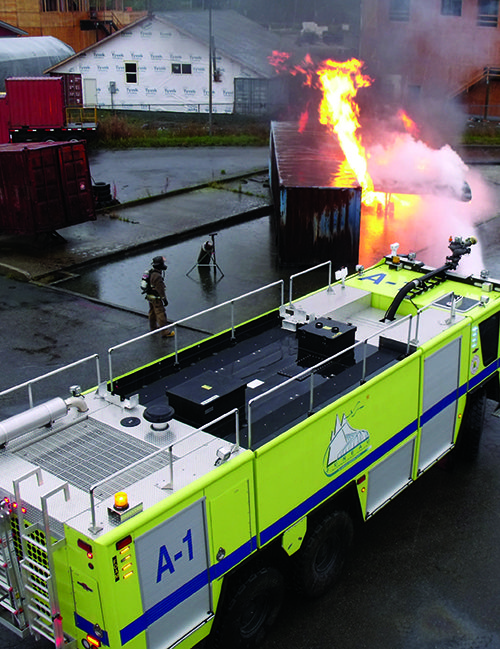
Traffic is changing at Juneau International (JNU), and so is the airport’s emergency response program. As the airfield begins to receive an increasing number of larger-capacity aircraft, officials are enhancing its aircraft rescue and firefighting (ARFF) capabilities accordingly.
Last year, the Alaska airport purchased a $750,000 state-of-the-art ARFF vehicle that is so tall and wide, JNU needed a larger station to house it. The recent $2.6 million renovation project also brought its facility up to FAA specifications and added more room for gear and support functions.
After overcoming space constraints, geological challenges and complications associated with high altitude, Telluride Regional Airport (TEX) in Colorado is thrilled to have a new $7 million deicing pad ready to boost operational efficiency again this winter.
A challenging management issue is emerging at many U.S. airports: As increasing numbers of long-time senior executives prepare to retire, their next-in-line successors typically don’t have the business, management and leadership skills the top positions demand.