For years, leaders at West Woodward Airport (WWR) identified critical infrastructure improvements needed to support growth and economic development throughout northwest Oklahoma. The challenge wasn’t a lack of vision or planning; it was funding.
That changed in September 2022, when the Oklahoma Legislature allocated $20 million to WWR from its $250 million Progressing Rural Economic Prosperity (PREP) Fund. Lawmakers created the fund to help rural communities become more competitive through investments in traditional infrastructure—especially airports. It also complements the $1.8 billion Oklahoma received from the federal American Rescue Plan Act, which funded water, wastewater, broadband and medical projects.
The city-owned airport in Woodward used state PREP funds to execute a comprehensive modernization/improvement program, with an additional $1.5 million FAA award (and associated local contribution) specifically for runway work.
 facts&figures facts&figures
Project: Airport-wide Upgrades Location: West Woodward Airport, in Woodward, OK Key Benefits: Foster economic development for city & region; update infrastructure; prepare for future growth Funding: $20 million from state PREP program; $1.5 million from FAA for runway extension; $34,000 local New Terminal: 5,000 sq. ft. (plus dedicated parking lot); $4 million New Executive Hangar: 17,000 sq. ft., with additional 3,100 sq. ft. of office space & apron expansion; $4.4 million Associated Utilities Infrastructure: $969,000 New Taxilane: 350 ft., plus new access road; $2.6 million Runway/Taxiway Extension: 500 ft.; $7.4 million Apron Reconstruction: 144 x 140 ft.; $2.59 million Land Acquisition: Construction: Spring 2024-Dec. 2026 Funds Distributor/Project Guidance: OK Dept. of Aerospace & Aeronautics Engineering Consultant: HW Lochner (now Lochner, an Egis Company) Architect: GHN Architects + Engineers General Contractor – Terminal & Hangar: W.L. McNatt & Co. General Contractor – Utilities: J.A.M. Construction General Contractor – South Taxilane: Contech General Contractor – Runway & Taxiway Extension; Apron Reconstruction; Partial Runway Rehab: Screed Tech Hangar Door: Norco – Universal Door Systems |
The first round of projects, completed last fall, included:
- a new terminal building;
- an executive hangar with associated taxilane; and
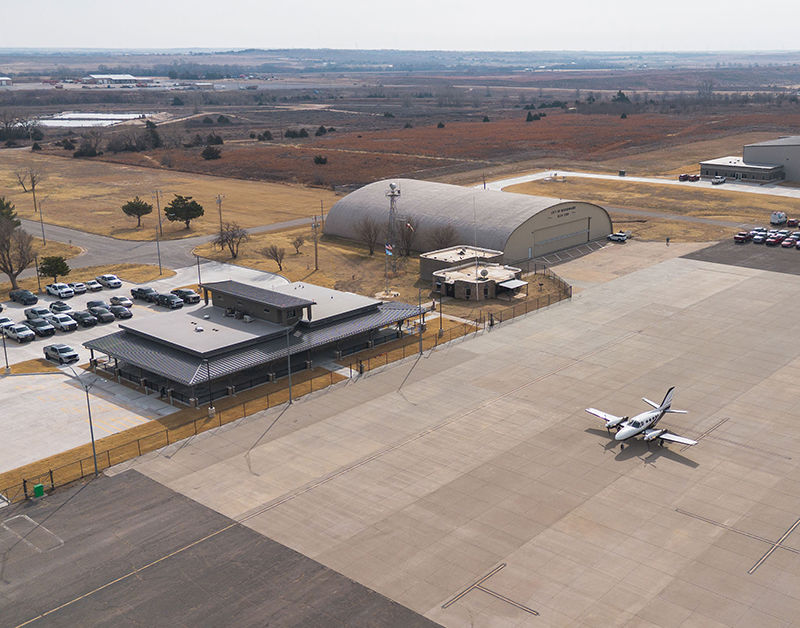
- surface access and utilities improvements, which will open up a new 40+ acre development area.
Pending projects slated for completion by year-end include:
- a runway/taxiway extension that will bring the runway’s total length to 6,000 feet,
- rehabilitation of the existing runway, and
- apron reconstruction.
The Oklahoma Department of Aerospace and Aeronautics (ODAA) oversaw allocation of the PREP funds and is providing project guidance through its revolving five-year Airport Construction Program.
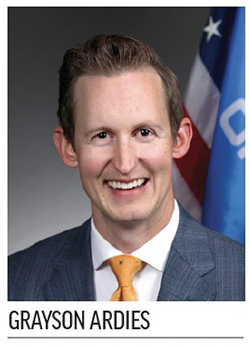
ODAA Executive Director Grayson Ardies notes that the money awarded to WWR will support aviation industrial activity throughout the northwest part of the state. The Legislature assessed opportunities across Oklahoma and determined which airports were best suited for new business activity to ultimately benefit the entire state.
“Our legislature sees this industry [aerospace] as one of the key driving economic forces for the state,” says Ardies. “It’s our second largest and the fastest growing industry, but we want this to be Oklahoma’s No. 1 industry, and it’s going to take infrastructure investment to be able to do that.”
He adds that WWR was a particularly attractive place to invest funds, citing its 5,500-foot runway, ample acreage for development and supportive community primed for strategic growth.
As the county seat and largest community in northwest Oklahoma, the city of Woodward is a three-hour drive from Kansas, Texas, Colorado and New Mexico. Moreover, it is a regional hub for oil and gas, cattle and healthcare, as well as home to attractions like Boiling Springs State Park and recreational hunting lands. “In terms of the geographic proximity of a community that can handle economic growth and activity and prosperity, Woodward checked all the boxes,” Ardies remarks.
With about 6,000 annual operations and 38 based aircraft, WWR serves a diverse mix of traffic: private and corporate planes, visiting medical personnel, agricultural missions and pipeline inspectors—emphasizing Woodward’s importance to the region and state.
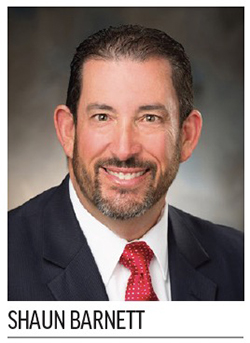
“We are small in population, about 12,000, but we serve some 65,000 people—whether that’s for work, shopping, entertainment or recreation,” says Woodward City Manager Shaun Barnett. “We call ourselves a hub city because we serve all of the communities around us, and our airport is the same way.”
As airport owner and operator, the city established a 2025 budget of $869,000 for WWR and contributed $480,000 from its General Fund to match the revenues generated by land leases and fuel sales.
About five years ago, the city installed a $1.5 million fuel system as part of its larger vision for improving the airport. “After we put in that new system, we heavily increased air traffic,” Barnett reports. “We knew that if we wanted to move forward, we had to have the fuel piece done first.”
Gateway to Growth
Over the past 20 years, industry has grown in the three-mile stretch between the city limits and WWR, and Woodward continues to attract more enterprises that use the airport.
“Like most airports that are set outside of a community like ours, for decades most of the community didn’t even realize we had an airport,” says Barnett. “As we continue to draw companies and businesses in those areas, that gives the community a reason to come out this way.”
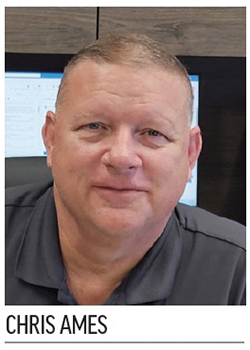
Airport Manager Chris Ames has seen plenty of growth during his three years at the helm. “Oklahoma Gas & Electric just bought one of our buildings. Deep Water Chemicals is here, and a recent rental in one of our buildings off the airport is to A4S, a company that recycles windmill blades from turbines. We have a concrete company in one of our buildings as well,” Ames says, pointing out the diversity of businesses at and near WWR. “Leadership of the city wants this to be the gateway for industries and people to do business in our community.”
 After the state allocated PREP funds, ODAA helped ensure the airport projects aligned with the program’s intent. Ardies recalls the “wants” for Woodward were aviation industrial activity, more overall economic development and additional aviation growth in the region. Meetings were held with city representatives to discuss the vision to transform WWR into an aviation industrial hub.
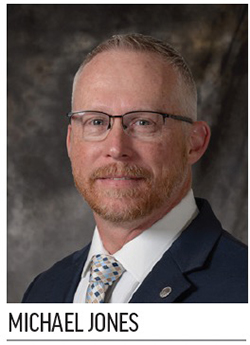
“We were in desperate need for a new terminal and were seeking grants for a new terminal and exploring all kinds of opportunities, but we had not gotten to the design phase. Part of the vision was ours, but ODAA really took the vision a step further,” recalls Assistant City Manager Michael Jones, noting the addition of a large executive hangar and sizable enterprise elements.
The city’s engineer of record, HW Lochner, and its team began with a Type A study to define the project scope, costs and priorities and then developed a plan for the $20 million investment.
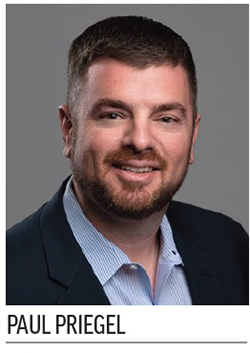 “It’s a little bit different than the capital improvement outlay that we normally work with,” says Project Manager Paul Priegel, A.A.E. “This was truly one of those transformative once-in-a-lifetime or once-in-a-generation projects.”
After the study was completed in June 2023, principals from ODAA, Woodward and Lochner ranked the 10 to 12 projects on its list. “Once we did that, we could prioritize which ones we wanted to do full design on and then advertise for bids,” says Ardies.
“If you look in the report, there were $40 million worth of needs for this airport,” shares Priegel, who formerly served as director of Stillwater Regional Airport, which is about a 2½-hour drive from WWR. “We drew a line and said, ‘Everything above this line, we think we can get done; and anything below, we want to have it on the list in case we can get favorable prices.’” Given the volatile pricing and supply chain challenges during the post-COVID era, accomplishing everything on the list would be tough. “I feel like we really lucked out in hitting things we said we were going to be able to do,” he reflects.
Lochner and subcontractor GHN Architects of Springfield, MO, were already developing a new terminal design when funding was awarded, and that project was then integrated into the larger improvement program.
Bidding and Building
The project team separated the terminal, hangar, taxilane, utilities and runway extension into individual bid packages to attract more bidders. Many local contractors would not be able to handle the size and scope of the entire program, and few have expertise in all of its necessary components. Ultimately, the same low bidder, W.L. McNatt & Co., won both the terminal and hangar projects. The new south taxilane and utilities projects were awarded separately to Contech Inc. and J.A.M. Construction, respectively, so work could proceed concurrently. Screed Tech was general contractor for the runway and taxiway extension, reconstruction of the fuel island apron and rehabilitation of a portion of Runway 17-35.
 Originally, the plan had three phases: 1) greenfield development with utilities, roads and a taxilane, and constructing an executive hangar; 2) a 500-foot runway extension and apron improvements; and 3) adding a smaller business hangar and apron if funds remained.
However, an opportunity to acquire an existing and relatively new business aviation hangar next to the planned terminal site emerged early in the project, eliminating the need for Phase 3. In addition, the city purchased 104 acres of adjacent land to support approach marker placement and allow for future runway expansion. Jones describes the strategy as, “Let’s not plan for tomorrow, let’s plan for 20 years from now.”
Transformative Upgrades
When Ames signed on as airport director three years ago, WWR’s facilities were sparse: a 1,935-square-foot cinder block terminal and round top hangar built in the 1940s, plus four small box hangars that were all leased. “I had no more room. We needed the room,” he recalls.
These days, Ames relishes the new 5,000-square-foot terminal, new 17,000-square-foot executive hangar and recently acquired 7,700-square-foot business hangar, along with the runway extension and other airfield improvements that make the airport more attractive to tenants. “We are always planning for the future,” says Ames. “So as we go along, we could possibly have charter service with regional hops between here and cities like Dallas, Denver, Kansas City, Oklahoma City, etc. We need to have the facilities to do so when we get to that point.”
 With plenty of available land, the airport didn’t have to tear down buildings to make recent improvements. “We built the new terminal between the old terminal and the business hangar,” Barnett explains. Moreover, it plans to repurpose the old terminal into office space and training classrooms, and also reuse the original round top hangar next to the old terminal.
The new terminal features a 24/7 pilot lounge with apartment-style amenities. Other amenities not available around-the-clock include a spacious passenger waiting area and tech-enabled conference room. Per the city’s request, there are also classrooms with movable walls, making the spaces suitable for use by airport staff, community members and potentially flight schools.
Airside, a wraparound porch with rocking chairs and bench seating offers a relaxed place for guests to watch airplanes. It also connects to a food truck area with full utility hookups. “The lobby and some of the rooms inside are built to be converted later into restaurant space,” adds Priegel. “We tried to be forward-thinking in that regard.”
The new 17,000-square-foot executive hangar, located on the south side of the airfield, was designed for the ERJ-145, but with room for several general aviation aircraft. It also has 3,100 square feet of office space, a conference room and a large multi-purpose room that opens into the hangar area. A new taxilane provides direct access to the main runway and parallel taxiway; a new apron facilitates aircraft movement.
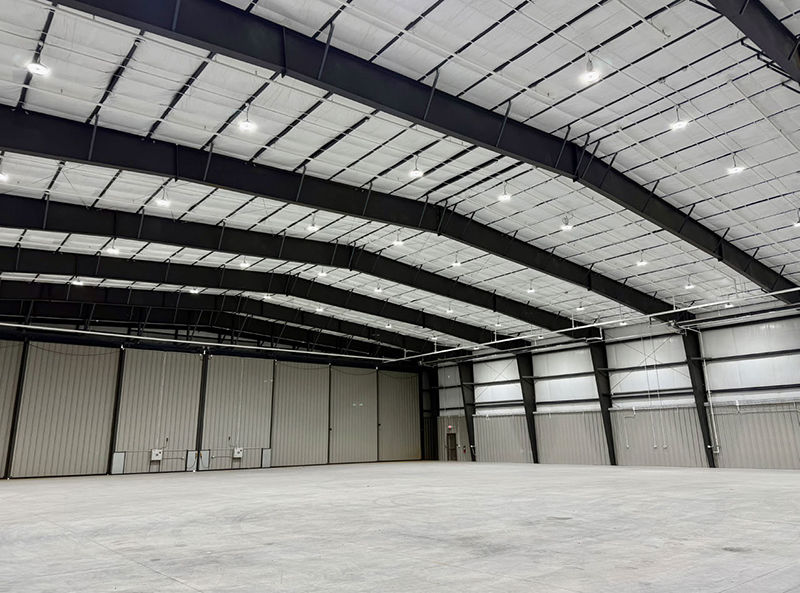
The new executive hangar includes office space, a conference room and a separate multi-purpose room.
All at Once
The projects were put out for bids in spring 2024 and spring 2025, with construction beginning shortly after each. The terminal took about one year to build, and the hangar took slightly longer due to extra lead time needed for materials.
“The terminal was a little bit easier because it was on a site by itself,” says Priegel. “All [the projects] were basically happening at the same time. The utilities were the first ones to start, then the concrete for the taxilane, and then we were doing sitework for the hangar.”
Most challenging aspect for Lochner was coordinating the greenspace development with contractors working on other improvements. “It’s a big space, but it gets pretty small when you start consolidating down and getting next to each other with all the equipment,” Priegel remarks. “Ultimately, it went really well. We always build into our contracts that they have to ‘play nice’ with each other. I would say that this was one of the most complex projects, and it flexed us a lot in terms of the teams that had to work and come together.”
While construction for the various projects had minimal impact on day-to-day airport operations, temporary runway closures were unavoidable. Even so, Ames was intent on continuing to accommodate the airport’s regular users—most notably cardiologists who fly from Oklahoma City to WWR on Tuesdays and Thursdays to care for patients in Woodward.
“We try to find ways to help our customers,” he comments.
 His way of helping included counseling the cardiologists to land at a 5,000-foot unmanned runway in a small town just 20 miles from WWR and providing courtesy cars for them to use from there. The only hitch was that he could not deliver fuel because the airport fuel trucks cannot drive on public roads. So, he reminded the pilots to top off before leaving Oklahoma City. “While it was going on, I thought it was forever. But in hindsight, it was probably 45 to 50 days,” Ames remarks.
Thinking Ahead
Securing additional fixed base operator (FBO) services and signing new commercial aeronautical tenants such as a maintenance, repair and overhaul facility are among the airport’s next objectives.
“I’ve been working with a private fire brigade company out of Texas for that large executive hangar,” says Jones. “We are also targeting a flight school looking to leave California. If we are able to land the fire brigade and the international flight school, it will significantly increase our traffic.”
Other key priorities include:
- leasing the former terminal (or demolishing the building if it remains vacant);
- replacing an asphalt and concrete apron that is deteriorating;
- adding new T hangars;
- developing a site for a maintenance, repair and overhaul hangar; and
- expansion of existing airfield pavement to meet operational and development demands.
The airport would also like to construct and connect large box hangars for use as a shipping facility. The strategy is to leverage Woodward’s central location, highway access and nearby rail systems to attract major carriers like FedEx, Amazon and UPS, while continuing to support existing general aviation customers.
“Overall, the airport should be self-sufficient and with these types of improvements, we are going to get there,” says Barnett. “We have a big vision. We’re going to have to take it in steps, but ultimately, it is to continue to grow and have [more] business here.”
Ames shares that vision. “We try to be a forward-thinking municipality—looking towards what is a possibility for the future and making preparations to have ourselves perfectly aligned for it.”
Priegel sees the recent and ongoing improvements as an important turning point for WWR. “Prior to this [state] money, the airport was just maintaining,” he relates. “This is truly a transformative project that has started a new movement for the airport to always be looking forward.”
For city leaders, the largely state-sponsored airport makeover positions Woodward to attract commerce for community and regional development. “We knew the airport would be a vital piece,” says Barnett, “and we needed that to move our airport forward.”