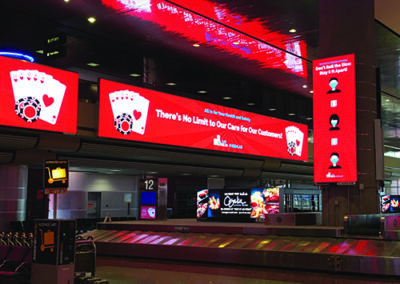
With air traffic down dramatically and the future of the COVID-19 pandemic still uncertain, this has already been a trying year for the entire industry. Many airports are tackling the need for additional communication with employees and passengers by developing public awareness campaigns to emphasize the importance of social distancing, stopping the spread and other key measures.
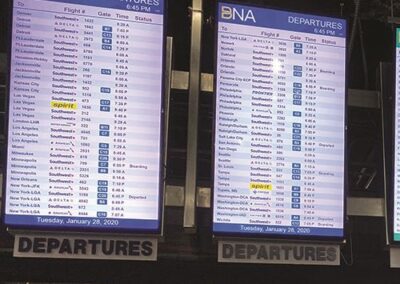
Flight information display systems (FIDS) are a passenger's lifeline. With all the crucial information travelers need to get to their gates on time, they're bound to create an impression on visitors. The real question is whether that impression is positive or negative.
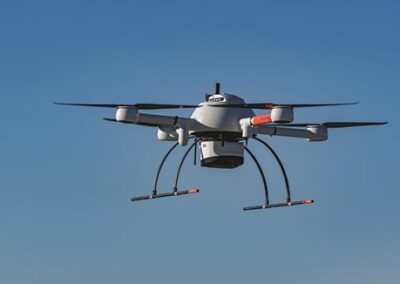
For years, airport operators categorically derided drones as a safety risk and general nuisance. Now, many are putting them to work for security surveillance, wildlife management and other operation-enhancing purposes.
Last spring, David Prince was enjoying a Sunday afternoon barbecue with his family when he received a troubling phone call from work. Employees at Louisville Regional Airport Authority were suddenly unable to open shared files.
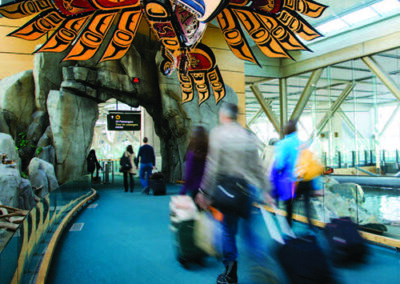
Vili Antic, technical analyst at Vancouver International (YVR), sleeps well at night knowing that a cutting-edge public safety and communications system is in place at the British Columbia airport. The system helps coordinate emergency response from ambulance service, firefighters and police officers, and it receives ongoing updates to add coverage and capacity.
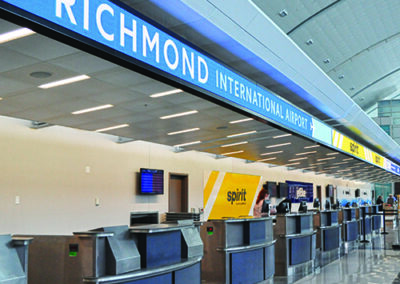
When Richmond International Airport (RIC) built its new terminal in 2007, the original budget included funds for an array of state-of-the-art digital displays in the passenger check-in area. However, escalating construction costs and subsequent value engineering resulted in a much different outcome.
In November 2017, local residents voted in favor of building a new terminal at Kansas City International Airport (MCI), with a resounding 75% saying yes to the project. The terminal is scheduled to open at the end of 2023 on the site of the now-closed Terminal A.
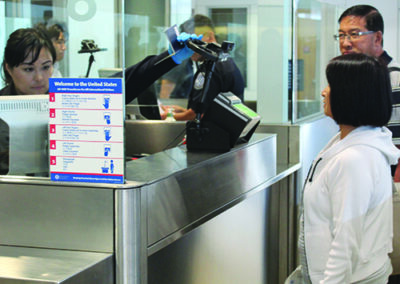
As the gateway to Silicon Valley, it's natural for Mineta San Jose International Airport (SJC) to leverage technology, researched and developed by local tech companies, to solve everyday passenger processing challenges. Of late, the California airport is using biometric facial recognition technology to screen international passengers and is leading the way for other U.S. airports to follow.
Mark Duebner, director of Aviation for Dallas Love Field Airport (DAL), worked for the city of Dallas in various capacities before joining the airport team. (He was even the top civilian commander for the Dallas police.) As he amassed experience in various posts, Duebner developed a strong affinity for cultivating purposefully open and constructive relationships with vendors.
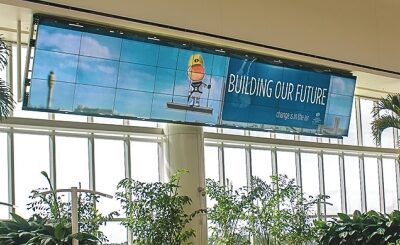
Have you met Annie the Astronaut' Can you spot Fred the Fish' Annie and Fred are just a couple of the creations that Orlando International Airport (MCO) presents to visitors on a digital ecosystem that so far includes 1,231 high-definition displays.
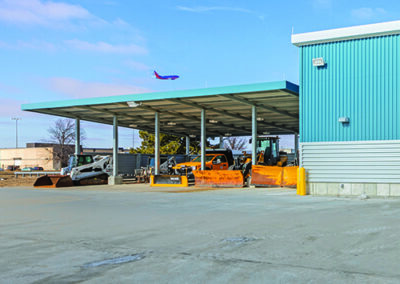
Operations and maintenance crews at Baltimore/Washington Thurgood Marshall International Airport (BWI) are no strangers to winter weather. With more than 600 flights on any given day and annual passenger volumes exceeding 25 million, the airport takes an 'all-hands-on-deck approach' to snowy and icy precipitation.
Whether travelers visit Honolulu for business or the spectacular sun, sand and surf, most bring along multiple electronic devices to keep in touch with friends and associates.