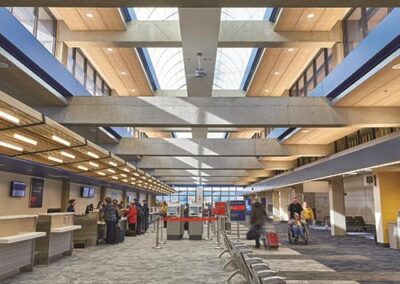
Even though the terminal at Evansville Regional Airport (EVV) was more than 30 years old, personnel there still called it the new building because it replaced the airport's original 1928 terminal. So after crews finished a major runway rehabilitation in 2015, Airport Executive Director Nate Hahn quickly turned his focus to making the 'new building' live up to its name.
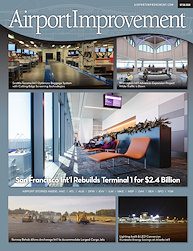
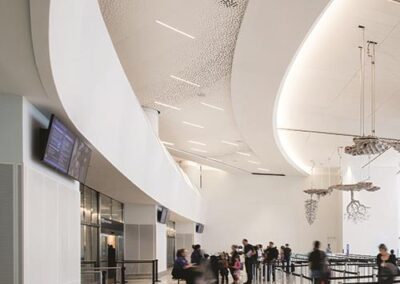
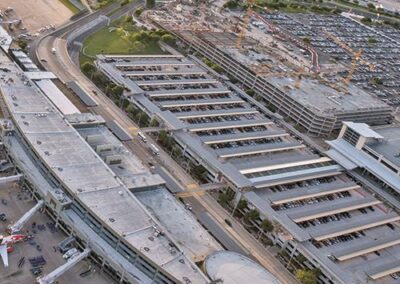
Guided by the ambitious goal of revolutionizing the guest experience, San Francisco International Airport (SFO) is steadily making its way through the $2.4 billion reconstruction of its recently renamed Harvey Milk Terminal 1.
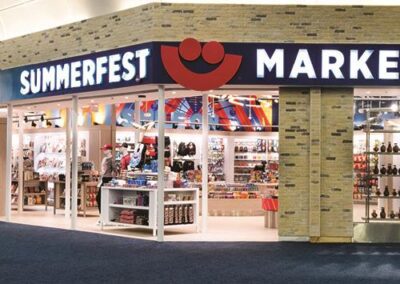
House cleaning and redecorating like company coming to visit. Officials at Milwaukee Mitchell International Airport (MKE) went one step further and completed a $10.5 million concessions overhaul to prepare for a series of important guests expected to arrive soon.
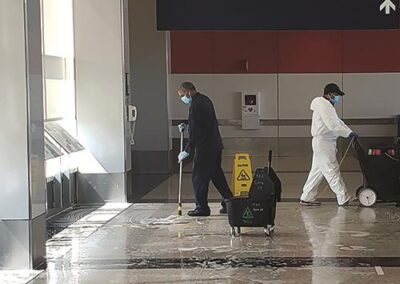
In mid-March, just as most of us started using the phrase 'social distancing' and began wondering how the impending shelter-in-place orders would affect our states, Oakland International Airport (OAK) in California was dealing with one of its first 'unprecedented' events related to the COVID-19 pandemic.
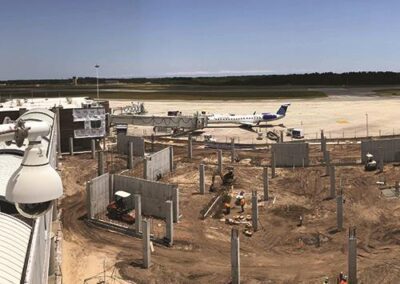
Wilmington International Airport (ILM) in North Carolina has officially turned coronavirus lemons into lemonade. Fueled by vacation and business traffic alike, ILM crossed the 1 million passenger mark last year and was in the midst of a large terminal expansion project to accommodate its rising traffic when the COVID-19 pandemic hit in March.
The emergence of transportation network companies, or TNCs, has been a charged topic in Austin, TX. Uber and Lyft left abruptly in 2016 after a squabble with the city over fingerprinting requirements. One year later, the regulation shifted, and they were back in the city and operating in full force at Austin-Bergstrom International Airport (AUS).
As the world's busiest airport, Hartsfield-Jackson Atlanta International (ATL) spans more than 7 million square feet of property. Naturally, it takes a lot of supplies and materials to keep the facilities that large running smoothly. Everything from carpeting and trash cans to paper towels and window cleaner is purchased and used in high volume.
It's common for airports to uncover unexpected challenges such as unmarked utilities, protected wildlife or even buried aircraft and other military surplus during airfield projects. At Ted Stevens Anchorage International (ANC), the ground beneath the airfield literally shook during its recent runway rehabilitation.
Just as home rennovations turn life upside down for families, infrastructure projects complicate life for airport operators. Kingston's Norman Rogers Airport (YGK) in eastern Ontario, Canada, worked dilligently to keep operations running smoothly for customers while completing $16 million of improvements spanning landside and airside areas alike.
Minneapolis-St. Paul International Airport (MSP) recently completed a roughly $3.5 million project designed to prevent the glycol used to deice planes from potentially seeping into groundwater. By sealing select sections of concrete storm sewers with leak-proof liners, the airport avoided the higher cost and disruption associated with excavating and replacing pipes.