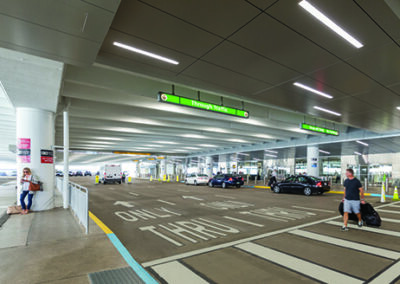
A new $1 million ground transportation management system is dramatically reducing paperwork and helping John Glenn Columbus International Airport (CMH) more accurately account for fees paid by ride-share services and commercial operators that pick up and drop off passengers at the terminal. At the same time, the Ohio airport is enjoying more efficient and orderly taxi dispatching from the holding lot, which minimizes wait times for airport guests.
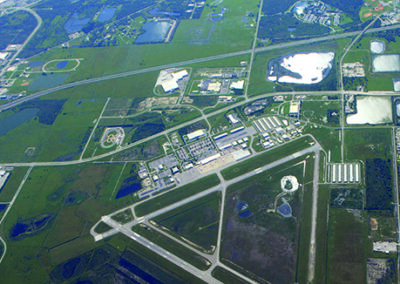
Commercial growth, safe aircraft operations and environmental sensitivity go hand-in-hand at Punta Gorda Airport (PGD) on Florida's Gulf Coast. Toward that end, the airport's 2018 master plan update dovetails with its wildlife hazard management program. A big part of the equation is environmental stewardship and managing wildlife hazards to enhance airfield safety.
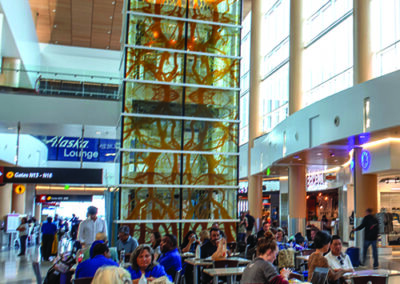
When Seattle-Tacoma International Airport (SEA) built its terminal and two satellites in the late 1960s and early '70s, officials hailed the new facility as the 'Jet Port of the Future.' But that was decades ago. In 2013, SEA launched the North Satellite Modernization program to update its outdated, nearly 50-year-old concourse and address seismic issues that emerged after an earthquake in 2001.
The Green Plate Program, introduced just a few months ago at Portland International (PDX) in Oregon, gives customers at its main pre-security food court the choice of having their food prepared 'for here' or 'to go.' Meals ordered 'for here' are presented on melamine dishes, with drinking glasses and metal silverware that are washed and used again. Customers who want their orders 'to go' receive them in disposable paper and plastic containers, with plastic silverware.
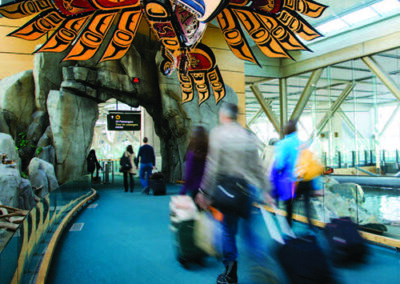
Vili Antic, technical analyst at Vancouver International (YVR), sleeps well at night knowing that a cutting-edge public safety and communications system is in place at the British Columbia airport. The system helps coordinate emergency response from ambulance service, firefighters and police officers, and it receives ongoing updates to add coverage and capacity.
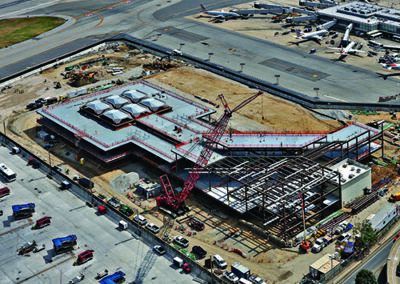
With structural steel still being erected for the $1 billion terminal expansion/renovation at Reagan National Airport (DCA), a new concessions lineup is already in the works. Ten concessionaires are being selected this fall for the new facility that is scheduled to open in 2021.
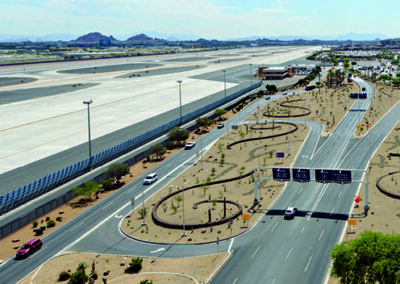
Over the last two years, Phoenix Sky Harbor International Airport (PHX) has transformed its lush green landscape into an eye-catching desert environment that requires less water and reflects the region's natural beauty. The move from grass and deciduous shrubs to rocks and native flora is expected to reduce the Arizona airport's annual water usage by 5.375 million gallons and save about $425,000 per year.
In our risk-averse airport industry, green projects were once viewed as politically motivated ideas championed by hippy, left-leaning activists. Now they?re being recognized as smart.
Booming. Surging. Growing. Like oil production in the Bakken formation, that's what is happening to communities in the northwest corner of North Dakota. In fact, a brand new $275 million airport, Williston Basin International (XWA), opened in October to keep up with the unprecedented economic expansion.
Austin, TX, is booming with tech companies galore, a vibrant arts scene and a calendar full of large festivals that attract hundreds of thousands of people to the growing area. Amid the hustle and bustle, executives at Austin-Bergstrom International Airport (AUS) are looking down the road five, 10 and even 20 years to predict passenger needs.
When Philadelphia International (PHL) wanted to upgrade its asset management system to a more robust tool, the project team talked with personnel at other airports about their experiences. As the Pennsylvania airport continues to deploy its upgrade, PHL Enterprise Asset Manager Milton Robinson is sharing his department's experience to help other airports reap similar benefits.
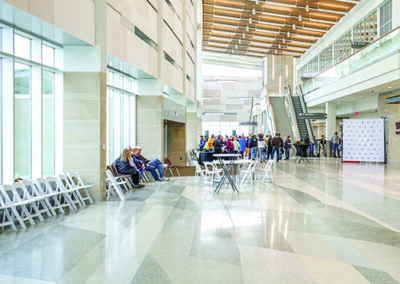
How does a small airport with an aging terminal meet the needs of today's travelers without breaking the proverbial bank' That was the bottom-line conundrum at Erie International Airport (ERI) in Pennsylvania. In total, construction lasted six months and cost $500,000. The airport completed the project in August'a timely finish given its recent rise in air traffic.
One year after a man went on a shooting rampage near the baggage claim area at Fort Lauderdale-Hollywood International Airport (FLL), the Broward County Commission passed an ordinance requiring all aviation employees to receive emergency response training. Before the 2018 resolution, airport workers received security training, but many tenant employees did not.