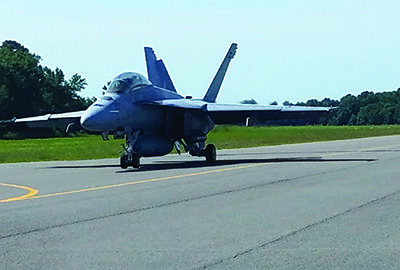
Naval Air Station Oceana (NTU) in Virginia Beach, VA, is moving into the final stretch of a $120 million airfield project to reconstruct one runway and replace aging incandescent airfield lighting with energy-saving LED fixtures.
Like other airports, Cincinnati/Northern Kentucky International (CVG) in Hebron, KY, is in the people transport business; but it's also in the business of moving stuff. And the 'stuff side' of the business is doing quite well. In fact, CVG is the fastest-growing cargo airport in the United States. It's also the eighth largest cargo airport in the country, and the 34th largest in the world.
When it comes to runway safety, Tucson International Airport (TUS) isn't waiting for an accident or regulatory sanctions to make improvements. It's acting proactively.
After a series of surface-level fixes throughout the years, it was high time the runways and related infrastructure at Oshawa Executive Airport (YOO) in Ontario received the upgrades they truly required. The only question for the project team was how to make up for nearly 80 years of patchwork solutions in just 35 days.
With a single runway handling 10.5 million passengers annually, John Wayne Airport (SNA) relies on safe nighttime operations to maintain its carefully orchestrated traffic schedule.
In late August after the AMAC Annual Conference in Seattle, my wife and I decided to explore the beautiful Northwest by visiting nearby Victoria, BC, on Vancouver Island. It?s quite impressive!
Officials at Jackson County Airport/Reynolds Field (JXN) in Michigan are pleased with the results of a $49 million runway project completed last fall, because they see it improving operational safety, creating new opportunities to generate more revenue and bolstering the airport's position as a local driver of economic growth.
Like oil and water, wildlife and aircraft just don't mix. The U.S. Department of Agriculture (USDA) reports that civilian aircraft suffered 13,000 wildlife strikes at 662 U.S. airports in 2016 alone. While many incidents are minor, some have devastating consequences. Between 1990 and 2016, wildlife strikes resulted in 262 human fatalities at U.S. airports, and 247 civil aircraft were destroyed or damaged beyond repair.
Roger Moats, airfield maintenance manager at Tulsa International Airport (TUL), understands that flight safety begins and ends on the ground. It's why he regularly emphasizes to his crew the importance of their work.
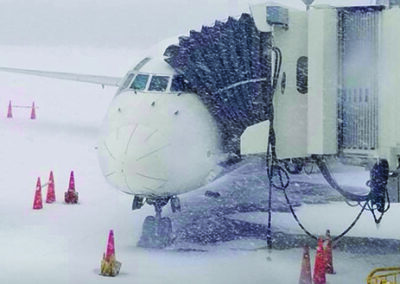
Even during the most bitter winters, the Southern port city of Charleston, SC, seldom experiences a deep freeze. But last winter proved to be a major exception. Winter Storm Grayson shocked residents and effectively closed the airfield shared by Charleston International Airport (CHS) and Boeing SC at U.S. Air Force Joint Base Charleston from Jan. 3 to 7.
The central location of Dallas Love Field (DAL)'just seven miles northwest of the downtown business district'is a double-edged sword. While ultra-convenient for travelers, the airport is surrounded on nearly all sides by residential developments, which presents myriad challenges when it comes to 'keeping the peace.'
Key West may be a small town of only 25,000 residents, but it's a thriving tourist spot that's growing in popularity. As a result, passenger traffic at Key West International Airport (EYW) is also projected to rise'to the tune of 2.4% per year for the next 20 years. Airport executives estimate that 750,000 travelers will pass through their island facility by the end of 2018.
Operations and maintenance crews at Baltimore/Washington Thurgood Marshall International Airport (BWI) are no strangers to winter weather. With more than 600 flights on any given day and annual passenger volumes exceeding 25 million, the airport takes an 'all-hands-on-deck approach' to snowy and icy precipitation.