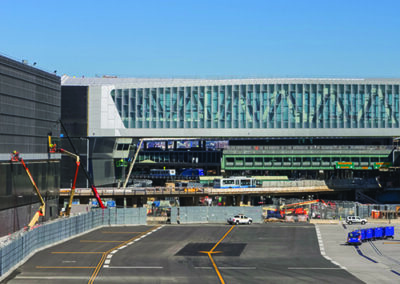
At long last, the day has arrived?your brand-new, state-of-the-art terminal is open. Thanks to hard work and a great team, Opening Day was smooth as silk.
New York is the city that never sleeps. That's the level of energy brought by the private consortium that recently redeveloped the Terminal B Arrivals and Departures Hall at LaGuardia Airport (LGA), one of the largest airport construction projects in the world.
From the very onset of the COVID-19 crisis, Los Angeles World Airports has been aggressively pursuing new processes, protocols and technologies to keep Los Angeles International Airport (LAX) clean, healthy and safe for employees, tenants and passengers.
When Louis Armstrong New Orleans International Airport (MSY) officially opened the doors of its new terminal in November 2019, the facility gleamed. The concourses and updated finishes literally transformed the way nearly 25,000 passengers traveled through the airport each day. But shortly after the grand opening, cleaning challenges emerged that threatened the image and reputation of the city's flagship airport.
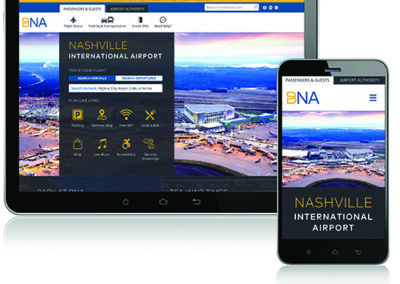
Nashville International Airport (BNA) has completed numerous brick-and-mortar improvements in recent years to keep pace with the region's booming economy and population growth. And now, BNA has an improved online presence as well.
As the general public continues to shy away from commercial air travel during the ongoing COVID-19 pandemic, airports are finding new ways to keep their important infrastructure improvements on track. Teams supporting projects in Pittsburgh and Puerto Rico, for instance, learned how to keep projects moving during shutdowns in March. Leveraging remote technologies that allowed personnel to work from home proved pivotal in both cases.
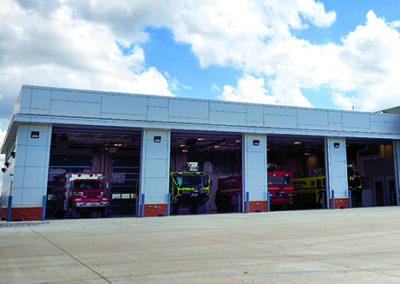
Lexington Blue Grass Airport (LEX) is on pace to open a new three-story aircraft rescue and firefighting (ARFF) facility in August. Completion of the $15 million ARFF station moves the Kentucky airport one important step closer to finishing its five-phase program to enhance taxiway safety.
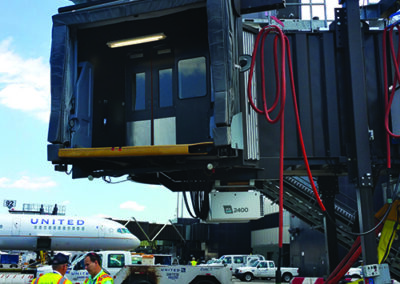
Change is happening on the tarmac at Newark Liberty International Airport (EWR) as United Airlines decentralizes its aging ground power systems in favor of new point-of-use ground power units (GPUs). The move is designed to improve the efficiency of ramp operations by providing more flexibility, reliability and redundancy.
As part of its ongoing commitment to customer service, Chicago O'Hare International Airport (ORD) refreshes its restroom facilities on a rotating three-year cycle. 'They get a lot of traffic, so the goal, with the support of our airline partners, is to keep a nice, updated, uniform design throughout our terminals,' explains Alex Leon, deputy commissioner of design and GPS for the Chicago Department of Aviation.
San Francisco International Airport (SFO) is turning heads with the architecture and art in Harvey Milk Terminal 1, but the rebuilt facility also includes some important less visible features. The new baggage handling system is one of its hardest-working hidden gems.
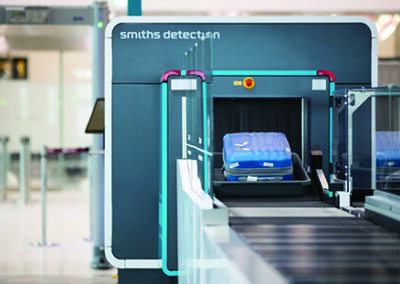
The same high-tech scanning technology that's used for medical imaging and screening checked baggage is gradually transitioning to passenger checkpoints at dozens of U.S. airports. As of mid-July, TSA had installed 123 computed tomography (CT) scanners at 41 airports around the country, with even more installations slated in coming years. The upgrade represents a considerable step forward in the technology used to screen passengers' carry-on bags and other items.
The Ocean City, NJ, area is known for beaches, boardwalks and unspoiled hiking areas. But some of the very features that make it attractive for tourists and outdoor enthusiasts make it difficult for the local general aviation airport. Located on a barrier island between the Atlantic Ocean and Great Egg Harbor Bay, Ocean City Municipal (26N) is prone to erosion problems from high tides and safety hazards from birds.
With air traffic down dramatically and the future of the COVID-19 pandemic still uncertain, this has already been a trying year for the entire industry. Many airports are tackling the need for additional communication with employees and passengers by developing public awareness campaigns to emphasize the importance of social distancing, stopping the spread and other key measures.