Airport owners and operators are increasingly adopting pavement preservation strategies that extend the service life of asphalt runways, taxiways and aprons. In doing so, they also help delay costly rehabilitation and reconstruction projects. The growing emphasis on proactive preservation coincides with the pending release of FAA Advisory Circular 150/5370-10J, Standards for Specifying Construction of Airports, which will update the agency’s pavement preservation specifications.
By the time distress is visible on airfield asphalt surfaces, deterioration has likely been well underway for years. Rather than waiting for visible signs of deterioration to develop, many airports are incorporating preservation treatments much earlier in a pavement’s life cycle to slow oxidation, maintain pavement condition and maximize the return on significant infrastructure investments. Three strategies in particular are becoming more common:
- Sealing newly constructed pavement before significant oxidation occurs;
- Using rapid-cure preservation materials during overnight closures to minimize operational disruptions at busy commercial airports; and
- Applying preservation treatments to extend the service life of structurally sound pavements with lower Pavement Condition Indices due to high weathering or raveling while working to secure funds for major rehabilitation.
All three approaches reflect a shift toward long-term management rather than reacting after deterioration becomes apparent.
Several factors have contributed to this shift over recent years, including substantial increases in construction costs and longer planning, review and funding cycles for rehabilitation projects. At the same time, however, airports are expected to maintain safe, reliable airfields with minimal disruption to operations.
Dustin Warren, airport manager at St. George Regional (SGU) in Utah, says his experience as an airport maintenance supervisor and airport manager has fundamentally changed how he views pavement preservation. From the maintenance perspective, Warren focused on pavement performance, material behavior and construction timing. As an airport manager, however, he sees pavement as a capital asset tied to FAA funding cycles, regulatory compliance, operational risk and airport revenue. “Preservation is infinitely cheaper than reconstruction,” he emphasizes. Waiting for pavement to fail turns what could have been a relatively low-cost maintenance decision into a major capital project that can take years to fund and complete.
 The financial advantages become even more compelling when airports view preservation as a long-term process rather than a one-time maintenance activity, says Jared Manning, a regional manager with Asphalt Systems Inc. “Rehabilitation is 10 times the cost of preservation, and reconstruction is 40 times the cost of preservation,” Manning remarks. By extending pavement life, airports can gain greater flexibility to secure funding and direct funds where they are needed most.
That evolution is evident not only in FAA’s 2025 draft version of AC 150/5370-10J, but also in the products airports are using. Mike Beckhoff, vice president of Airport Engineering with LJA Engineering, has observed a significant shift during his 20+ years working with airport preservation programs across multiple states. “Many years ago, it was quite common to see SS-1 emulsified asphalt in fog seal applications, which in my opinion did little more than leave a nice shiny black surface,” Beckhoff explains. “SS-1 has been completely replaced by dedicated preservation treatments like GSB-78 and GSB-88.” As a result, well-maintained pavements are lasting significantly longer than they once did, he adds.
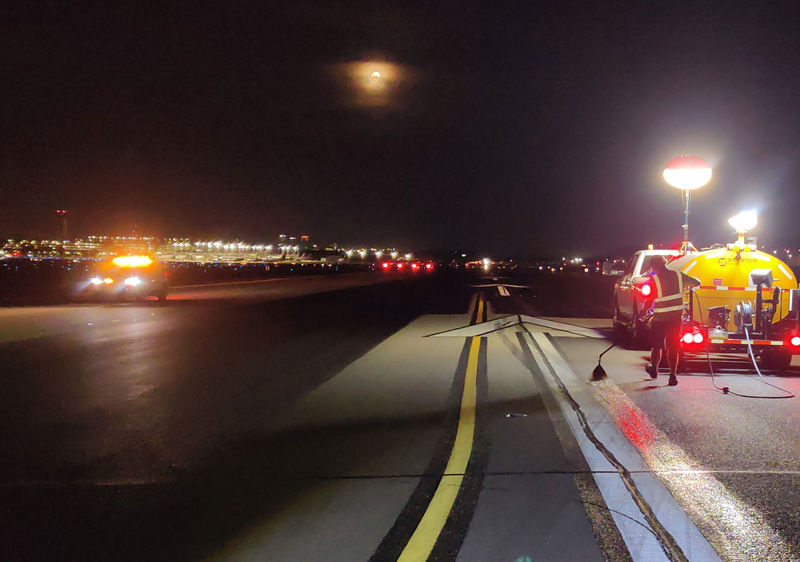
Crews at Birmingham-Shuttlesworth Int’l used a fast-curing treatment and worked during short overnight runway closures.
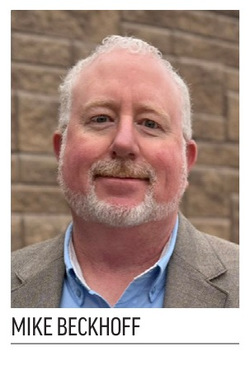 The anticipated AC changes emphasize this preservation evolution. Industry watchers expect P-608 and the draft P-608H specifications to become P-628, while P-608-R is expected to become P-628-R. Charlie Miller, a regional manager with Asphalt Systems Inc., explains that the renumbering reflects FAA’s effort to consolidate pavement preservation specifications within the P-620 series while incorporating the heavier preservation treatment that has been proven through field applications.
Previously, many airports delayed action because newly constructed pavement appeared to be performing as expected. Treatments were often applied only after visible distress such as oxidation or raveling became evident.
Some airport owners and operators continue to underestimate how quickly oxidation begins after construction. “Most people think because the pavement is new that it doesn’t need protection from the elements. However, new pavement is just as susceptible to aging as older pavements,” Miller says. “A pavement going from 100 to 80 PCI [Pavement Condition Index] will still look great, but you lost 20 points of PCI and didn’t start flattening the deterioration curve earlier, meaning the life of the pavement will be shorter.”
Sooner Than Later
Scott County Airport (SCX) in Oneida, TN, opted for prompt preservation when reconstructing its runway in 2022. Rather than waiting several years, airport leadership chose to have crews apply a construction seal almost immediately as part of its long-term management strategy.
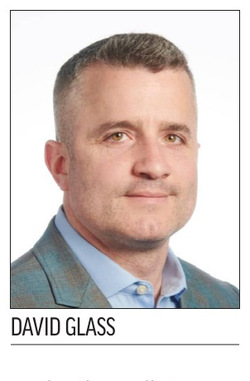 David Glass, a civil engineer with Goodwyn Mills Cawood, says the design team incorporated an FAA P-608 construction seal into the overall runway rehabilitation project rather than treating preservation as a separate maintenance activity later. Glass says the newly constructed runway was an ideal candidate for preventive maintenance because the surface was free of significant cracking, rutting and other distress. Applying the construction seal immediately after construction helped reduce pavement permeability, minimize early oxidation and preserve the airport’s initial investment, he explains.
Airport Manager Hank Duvall describes the decision as a no-brainer, because it will extend the life of the pavement and support long-term capital planning. “It should help so we can save up enough to do full paving,” he says.
According to Manning, the effects can be significant. “If you start preservation early and continue to preserve routinely, an airfield asphalt pavement’s life can be extended for decades,” he says. “We have examples of pavements lasting 35+ years and likely will last 40 to 45 years before needing rehabilitation or reconstruction.”
Although LJA was not involved with this particular project, Beckhoff recommends applying the first P-608 preservation treatment approximately three years after a new runway is constructed, followed by reapplications every four to five years. He also suggests sealing cracks much more frequently because open cracks accelerate pavement deterioration.
Preserving Service Schedules, Too
For many commercial airports, deciding to preserve airfield pavement is easy. However, finding time to complete the work is much more difficult because airlines understandably oppose extended runway closures.
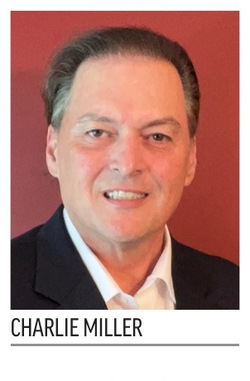 Advances in pavement preservation materials have helped address that challenge. Rapid-curing treatments now allow preservation projects to be completed during overnight closure windows—facilitating project schedules that would have been impossible only a few years ago. “P-608-R (soon to be P-628-R) was developed for airports that cannot shut down airfields or runways for 24 hours,” Miller explains.
That was the case at Birmingham-Shuttlesworth International Airport (BHM) in Alabama, which opted to apply a fast-curing treatment on Runway 6-24 during a series of short overnight closure periods rather than a single, longer closure. This allowed commercial carriers to maintain their daytime operations as usual.
Marcelo Lima, vice president of Planning and Development with the Birmingham Airport Authority, notes that the runway still had useful pavement life, but several years had passed since it had been significantly improved, and new and expanding cracks were becoming evident. Because 6-24 is BHM’s primary runway and the preferred option for airline and cargo operators, airport officials wanted to extend its service life without disrupting daily commercial operations.
Naturally, the project still required extensive coordination among air carriers, engineers, contractors, air traffic control, airport operations and the FAA. Lima says conversations with the airlines helped establish a work window of midnight to 4 a.m., while coordination with air traffic control addressed runway crossings and access points during closures. The airport operations team was responsible for issuing the necessary Notices to Airmen (NOTAMs) and notifications each night.
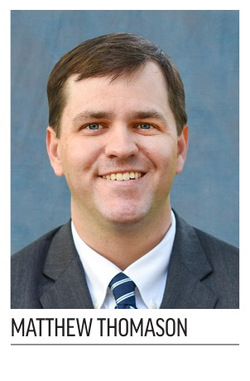 Matthew Thomason, associate vice president of Aviation with RS&H, notes that minimizing impacts to airline operations was a primary objective from the outset of the project. As such, it influenced virtually every aspect of planning, from selecting the preservation treatment to establishing realistic nightly production goals.
Although the runway was closed for approximately four hours each night, the actual window crews had to work was closer to two hours due to critical but time-consuming closure and reopening procedures. To enhance efficiency during each shift, one subcontractor was solely dedicated to installing and removing closure barricades so construction crews could focus exclusively on their work.
Recognizing that every step had to be completed on time for the runway to safely reopen each morning, the project team devoted considerable effort to preconstruction planning. “We performed trial runs ahead of the work to make sure the contractor could complete each night’s work within the allotted closure period,” Thomason recalls. Those exercises allowed the team to reduce uncertainty once the runway was closed each evening.
Miller agrees that detailed planning is critical because compressed construction schedules leave little room to recover from delays once the runway is closed. He emphasizes the importance of establishing procedures for equipment staging, material deliveries, staffing levels, quality control procedures and contingency plans before construction begins so every available minute can be devoted to production rather than problem-solving.
Weather was a variable that received constant attention throughout the project at BHM, as preservation treatments require specific environmental conditions for proper application and curing. “This can be hard to predict in Birmingham, so a go/no-go decision with the contractor and Airport Operations was made each night prior to closing the runway,” Thomason explains. “If there was any doubt about clear weather for the entire shift, a no-go decision was made and that night’s work was postponed.”
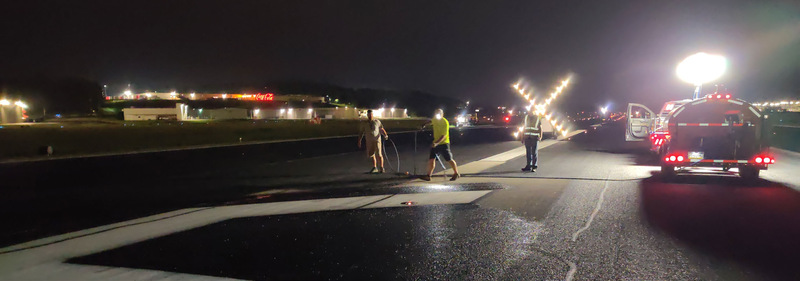
Fresno Yosemite Int’l is leveraging asphalt preservation until full runway reconstruction is possible.
Despite weather delays and occasional adjustments to accommodate late-arriving flights, the construction phase remained on schedule and ultimately came in under budget. The nighttime strategy also achieved its primary operational objective. “The most important benefit was that BHM did not experience any delays or cancellations due to the project,” Lima says. “Airfield work is inevitable, and if you can successfully complete it without major impacts to flight operations, that’s always a huge win.”
In a similar vein, SGU in Utah typically schedules its pavement maintenance during overnight closure windows to avoid disrupting commercial service. While nighttime work minimizes impacts to airlines and passengers, the associated cooler temperatures can increase curing time of treatments, which requires more demanding quality control under portable lighting and increases contractor costs. Even so, SGU Airport Manager Dustin Warren says those costs are outweighed by avoiding the operational and economic impacts associated with daytime runway closures.
The projects at BHM and SGU illustrate that treatments to extend pavement service can be applied in a manner that minimizes impacts to airlines, tenants and the traveling public. For other airports, the primary challenge is not finding time to complete the work; it’s securing the necessary funds to address aging pavement. In those situations, preservation serves a different purpose: buying valuable time until larger capital improvement projects can be completed.
Biding Time
Using customized preservation techniques while larger rehabilitation projects move through lengthy design and funding processes has become increasingly common as construction costs continue to rise. They can also provide a greater return on investment than allowing deterioration to progress while waiting for rehabilitation funding to become available.
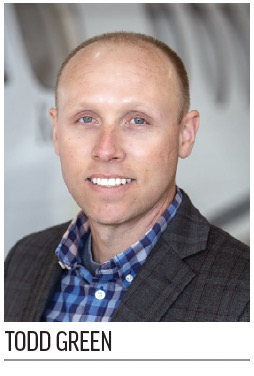 The Colorado Division of Aeronautics has incorporated this philosophy into its statewide pavement management strategy. Deputy Director Todd Green explains that high elevations, intense sun exposure, low humidity and major temperature swings throughout the state accelerate weathering and oxidation, often shortening pavement life if left unchecked. “The Division of Aeronautics has always been a strong proponent of pavement preservation,” Green says. “The goal is to maximize pavement life while making the best use of available funding.”
This approach allowed Southeast Colorado Regional Airport (LAA) in Lamar, CO, to address a growing concern with its crosswind runway. The pavement had noticeable oxidation and cracking, yet rehabilitation funding was not immediately available. Airport officials recognized that continued deterioration could jeopardize the runway in the meantime.
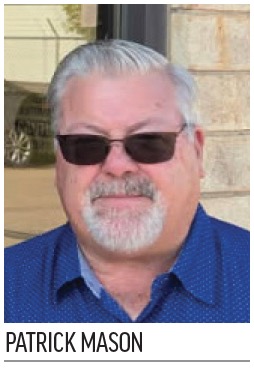
Rather than waiting for conditions to worsen, the Colorado Division of Aeronautics worked to preserve the existing pavement and extend its useful life. “The overall goal was to save our crosswind runway from closure in the near term in order to give us more time to acquire funding for future rehabilitation,” explains Patrick Mason, public works director for the city of Lamar. The preservation project received approximately $300,000 in discretionary funding from the Colorado Division of Aeronautics, and the city provided the required local share.
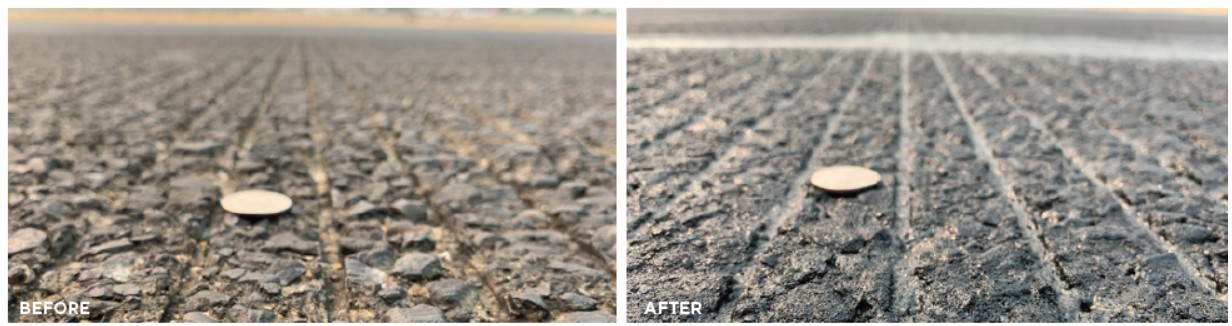
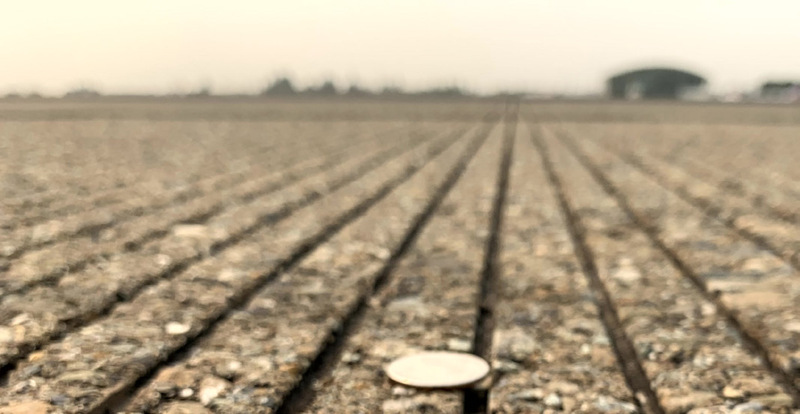
 Now, more than two years later, the intervention has been deemed a success. “The runway has held up very well,” Mason reports. “There has been virtually no additional raveling since the treatment.” Without it, he says the airport likely would have faced a very different situation: “There is a good chance we would have had to close the crosswind runway until funding for rehabilitation could be procured.”
Manning says this case at LAA illustrates how preservation can help airports bridge the gap until funding is available. “It shows that we can slow down the deterioration of pavements and extend out the inevitable—which is a costly rehab or, in Lamar’s case, a very expensive reconstruction,” he remarks.
Fresno Yosemite International (FAT) faced a similar challenge in 2021. The California airport needed to stabilize a runway with severe weathering and raveling until reconstruction funding became available. “We considered mill and overlay and reconstruction,” recalls Heath Hildebrandt, engineer with Kimley-Horn. “Ultimately, we ended milling and overlaying the really bad keel section and sealing the other areas [with P-608].”
 In his experience, P-608 preservation treatment is a cost-effective way to stabilize deteriorating runway pavement and reduce associated foreign object debris. At FAT, Hildebrandt estimates it extended the useful life of Runway 11L-29R by five years and reduced the need for intermittent runway closures while reconstruction planning continued.
Taos Regional Airport in New Mexico (SKX) also used P-608 pavement preservation as an interim strategy. In 2023, Runway 4-22 was weathering, raveling and cracking, with a PCI of 55; but rehabilitation funding remained several years away. Leadership consequently opted for a P-608 treatment to help keep the runway open and operating safely.
Greg Fuller, a regional manager with Asphalt Systems Inc., explains that the treatment is designed to restore damaged surface binder, reduce continued aggregate loss and protect the pavement from further environmental deterioration. He reports that the runway at SKX has performed without issues since application, and estimates the airport gained about two additional years of service before scheduled rehabilitation.
 Cases like the one at SKX are more common than many realize, Fuller says. Even with a thoughtful management program in place, pavement can deteriorate much faster than expected. “It’s in these situations when a treatment proven to delay costly rehab becomes a critical tool in the preservation toolbox,” he comments. He counsels engineers evaluating whether preservation can successfully bridge a funding gap to consider how long rehabilitation funding will take to obtain, the pavement’s PCI, the severity of observed distresses and the operational consequences if pavement must be removed from service.
Which One?
Choosing the right preservation treatment is just as important as when it is applied, Fuller advises. And selection should be based on the unique pavement conditions and operational challenges of each airport. He says one common misconception is assuming products designed for pavements early in their lifecycle will be equally effective on those approaching rehabilitation.
However, there can be a point of no return. “When weathering of the surface turns into raveling of the aggregates from the surface, generating FOD, it may be too late to begin preservation,” Beckhoff notes.
Fuller agrees that preservation isn’t always the fix. “Typically, when the hot mix asphalt has failed structurally, the pavement isn’t a candidate for delaying costly rehab,” he says. However, he adds that each project should be evaluated individually because some severely deteriorated pavements can still benefit from robust preservation treatments when rehabilitation funding is unavailable.
Warren, from SGU, says that one of the most common mistakes airports make is expecting preservation treatments to solve structural pavement problems. “Applying sealcoat over cracked, rutted or subgrade-failed asphalt is burning money,” he remarks. “Seals protect good surfaces; they cannot fix bad foundations.” He also emphasizes that delaying routine crack sealing allows water to penetrate beneath the pavement surface and accelerate deterioration of the underlying base.
Forward Progress
Speaking from a product manufacturer’s viewpoint, Manning interprets the growing acceptance of pavement preservation as confidence in both the research and the onsite results.
“Preservation is a process,” he adds. “It’s not a one-time deal.” If started early and continued routinely, he says treatments can extend the life of airfield asphalt for decades. “It is important to protect and preserve an airport’s pavement assets,” Manning emphasizes. “There is only one way to do that, and that is to start preserving early and keep preserving routinely.”
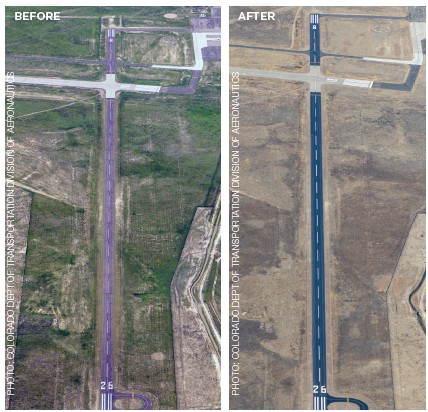
The difference after P-608H treatment is evident at Southeast Colorado Regional.
As an airport manager and former airfield maintenance supervisor, Warren highly recommends routinely sealing cracks to prevent water from reaching the pavement base. This can significantly delay more expensive rehabilitation and help stretch limited maintenance budgets, he explains.
“Preservation isn’t an expense; it’s capital protection,” Warren reasons. “You can either spend $3 per square yard every four years to maintain pavement, or you can explain to the City Council and FAA why you need $60 per square yard in 10 years when the runway breaks up—and why the airport will be closed for three weeks to fix it.”
Beckhoff stresses the value of consistent attention. “Far and away, the biggest single mistake that I see airports make is ignoring their pavements altogether,” he comments. Beckhoff also encourages managers to visit airports with successful preservation programs to compare long-term pavement performance and capital improvement plans. “The proof is out there!” he proclaims.
| FACTS&FIGURES |
|
Project: Runway Construction Seal Location: Scott County Airport, in Oneida, TN Runway: 5-23 Scope: Runway, taxiway & full lighting rehabilitation; mill & overlay, construction seal & paint on 5,502 ft. x 75 ft. section Cost: $4.9 million Funding: 90% FAA, 5% state, 5% local Schedule: Applied 1 month after reconstruction in 2022 Project Designer/Engineer: Goodwyn Mills Cawood Product: GSB-88, from Asphalt Systems Inc. Key Benefits: Extended pavement life; delay of full paving; long-term pavement management; preserving condition before significant oxidation occurs Project: Runway Pavement Preservation Location: Birmingham-Shuttlesworth Int’l Airport, in AL Runway: 6-24 Scope: 365,000 sq. yd. of P-608-R asphalt surface treatment; 395,000 linear ft. of asphalt crack-sealing; 300,000 sq. ft. of airfield pavement markings Cost: Nearly $6 million Funding: 90% FAA Airport Improvement Program grant; 10% Birmingham Airport Authority (cost incorporated into airline rates & charges) Strategy: Apply fast-curing treatment during 4-hour nighttime closures to preserve daytime airline operations Timeline: March 2022–Jan. 2023 Project Engineer: RS&H Contractor: JJ Cunningham LLC Product: GSB-78, from Asphalt Systems Inc. Notable Details: Trial runs tested procedures & logistics before project began; dedicated subcontractor managed runway closure barricades; extensive coordination among airport staff, contractor, FAA & engineering team Key Benefits: No flight delays or cancellations attributed to project; work completed on schedule & under budget; preserved pavement while minimizing operational impacts Project: Preserving Runway Until Rehabilitation Location: Southeast Colorado Regional Airport, in Lamar, CO Strategy/Scope: After the city/airport sealed cracks & completed skin patching, crews sealed existing pavement with GSB-88 1:1 dilute as a prime coat to get as much binder into the pavement as possible before applying GSB-88-Heavy on entire runway the next day Schedule: Oct. 2023 Strategy: Applying preservation treatment to oxidized & cracked runway to extend its service life while rehabilitation funding is pursued Product: GSB-88-Heavy (P-608H—soon to be P-628H, which is P-628 Concentrate), from Asphalt Systems Inc. Key Benefits: Prevented near-term runway closure; extended useful life; virtually eliminated additional raveling for 2+ yrs. after treatment Project: Preserving Runway Until Rehabilitation Location: Taos Regional Airport, in NM Runway: 4-22 Scope: Crack sealing, seal coating of 45,867 sq. yd. Cost: $371,433 Funding: 90% FAA, 10% state & local Schedule: Oct. 2024 Strategy: Addressed weathering, raveling & cracking; restored asphalt binder near surface; reduced aggregate loss; protected pavement from continued oxidation Product: P-608 2:1 dilute with 2.5% polymer, from Asphalt Systems Inc. Key Benefits: Extended runway service life; facilitated regular airport operations; preserved pavement until rehabilitation funding becomes available Project: Preserving Runway Until Full Reconstruction Location: Fresno Yosemite Int’l Airport, in CA Runway: 11L-29R Scope: Mill & overlay with seal coat of 7,000 ft. Approx. Cost: $5 million Funding: FAA Airport Improvement Program/Airport Infrastructure grants Schedule: 2021 Strategy: Milled & overlayed keel section, preserved remaining pavement to stabilize runway until reconstruction funding became available Planning & Design: Kimley-Horn Product: P-608 treatment, from Asphalt Systems Inc. Key Benefits: Stabilized severely weathered pavement; reduced foreign object debris; extended pavement life about 5 yrs; minimized intermittent runway closures while reconstruction planning continued |