Here in Southwest Florida, emergency response planning for hurricanes, tropical storms and severe weather is a top responsibility for airport leaders. Each storm has different impacts and presents new opportunities to reassess previous plans. Weathering the storm, however, is only part of the equation.
Recovering from it—and resuming operations quickly—is vital to supporting search and rescue operations, humanitarian missions and flights with lifesaving food, water and medical supplies. Airfields also serve as staging areas for relief workers, utility companies and military operations. The sooner airports are operational, the sooner communities can begin to recover.
That challenge is becoming more urgent as Florida’s hurricanes produce broader impacts and greater damage. Hurricane Andrew in 1992 was a relatively compact but devastating storm, while the more recent Hurricane Irma affected nearly the entire state. In September 2022, Hurricane Ian made landfall in Southwest Florida, inundating portions of Naples Airport (APF) with 3 to 5 feet of storm surge. Flooding damaged buildings, airfield lighting and navigational aids while severely disrupting airport operations.

Chris Rozansky, C.M., is executive director of the Naples Airport Authority. Under his leadership, Naples Airport has become a community asset that generates an annual economic impact of $781 million and serves more than 200,000 passengers per year. |
APF has also experienced impacts from storms that never made direct landfall nearby. Hurricanes Helene and Milton remained well offshore of Southwest Florida yet still produced water levels that caused airfield flooding. The lesson is clear: Resilience planning can no longer focus solely on direct hits. Airports must prepare for a wider range of storm scenarios and secondary effects such as storm surge, prolonged rainfall and regional infrastructure disruptions.
To help keep critical infrastructure functioning after future storms, the Naples Airport Authority undertook a $25.4 million Airfield Lighting Rehabilitation and Electrical Vault Replacement Project. More than 1,000 elevated, watertight lights will replace existing runway and taxiway lighting. The new fixtures will sit about 20 inches above the ground.
The project also includes a new electrical vault. During Hurricane Ian, storm surge came within inches of flooding the existing vault. Had water entered that facility, portions of the airfield lighting system could have been disabled for weeks or even months. The replacement vault, now under construction, will be 3 feet above the base flood elevation, inside a hurricane-rated concrete structure equipped with standby power, backup climate control and surge and lightning protection.
Other upgrades will address threats that are not immediately visible. After Hurricane Ian, saltwater remained trapped within portions of the underground conduit network that carries power to airfield lighting. Even after floodwaters receded, residual salt continued to corrode system components. The replacement system is designed to improve drainage, and new flush ports will allow crews to quickly rinse the system with fresh water after a storm surge event.
The larger lesson is that resilience should not hinge on one project.
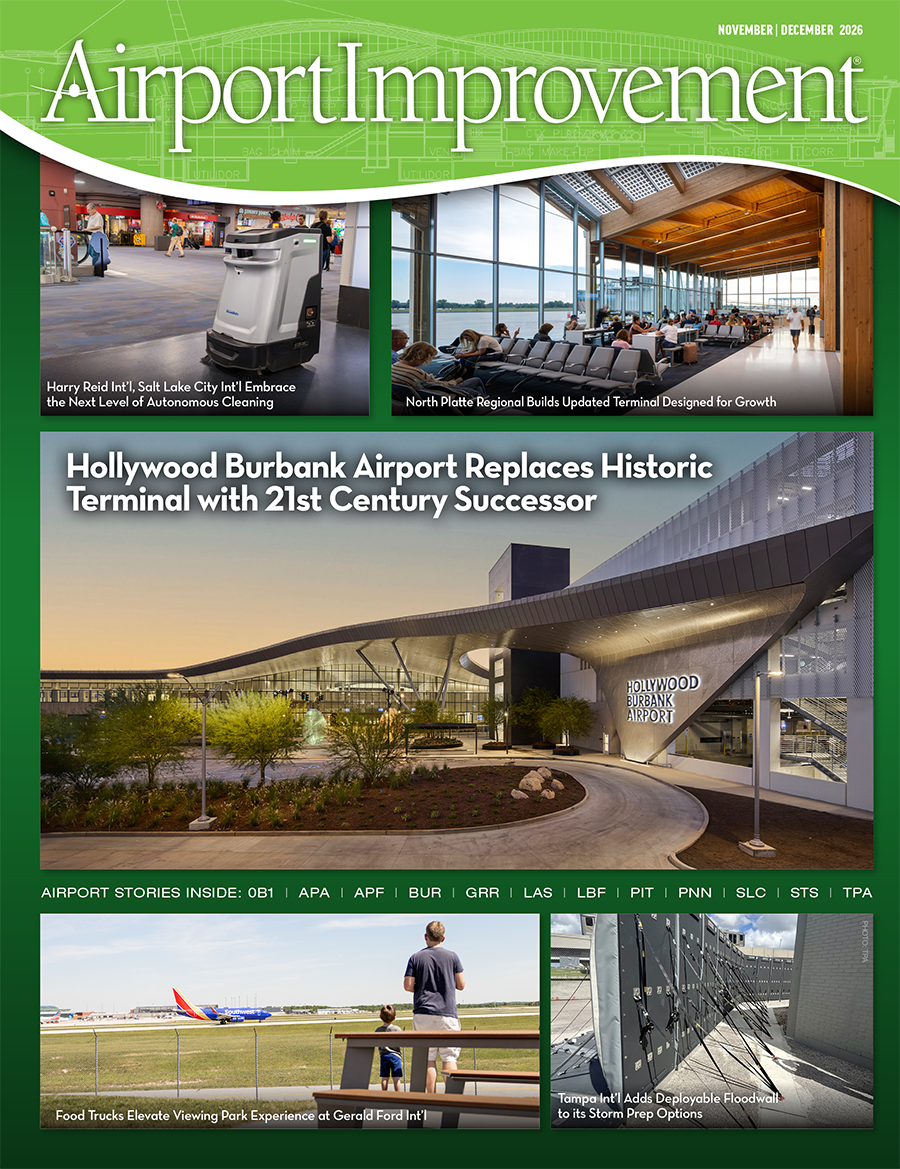
We purchased 3,000 feet of rapidly deployable Tiger Dam flood barriers to protect key buildings, electrical systems, communications infrastructure and APF’s fuel farm. More importantly, airport teams are trained to deploy it within hours of forecasted storm surge.
Significant resilience upgrades to the fuel farm are also nearing completion. During Hurricane Ian, flooding affected pumps, electrical equipment and the facility’s generator. The improvement project elevates those critical systems to better protect them. The ability to keep fuel flowing is fundamental—particularly during emergency response and recovery efforts. By hardening this infrastructure, APF is helping ensure it can continue supporting emergency responders and relief operations when they are needed most.
Understanding the ongoing condition of critical infrastructure is key. Routine inspections and testing of airfield lighting circuits help staff monitor system health and address issues before a disaster hits. That data becomes especially important after a federally declared disaster. While FEMA provides significant recovery assistance, documentation is essential for demonstrating how a qualifying event affected airport infrastructure. Detailed maintenance records and system performance data help establish pre-storm conditions, allowing recovery efforts and reimbursement requests to move forward more efficiently. Without that information, recovery can slow considerably and delay progress toward full restoration.
Together, these efforts represent a change in philosophy. Emergency planning is not simply about replacing what a storm damaged. Airport leaders should ask why infrastructure was vulnerable in the first place and what could be done differently to prevent it from happening again.
We cannot control the next hurricane, its path or the height of related storm surge. What we can control are the decisions made before the next Ian hits.
Chris Rozansky, C.M., is executive director of the Naples Airport Authority. Under his leadership, Naples Airport has become a community asset that generates an annual economic impact of $781 million and serves more than 200,000 passengers per year.