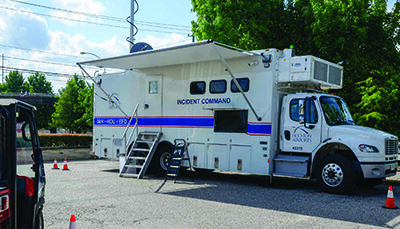
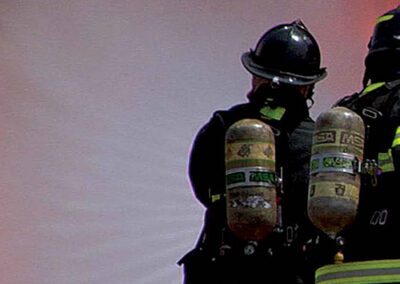
"Be prepared' isn't only the motto for Boy Scouts. The Houston Airport System follows the same philosophy for providing emergency services at George Bush Intercontinental Airport (IAH), William P. Hobby Airport (HOU) and Ellington Field (EFD). The timeless wisdom of its approach was demonstrated last June, when an F-16 crashed at EFD' a three-runway airport that serves a variety of military, NASA and general aviation operations.
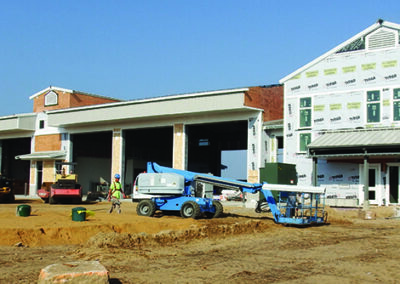
Faced with the prospect of heavy FAA sanctions, Martha's Vineyard Airport (MVY) was under the gun to replace its aging, non-compliant aircraft rescue and firefighting (ARFF) building. When its new $10.4 million facility opens in November, officials will officially close the book on a difficult chapter for the county-owned airport.
Traffic is changing at Juneau International (JNU), and so is the airport's emergency response program. As the airfield begins to receive an increasing number of larger-capacity aircraft, officials are enhancing its aircraft rescue and firefighting (ARFF) capabilities accordingly.
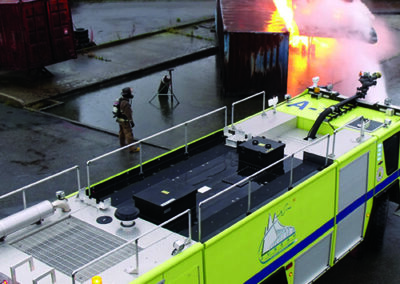
Last year, the Alaska airport purchased a $750,000 state-of-the-art ARFF vehicle that is so tall and wide, JNU needed a larger station to house it. The recent $2.6 million renovation project also brought its facility up to FAA specifications and added more room for gear and support functions.
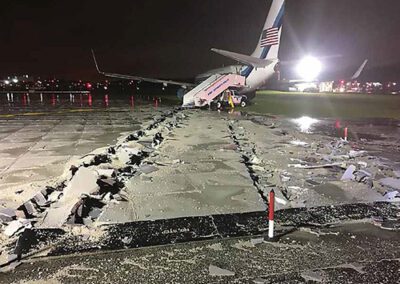
Last fall, amid the final flurry of campaign activity before the U.S. presidential election, New York's LaGuardia Airport (LGA) experienced a runway incident that briefly closed the entire airfield and thrust its safety systems and response procedures onto center stage. When the dust settled, it also reaffirmed the airport's policy of putting safety first and proved that planning ahead can make all the difference.
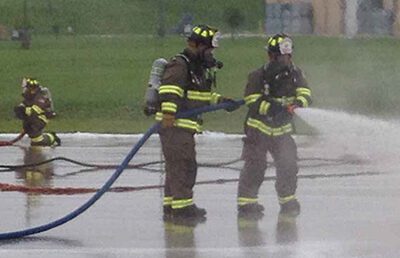
Meeting annual training requirements for aircraft rescue and firefighting (ARFF) personnel can be particularly challenging at smaller airports with small staffs, where firefighters often perform airfield maintenance in addition to their primary ARFF and operational duties.
Although the 2013 shooting incident at Los Angeles International Airport (LAX) was resolved in just three minutes, six people were wounded and a TSA officer lost his life. The tragic event left permanent scars on the airport...and also prompted an extensive review of response operations at the facility that serves more than 70 million people annually.
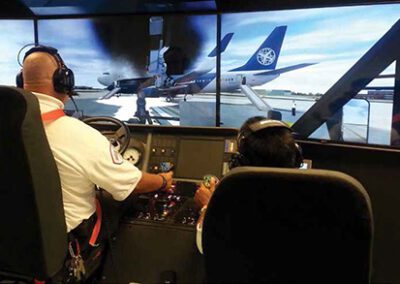
Emergency crews at O'Hare International Airport (ORD) can now train without the omnipresent danger of blazing flames and structural collapse. There's no smoke and mirrors involved, just a customized aircraft firefighting and rescue (ARFF) simulator that safely replicates actual emergency situations with virtually no risk to equipment or personnel.
As the Pentagon converts two Midwestern Air National Guard units from flight training to drone operation regiments, the airports that hosted the units lost their aircraft rescue and firefighting services (ARFF) in the process. Acting separately, both airports turned to the private sector to fill that gap. On Oct. 1, Iowa's Des Moines International Airport (DSM) and Fort Smith Regional Airport (FSM) in Arkansas turned over their ARFF operations to Pro-Tec Fire Services, the largest private provider of ARFF services in the industry. While both DSM and FSM received advance notice that their ARFF services would be leaving with their respective guard units, the airport's individual situations differed ' and so did their reactions to the news.