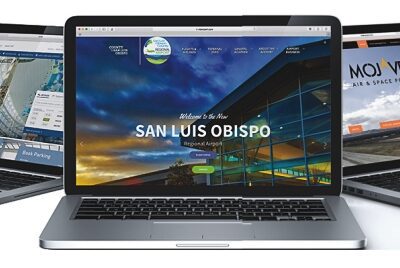
These days, the internet is the first place many passengers check when looking for information about parking, concessions and other ground-based details regarding air travel. Good or bad, an airport's website acts as its face and leaves an impression on customers.
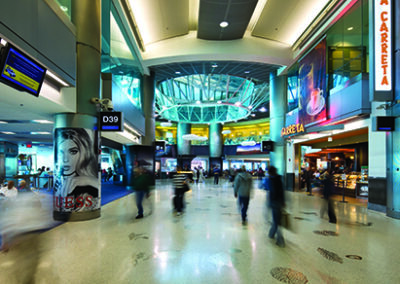
Blockchain is the buzzword in information technology today, and airports such as Miami International (MIA) are paying attention. 'It's our charter as IT executives to look at technology and see how we can insert it into our ecosystem to improve processes,' says Maurice Jenkins, information systems and technology director at MIA. 'Some work, some don't. You never can tell until you see how well you can actually apply it.'
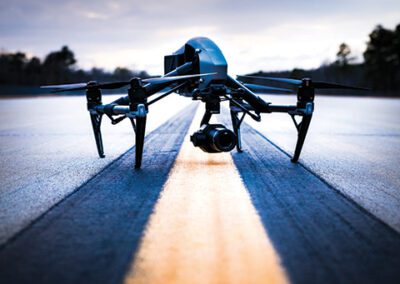
Patrolling the perimeter fence at Savannah/Hilton Head International Airport (SAV) is a difficult task, thanks to about 400 acres of swampland'and the alligators, snakes and other wildlife that live there. But it's an easy job for a camera-equipped drone. That's why the Georgia facility is striving to become one of the first commercial airports in the United States to integrate drone flights into some of its routine safety and security operations.
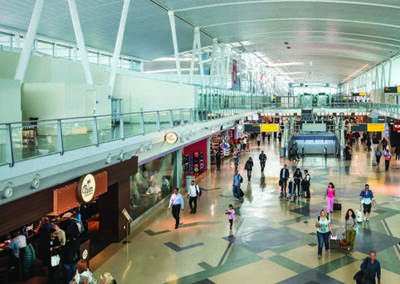
Unlike most aircraft traffic, pedestrian traffic inside the terminal is notoriously tricky to track and predict. It takes no time at all for congestion to build at ticket counters/bag drop areas or lines to form at security checkpoints. JFKIAT, the private company that operates Terminal 4 at John F. Kennedy International Airport (JFK), is leveraging technology to change this frustrating dynamic.
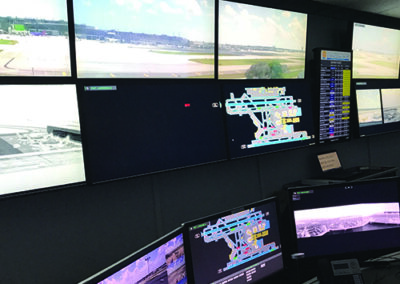
Just as NASA has a Mission Control room to monitor spacecraft, Fort Lauderdale-Hollywood International (FLL) has a ramp control room to track aircraft in non-movement areas. Earlier this year, the airport installed a high-tech system that is especially valuable for monitoring and managing aircraft in areas outside of the visual field of air traffic controllers.
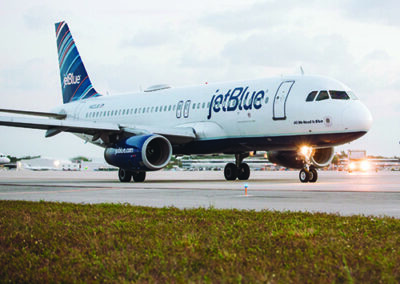
South Florida is a hot tourist area, with air traffic increasing steadily for the last few years. To cope with overall passenger growth and seasonal swings, Fort Lauderdale-Hollywood International Airport (FLL) is leveraging information technology and automation.
When you hear the word "Orlando," you probably think of vacation attractions: Disney World. Sea World. Beaches. Golf. Or perhaps you've attended an event at the Orange County Convention Center, the second-largest convention complex in the United States.
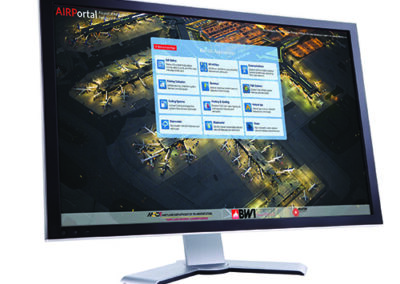
The Maryland Aviation Administration is transforming the way it manages the volume of facility documents and geographic information system data generated and used at its two airports.
Last fall, YYC Calgary International Airport (YYC) in Alberta capped its $2 billion airport development program with the opening of a new five-level, 2 million-square-foot terminal brimming with state-of-the-art technologies (see list to the left for specifics). Together with a 14,000-foot runway that opened in June 2014, the projects represent the largest single infrastructure program in the airport's history.
As director of Information Technology at Tulsa International Airport (TUL), James Rockholt knows a thing or two about cybersecurity. It's what he doesn't know that keeps him awake at night.
The scope of potential problems that fall under his domain is mindboggling, ranging from inside threats mounted by disgruntled employees or tenants to attacks from outside forces such as professional cyber criminals, politically motivated attackers (hacktivists), state-sponsored aggressors from foreign countries, "script kiddies," and even customers passing through the terminal.
When Tim Bradshaw took the helm as executive director at Roanoke-Blacksburg Regional (ROA) in 2014, the Virginia airport didn't have a ground transport policy. These days, ROA not only has a formal policy in place, it also has a new system that uses low-cost beacons to track activity and revenue.
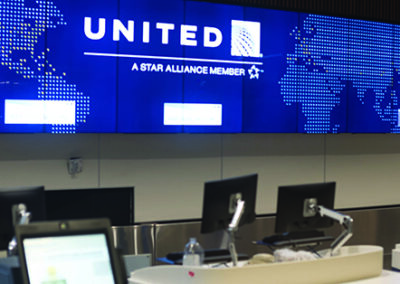
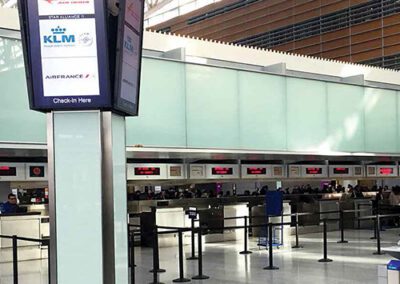
As part of an ongoing effort to improve the passenger experience, San Francisco International Airport (SFO) recently debuted more than 80 new common-use self-service units (CUSS) in its International Terminal.