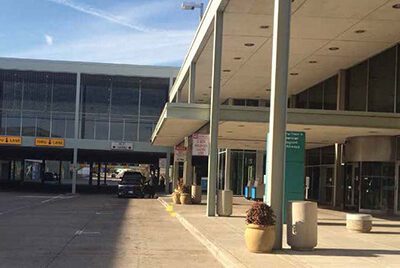
Airport managers wanting to maximize revenue while offering passengers an upgraded landside service option may want to take a page from the playbook at Tulsa International Airport (TUL).
Every day, 10,000 Americans turn 60 and begin counting down to retirement. Many will vacate management positions, leaving behind voids of leadership and industry knowledge. This Baby Boomer exodus could be particularly problematic for airports. The Florida Airports Council is working to help its members stay ahead of the retirement curve with a three-day program to identify, train and educate emerging managers so they're ready to take the reigns as Baby Boom leaders leave.
As in real estate, "location, location, location" can be crucial for airports. It's especially true for Ted Stevens Anchorage International (ANC) in Alaska. The state-owned airport has parlayed its geographic quirk into a competitive advantage. With three runways (all longer than 10,600 feet), special ramp facilities and procedures, and a little help from the federal government, ANC has molded itself into a critical refueling stop for cargo carriers flying the skies between Asia and North America.
Crime is down at the world's busiest passenger airport, and its "top cop" credits increased visibility of enforcement methods for much of the positive change. Specifically, Hartsfield-Jackson Atlanta International Airport (ATL) experienced about 12% less crime last year vs. 2013. Larceny, in particular, dropped 34%. Maj. Lane A. Hagin, commanding officer of the Atlanta Police Department Airport Precinct, attributes improvement in both areas to a more conspicuous policing presence throughout the facility.
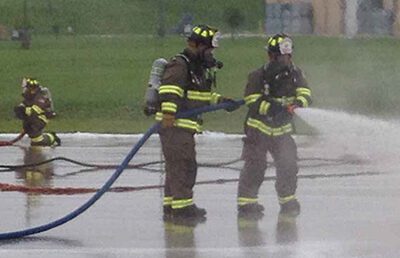
As the Pentagon converts two Midwestern Air National Guard units from flight training to drone operation regiments, the airports that hosted the units lost their aircraft rescue and firefighting services (ARFF) in the process. Acting separately, both airports turned to the private sector to fill that gap. On Oct. 1, Iowa's Des Moines International Airport (DSM) and Fort Smith Regional Airport (FSM) in Arkansas turned over their ARFF operations to Pro-Tec Fire Services, the largest private provider of ARFF services in the industry. While both DSM and FSM received advance notice that their ARFF services would be leaving with their respective guard units, the airport's individual situations differed ' and so did their reactions to the news.
San Francisco International Airport (SFO) completed a two-phase runway safety area (RSA) project in early August (2014) ' beating its own schedule by one month and finishing more than a year ahead of the congressionally mandated Dec. 31, 2015, deadline for all federally obligated and Part 139 airports. The new safety features, estimated to cost about $223 million, are designed to significantly reduce personal injury and aircraft damage in the event of runway overruns, undershoots and veer-offs, per FAA Advisory Circular 150/5300-13.
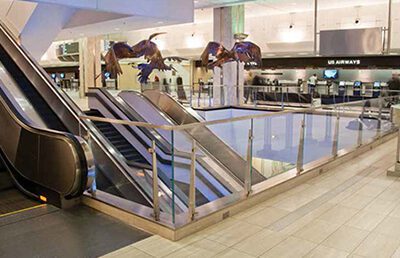
From new restrooms and giant video walls to updated architectural finishes, Tampa International Airport (TPA) has undergone a gradual yet comprehensive transformation during the last four years. Now that its $23 million Main Terminal Modernization Project is complete, it may be more accurate to refer to the Florida airport as '43 years young' rather than 43 years old.
Recent enhancements to baggage handling at Halifax Stanfield International Airport (YHZ) are setting new precedents for efficiency in the front of the house and behind the scenes. A fully automated self-service baggage drop is the first of its kind in North America; and associated backroom systems have more than tripled the Nova Scotia airport's overall handling capacity.
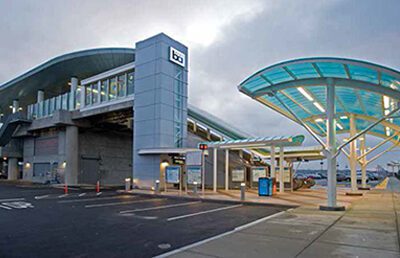
Getting to and from Oakland International Airport (OAK) is drastically easier for many passengers since the new connection opened in November between the airport and California's Bay Area Rapid Transit District (BART) train system. OAK's financial share of the project was $45 million ' just less than 10% of the total cost. 'It's important that we invest in transportation infrastructure that serves today as well as into the future,' explains Deborah Ale-Flint, Director of Aviation for the Port of Oakland.
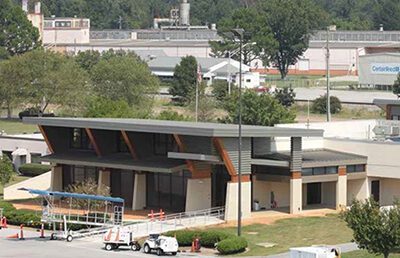
Hancock County-Bar Harbor Airport (BHB) overcame significant financial challenges to remodel its facilities. And in the end, the small Maine airport doubled the size of its terminal, upgraded its security area, added new customer conveniences and generally made the building more aesthetically pleasing and energy efficient. The $2.5 million facelift, completed late last year, increased BHB's terminal from 5,000 to 10,000 square feet. It also created separate arrival and departure areas ' a critical upgrade for small airports, due to post-9/11 security requirements. (BHB logs about 34,000 total operations annually.) But the project required intense number crunching to keep it within budget. A collaborative effort by airport officials, the contractor, design team and engineering consultant cut nearly 20% from the original $3.1 million cost estimate.
After losing their respective carriers and being declared 'dead' by one consultant's study, two southern Mississippi airports have joined forces and secured shared service with the help of a new consultant and an essential air service contract. In early November, Meridian Regional Airport (MEI) and Hattiesburg-Laurel Regional Airport (PIB) both celebrated the beginning of new service to Dallas/Fort Worth International (DFW) on ExpressJet, operating under Skywest for American Airlines. After picking up passengers at PIB, 50-seat regional jets continue to MEI, just 60 miles north, to pick up additional passengers before heading to DFW. 'Do you know how much fun it was to announce we had jet service with American'' asks Tom Williams, president and chief executive officer of the Meridian Airport Authority.
It's a New Year. We have the same party in both houses of Congress, Moody's has changed its outlook for the U.S. airport industry to positive from stable, and both enplanement growth and the U.S. economy are expected ...