With a $6 billion renovation and expansion program getting underway at Hartsfield-Jackson Atlanta Int'l Airport (ATL), passengers are already enjoying tangible improvements. Early efforts focused on one of the most sought-after customer amenities: a comfortable place to sit down and plug in cellphones and laptops.
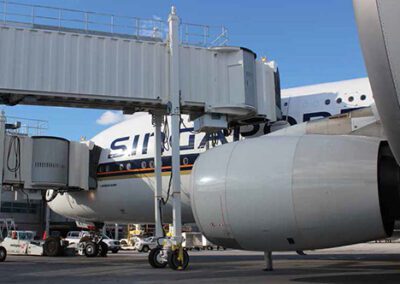
The firm that operates Terminal 4 at John F. Kennedy International Airport (JFK) faced a unique challenge last year: It would soon have four carriers flying Airbus 380s into the terminal, and only two gates were equipped to handle the double-decker aircraft.
When Calgary International Airport (YYC) in Alberta opens the doors to its new International Terminal later this year, a new baggage handling system will be among its notable features. The system is designed to run faster, use less energy and facilitate better bag tracking. Importantly, it will also eliminate the need for passengers on connecting flights to claim and recheck their bags.
From BP and Enron to Volkswagen and Valeant, there's no shortage of cautionary tales about companies shooting themselves in the foot with egregious-and ultimately actionable-breaches of conscience. It's no wonder that organizations in all sectors, including the airport industry, are beginning to recognize the importance of corporate social responsibility (CSR for short).
While some airport operators talk about reducing energy consumption, others take action to make it happen. Orlando International Airport (MCO) recently committed to the goal of using 10% less energy in its facilities by 2018, a move that will significantly reduce operating costs and may boost the airport's reputation from "eco-friendly" to "eco-friendlier."
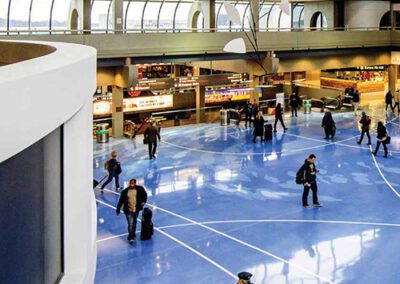
Travelers passing through Pittsburgh International Airport (PIT) need only look down to see one of the most striking components of the airport's recent multimillion-dollar renovation. The airport replaced its uninspired, dated tile flooring with smooth new terrazzo that serves as the "canvas" for an eye-catching piece of art. The new material also eliminates the familiar racket of suitcases rolling over tile flooring.
Each year, airports spend millions of dollars improving the passenger experience. But despite luxury lounges, gourmet restaurants and high-end retail stores, many still share a common Achilles' heel: security checkpoints. Passenger grumbling has grown noticeably louder at facilities where traffic volume continues to rise and TSA staffing levels remain unchanged due to budget constraints.
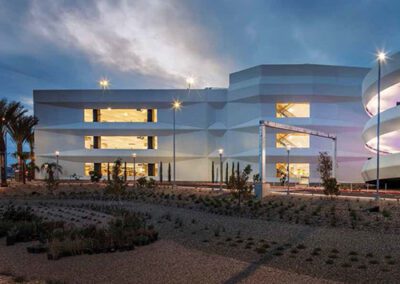
The new 2.1 million-square-foot rental car center at San Diego International (SAN) consolidates the busy airport's car rental operations under one roof to maximize operational efficiency and enhance service for customers. Given the airport's active car rental market (more than 1 million transactions per year) and limited overall footprint (661 acres for all airport operations), the project was a tall
order to fill.
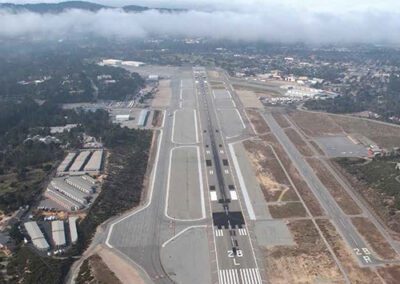
Sometimes, the phrase "perfect storm" refers to a rare combination of events that leads to disaster. Other times, it describes similarly unusual circumstances that create an amazing outcome. Surprisingly, a recent runway safety area project at Monterey Regional Airport (MRY) met both definitions at various points.
For many years, the only escalator in Minot, ND, was at Woolworth's, which also had a lunch counter. Today, there's a new escalator in town-inside the airport's spanking new terminal, and Minot International (MOT) holds its own claim to fame as the largest airport terminal in North Dakota.
Maximizing income from multiple sources is important for all airports, but it's especially crucial for small general aviation facilities that don't collect commercial landing fees, or have high-volume potential from parking and concessions.
Managing the safety, security and credentialing of employees and outside workers presents complex challenges for airport operators across the globe. U.S. airports, in particular, have found themselves swimming chin-deep in paperwork associated with post-9/11 security regulations.
Harkening back to my early days in business school at UW-Whitewater, I'm reminded of freshman speech class. I like to talk, so giving speeches was no big deal. However, before we began writing, practicing and delivering speeches, much of our time centered on the topic of listening. That's right, listening.
Later this year, airport operations will enter a brand new era. For the very first time, they will be implementing procedures designed by aircraft manufacturers, pilots, performance engineers, safety professionals and other airport operators.
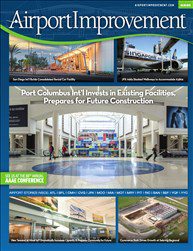
The decision to renovate or build new is often viewed as a high-stakes fork in the road, but Port Columbus International (CMH) seems comfortable straddling the common divide. In March, the Ohio airport celebrated the end of an $80 million terminal renovation program while maintaining its options to build a new midfield terminal in the future. Fresh finishes, an infusion of natural lighting and updated mechanicals were completed to bridge the gap until passenger numbers establish a clearer path toward ground-up construction.
When officials at Meadows Field Airport (BFL) in Bakersfield, CA, started planning to replace the facility's aging main runway, they expected a price tag of around $10 million. But the initial tally approached $70 million, prompting a bad case of sticker shock.