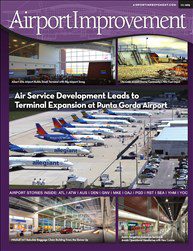
"A rose by any other name would smell as sweet" is certainly a memorable line; but it's not exactly sound marketing advice. After all, Shakespeare was an Elizabethan playwright and poet, not a 21st century branding expert.
This summer, Milwaukee's General Mitchell International Airport (MKE) cut the ribbon on a newly renovated baggage claim building. The $45 million project stripped the airport's 1950s structure down to its bones and raised up a more open, spacious and light-filled facility - a fitting complement to the inline baggage handling system completed last summer (see Sept. 2015 issue of Airport Improvement for more details).
Seattle-Tacoma International Airport (SEA) recently completed the total reconstruction of Runway 16C-34C, giving new life to the oldest of its three runways. And what a life it will be. The 9,426-foot runway that was originally built in 1969 is now projected to have another 40-year lifecycle.
Over the last few months or so, I've detected a change in attitude, and this sense was validated at the national conferences I attended in fall. What is it, you ask? That airports and other aviation sectors are now enjoying the best of times.
Green is the new black. And the trend sees design and construction industry project teams certifying the "greenness" of buildings through the Leadership in Energy and Environmental Design (LEED) program. But the rating for the environmental impact of horizontal infrastructure such as runways and aprons lags due to the lack of a comparably influential certification standard. That has changed.
Cargo is already a dominant force at John C. Munro Hamilton International Airport (YHM), and it's about to get even bigger, and more diverse, with the opening of a $12 million warehouse complex.
When disaster strikes, airport staff must react quickly and decisively - almost instinctively. That's why annual emergency training is so important. It helps employees perform appropriately and safely by providing opportunities to practice their particular roles in prescribed response procedures.
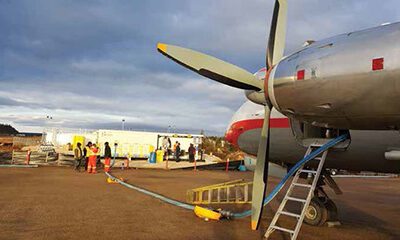
Fuel is more than a revenue stream at Old Crow Airport (YOC) in Canada's Yukon Territory; it's the very lifeblood of the region. Located north of the Arctic Circle, the small community of Old Crow is only accessible by air. When the local government recently replaced the aging fuel farm that supplies crucial heating and automotive fuel to the community's 250 aboriginal residents, YOC's ability to store and deliver aircraft fuel was also improved.
It's often a challenge to secure partial funding for major projects, but Gainesville Regional Airport (GNV) in Florida received full funding from the state for its recent $2.8 million runway renovation. Typically, the Florida Department of Transportation (FDOT) will pay up to 50% of construction expenses at state airports. However, it pays up to 100% of the cost for special demonstration projects.
In October, Austin-Bergstrom International Airport (AUS) opened a $155.5 million consolidated rental agency complex (conrac) funded with customer facility charges. Beyond creating a new onsite facility for rental agencies, officials also carved out more space for customer parking at the Texas airport.
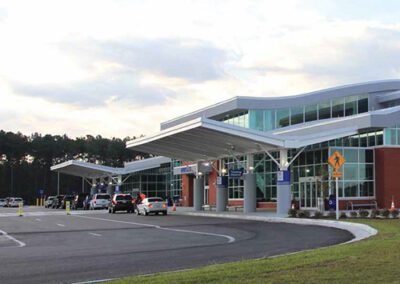
When was the last time you heard about a significant public facility such as a school or stadium being built without dedicated local tax dollars' Albert J. Ellis Airport (OAJ), just outside of Jacksonville, NC, recently pulled it off. The airport's $43.9 million project added new facilities for commercial and general aviation passengers, plus a wide variety of other airside and landside improvements.
Denver International Airport (DEN) is adding a touch of Hollywood to its nature-friendly culture with a customized television network. The project is not about red carpets and entourages; it's simply another program to engage passengers and make their travel more enjoyable. A national media company provides specially modified programming for travelers and ultra-targeted advertising is expected to boost non-airline revenue - another ongoing effort at the busy hub.
As TSA continues on pace to break its all-time annual record for firearms collected at checkpoints, guns continue to aggravate security efforts at U.S. airports. But the problems don't end with the recovery of wayward weapons at passenger screening stations.