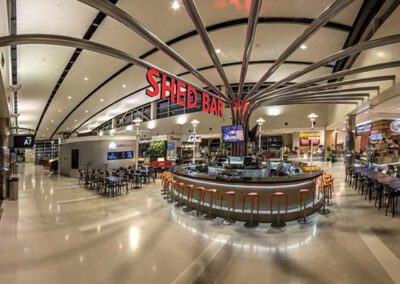
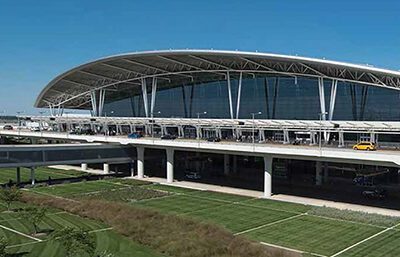
Visitors at Detroit Metropolitan Airport (DTW) might not leave the McNamara Terminal if it's up to their taste buds. Earlier this year, the airport launched an entirely new lineup of food and beverage offerings that includes farm-to-table freshness and an updated combination of local and national options. In addition, the terminal also features delivery service in two gatehold areas, Motown-flavored live music and a lush green wall.
Following a series of high-profile security breaches at Mineta San Jose International (SJC), the airport teamed up with local and federal agencies and is working toward a safer, more secure facility through perimeter fence upgrades and technology enhancements.
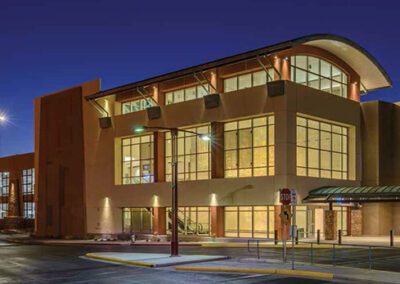
A new $46 million rental car facility at El Paso International Airport (ELP) reflects a simple but sometimes-overlooked truth: Airports and rental car agencies both benefit when travelers can rent cars quickly and efficiently in comfortable, carefully conceived structures.
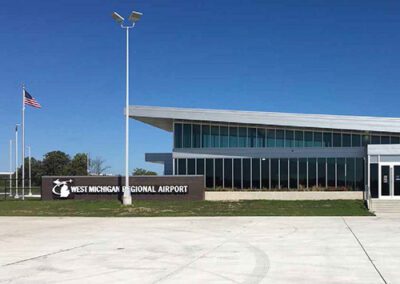
Community support for West Michigan Regional (BIV) in Holland, MI, is highly visible to anyone arriving at the general aviation airport. Literally. Contributors who donated to the "Earn Your Wings" fundraising campaign will be formally recognized on a permanent display in BIV's new Airport Business Center, the primary showpiece of a $7 million improvement program that also added a parking lot and expanded the existing aircraft apron.
Moving operations to a new terminal is a tricky task, to say the least. More realistically, it's a massive, complicated mission for any airport executive and staff. While some airports successfully handle moving into a new terminal with internal staff, others hire outside consultants to lead the way. ICT and IND each hired Chrysalis Aviation Solutions to help with their transitions.
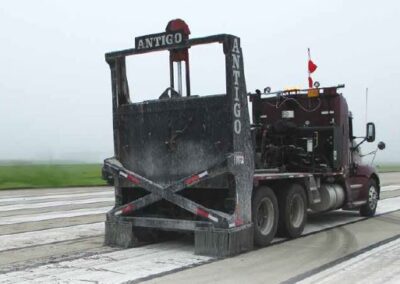
Before Coles County Memorial Airport (MTO) in Mattoon, IL, reconstructed its 41-year-old main runway, the project team looked far and wide for the best way to keep costs down and cause the least possible disruption of day-to-day operations. The preferred strategy' Rubblization, a process that breaks down existing concrete into small, uniform chunks, thereby making it an ideal base for subsequent layers of asphalt or concrete.
Mishandled bags cost the airlines money-lots of it. According to SITA's most recent annual Baggage Report, there are approximately 6.5 mishandled bags per every 1,000 passengers, for a total of 23.1 million mishandled bags annually. Skift Magazine reports that baggage snafus cost the airlines an estimated $2.3 billion in 2015.
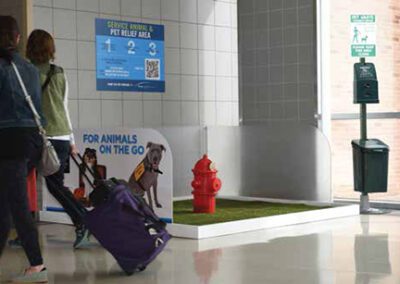
Since August, all U.S. commercial airports have been required to provide a post-security service animal relief area (SARA); and airport operators are responding with a wide variety of options. Specially constructed facilities range from small, utilitarian spaces in obscure areas to entire rooms with finish materials that match nearby human restrooms. Self-contained ready-to-install commercial units are another viable solution.
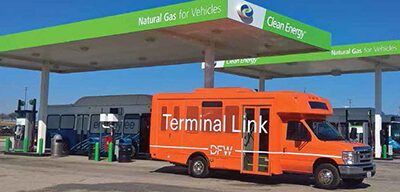
During the last decade, Dallas/Fort Worth International Airport (DFW) has amassed a host of awards for its eco-friendly programs. One recent accolade both punctuates and encompasses the entire lot: carbon neutrality, as recognized by the Airport Carbon Accreditation program of Airports Council International.
When Brian Ryks, former executive director at Gerald R. Ford International Airport, approached me about spearheading the Gateway Transformation Project Fundraising Campaign, I instantly knew we were pioneering a path that no other airport had ever taken.
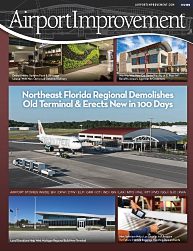
While U.S. presidents like to talk about plans for their first 100 days in office, officials at Northeast Florida Regional Airport (SGJ) can proudly show what they accomplished in 100 days. SGJ closed its existing terminal, tore that structure down and constructed a new 14,000-square-foot facility-all while maintaining flights into and out of the airport.
After 24 years and more than 2 million miles in service, the people mover trains connecting the landside and airside terminals at Pittsburgh International Airport (PIT) are virtually all new and rolling into the future. A four-phase, $11 million project modernized the trains with new underframes and updated interior elements (flooring, air conditioning, lighting, etc.).
In his new book, "Simply Brilliant: How Great Organizations Do Ordinary Things In Extraordinary Ways," Fast Company co-founder William C. Taylor emphasizes, "You don't have to be working at world-famous innovators such as Uber or Airbnb to be accomplishing something remarkable. Often, the best opportunities are in the humdrum sorts of businesses that clean buildings, run parking lots or deliver rural health care."