The six general aviation airports operated by the Metropolitan Airports Commission (MAC) are called relievers for a good reason: They significantly reduce traffic pressure that would otherwise congest Minneapolis-St. Paul International (MSP), the major airport of the system.
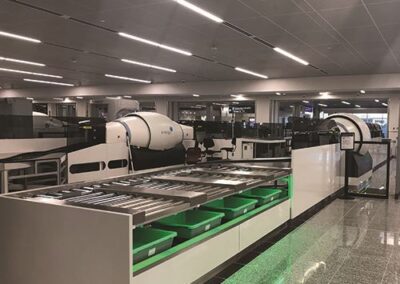
In 2019, Hartsfield-Jackson Atlanta International (ATL) was the world's busiest airport'hitting an all-time high of 110 million passengers. To increase throughput and maintain its service level agreement of less than 20-minute wait times for passenger screening, ATL added five new lanes to its South Security Checkpoint.
This summer, just as passengers returned in significant numbers, Seattle-Tacoma International Airport (SEA) opened Phase 2 of its $710 million North Satellite modernization project, adding much-needed gates and square footage.
As airports around the globe are seeing an uptick in passenger traffic, Halifax Stanfield International (YHZ) is experiencing incredible growth in cargo operations. Despite the COVID-19 pandemic, officials at the Nova Scotia airfield believed in the old maxim, 'If you build it, they will come.' And they were right.
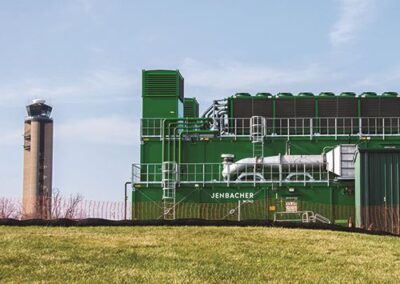
Pittsburgh International Airport (PIT) made history in June when it flipped the switch on its own natural gas and solar energy powered microgrid. In an era when energy resiliency and independence have become a Holy Grail of sorts, PIT is the first airport in the world to be completely powered by its own microgrid. And, it did so at no cost to the airport or local taxpayers.
For years, personnel at Murfreesboro Municipal Airport (MBT) manually tracked aircraft to estimate daily traffic at the central Tennessee airfield. Based on crude visual tallies, MBT officials began this year thinking the general aviation facility logged about 225 operations per day.
Even though COVID-19 put obstacles in its path, Lehigh Valley International (ABE) never veered from its mission of adding more hangar space. Last July, the eastern Pennsylvania airport opened a new 54,000-square-foot hangar to accommodate soaring passenger traffic and newer corporate jets that weigh up to 100,000 pounds.
While many airfield safety programs focus on runways, Tampa International (TPA) recently finished a $78,500 project that honed in on its apron area. The Florida airport established a well-defined route specifically designed to decrease the speed of ground service vehicles and help keep them a safe distance from parked and taxiing aircraft.
When air travel hit the skids in 2020, rental car companies struggled right alongside airlines and airports. With business slowing to a trickle, rental fleets were decimated by the sale of dormant vehicles. Hertz reported a 40% reduction in cars between the end of 2019 and the end of 2020.
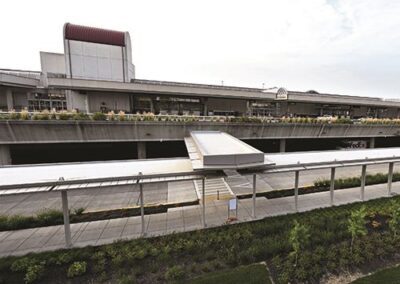
This past May, Dallas Fort Worth International Airport (DFW) opened an extension of Terminal D, its primary international terminal. Although the $202 million project added just four gates, the impact on operational capacity and customer satisfaction is expected to be tremendous.
With passenger traffic on the rise and dated parking facilities straining at the seams, Louisville Muhammad Ali International (SDF) began expanding and upgrading its parking operations in 2019. Since then, the Kentucky airport has invested more than $36 million in new facilities, systems and related projects.
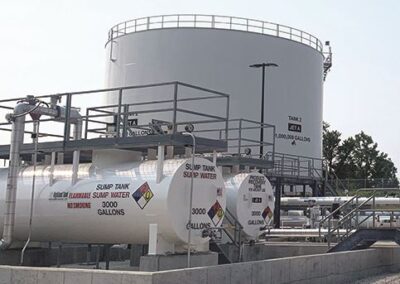
The new $50 million jet fuel storage facility at St. Louis Lambert International (STL) nearly doubles the airport's storage capacity to 3 million gallons. The fuel farm, which began operating in August, replaces an aging underground storage tank facility constructed more than 60 years ago.