In recent years, overseeing parking issues had become an increasing burden at Charles M. Schulz-Sonoma County Airport (STS), and a new system was needed.
“Our old equipment was breaking down more frequently, and it was taking more time and money to fix things,” explains Airport Manager Jon Stout. “We also wanted to improve the customer experience. It was taking our customers longer to exit the property if one of the exit gates was down. Tickets were frequently lost by customers, or not working.”
To solve these issues, the California airport recently began using the Metropolis Recognition Platform, a ticketless system that leverages a computerized digital camera system that reads license plates and provides a time stamp as vehicles enter and exit its three parking lots (two long-term and one short-term).
| facts&figures
Project: New Parking Access & Revenue Collection System Location: Charles M. Schulz-Sonoma County Airport, in Santa Rosa, CA Technology Leveraged: License plate readers Platform Provider: Metropolis Technologies Reservation System: AeroParker, a Metropolis company Annual Management Fee: $347,736 in 2026 with 3% increase/yr. Customer Fee: $.99 to $3.99/transaction Length of Contract: 5 yrs System Installation: Late April to mid-May 2026 Launched to Public: June 1, 2026 Key Benefits: Customers save time entering/exiting parking lots & receive receipts via their cellphones; airport no longer handles equipment or customer issues; live data about parking demand |
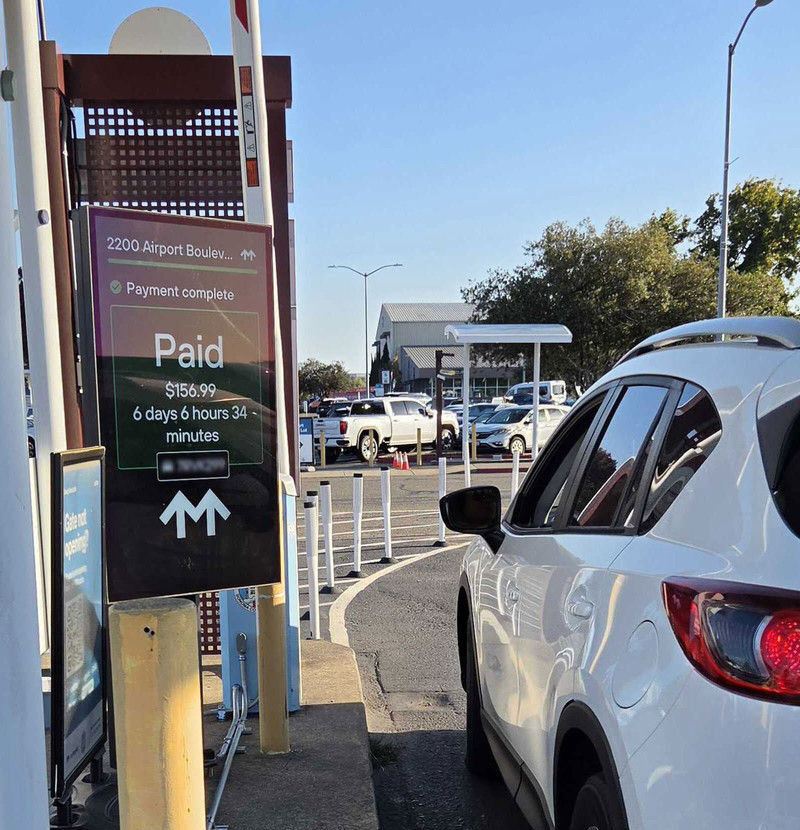
With the new tech platform in place, drivers no longer have to stop and take a ticket when entering any of the lots at STS. Customers simply pull into the lot, find an empty space and head to the terminal. Upon returning, those with an active account and payment method with Metropolis drive to the exit, where a camera confirms their license plate and entry time. The system computes the associated fee, opens the gate and texts a receipt to their cellphone.
Registering via the company’s website involves customers entering their license plate number, cellphone number and credit card information. Customers who don’t have an active Metropolis account can enter any parking lot, scan the QR code on signs inside and register before exiting.
Rob Mitchell, vice president of aviation for Metropolis, stresses that registering with Metropolis is not required. “Customers can still conduct a one-time transaction using the digital exit screens, or provide payment to on-site staff, where they can use a credit card or even cash to make a one-time payment.”
When an unregistered vehicle approaches the exit, the gate will not open, and a QR code and text-to-pay number appear on the digital screen. Customers can use either method to complete a one-time payment. Alternately, they can use a call box in any lot to summon an on-site Metropolis employee on duty at the exit to meet them and process the transaction remotely on an iPad.
Whether or not a vehicle has an active payment method when it entered the lot, the system knows when it entered (via license plate recognition) and calculates the customer’s parking fee accordingly. Registering on the company’s website simply saves time and potential confusion when exiting.
Having personnel on hand to assist customers is particularly important because the Sonoma County area has a large population of residents who may not be accustomed to using QR codes or text payment systems.
Managing the Transition
To help alleviate potential confusion among customers about the new process, STS launched a multiplatform public awareness campaign before the system went live on June 1, 2026. “We did a media blitz including social media, the airport newsletter, our website and the placement of signs,” Stout says. “The last thing we wanted to do was frustrate our long-term customers.”
He reports that the transition was mostly smooth, but included a few hiccups. Passengers who parked before the June 1 rollout still had to pull a ticket when entering and use it when paying and leaving. A designated gate was set up at the central exit for all three parking lots to accommodate such customers.
Metropolis also posted a parking attendant on site during airport hours (5 a.m. to midnight) to help customers who had issues registering and/or paying their fees.
 Most feedback came from customers using the short-term lot. “A few people who simply wanted to park for an hour or two in order to meet some passengers thought it was a hassle to register their vehicle just to do that,” Stout relates. “They did have the option of going to the manned booth and paying another way, such as using a credit card or cash.”
In addition, some people expressed privacy concerns about providing their license plate number. “We do not share any data,” Stout emphasizes. “Law enforcement would have to get a warrant for us to do that.”
Metropolis follows the same policy, adds Mitchell.
The Ease of Outsourcing
Per its contract with the airport, Metropolis collects all parking payments and remits the revenue monthly to STS, less transaction fees ranging from $.99 to $3.99, depending on length of stay and parking product selected. These fees cover the expenses associated with engineering, operating and maintaining the technology. The company also receives an annual management fee of $347,736 (with 3% increase per year) that is prorated and also paid on a monthly basis. The management fee is designed to cover the company’s operating costs for labor, insurance, signage, service vehicles, uniforms and other expenses.
In turn, Metropolis paid for and installed the new system, including 10 cameras and five digital signs at exit lanes with 50-inch monitors that confirm each transaction and list the amount charged before the gate opens. A few weeks after the new platform was in operation, Metropolis removed the old entrance and exit equipment.
The company also handles equipment maintenance and customer service—some of the issues that prompted the airport to consider a new parking system in the first place.
 At STS, the Metropolis Recognition Platform is also natively integrated with AeroParker, a reservation system from another Metropolis company that replaced the airport’s legacy third-party reservation system. “It gives the customer the ability to book reservations for parking and enjoy the certainty of a guaranteed space in the selected parking lot,” Mitchell explains. “For the airport, growing its share of pre-booked transactions allows the introduction of revenue management techniques, such as seasonal pricing, peak/off peak, length of stay pricing (e.g. 10% off for stays greater than five days), etc. These capabilities are useful in that they allow airports to drive incremental parking revenue and reward loyal customers.”
As of early October, 14 U.S. airports were using the Metropolis Recognition Platform, and three others were scheduled to add it by the end of the year: Chicago Rockford International Airport (RFD), Louisville Muhammad Ali International Airport (SDF) and Richmond International Airport (RIC). The associated AeroParker reservation system is used at 42 U.S. airports, and more than 125 globally.
Managing Logistics
After an open bidding process, Metropolis was awarded the parking management contract at STS in early 2026, and the project started rolling from there.
“We have a good playbook we use to discuss the implementation of the program with airport staff. This is our bread and butter,” Mitchell assures. “Once we were aboard, we held weekly meetings with airport officials to discuss aspects of making the transition, including suggested marketing strategies to reach the general public. Then, for at least 90 days after launch, we still have additional staff on site to help customers with any issues they might have in signing up.”
In most cases, the platform is up and running in 30 to 60 days, Mitchell adds. “At STS, we started installation in late April, and had it fully installed by mid-May 2026,” he reports.
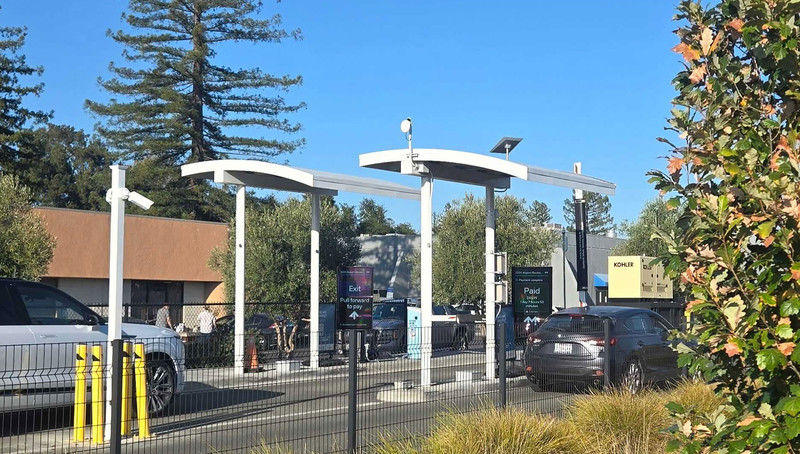
The system texts receipts to customer cellphones.
Metropolis technicians worked to limit the footprint they affected by closing only one lane at a time to install cameras at the entrance points to lots. Crews followed the same strategy when installing cameras and display monitors in exit lanes.
Feedback
The key advantage for customers is saving time, says Mitchell. “Our studies showed that customers using a ticket in the old system would spend at least 45 to 60 seconds to complete their transaction. Once they are registered with us, it can take only two or three seconds to exit,” he shares.
The new system is especially beneficial for frequent travelers. “Once a customer is a Metropolis member, they will be set up at STS for all future trips, assuming they have the same license plate. They also can include multiple vehicles in their account,” Mitchell explains. Registered customers also can use the system at any other airport operating the company’s platform.
Mitchell is confident that once customers at STS get used to the new parking system, they will embrace it. “At San Antonio Airport, 95% of travelers are signed up with us,” he says. “And so far at STS, more than 130,000 travelers have signed up as Metropolis members.”
As of early October, the Metropolis platform had been up and running at STS for about four months, and Stout reports that parking operations are going smoothly. “So far, we are very pleased with the new system. Complaints are down and customer satisfaction is high,” he reports.
“Our frequent travelers have been very complimentary,” Stout continues. “They like the idea of coming in and out, and getting a receipt sent to their cellphone. In most cases, people can exit the airport within two minutes after they get into their vehicle.”