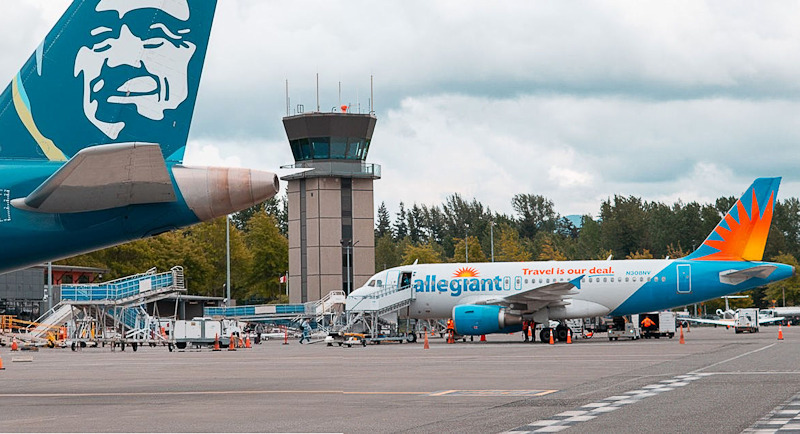
When Matt Rodriguez became the director of aviation at Bellingham International Airport (BLI) in June 2025, one of his primary goals was to totally upgrade the Washington airport’s software system.
Having worked as BLI operations manager the previous five years, Rodriguez was especially well qualified for the project. He personally knew the recordkeeping flaws that were occurring.
“When I first started at BLI in 2018, I eventually noticed inconsistencies in many areas concerning recordkeeping,” Rodriguez relates. “Some of the forms were inputted incorrectly, and some were just done late. During those six years, I made some detailed notes to myself on how things could be done differently.”
| facts&figures
Project: Major Software Updates Location: Bellingham Int’l Airport, in WA FBO: Bellingham Aviation Service Project Timeline: Jan.-Sept. 2025 Software Provider: Veoci Cost: Included in original contract Key Benefits: Upgraded software is more user-friendly, more accurate; saves airport time & money |
After he was named airport director, Rodriguez was ready to implement sweeping changes. “The original configuration with our long-time software provider, Veoci, was fairly basic,” he recalls. “After benchmarking against other airports using the platform, we saw they had access to far more advanced options and functionality than we were utilizing.”
This realization prompted a comprehensive review, with Rodriguez personally examining each and every department’s software forms, and evaluating how they were implemented. “The review identified a substantial number of updates and improvements that were needed to bring our system up to current standards,” he relates.
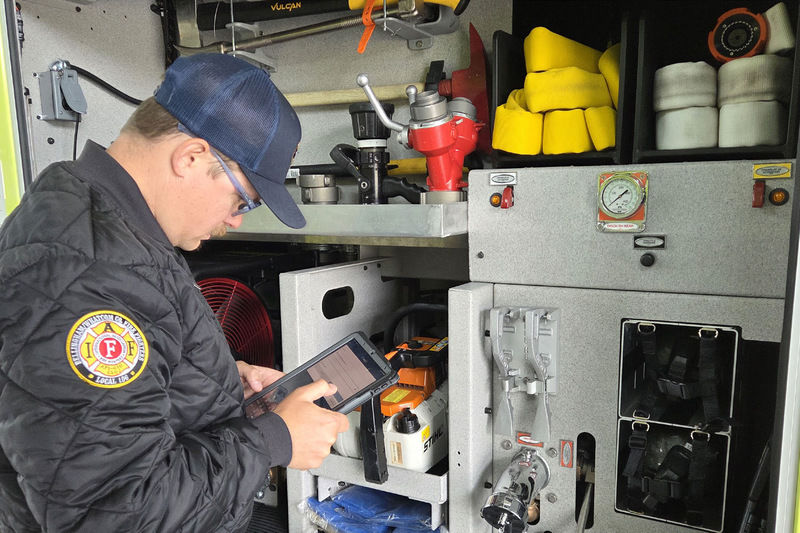
Rodriguez also initiated discussions with Veoci, and together, they began the painstaking task of completely overhauling the airport’s software system. “I wanted a fully automated system that could be used by anyone on our staff,” he explains. “For example, a person in our Airfield Operations Department would be able to take their tablet out into the field to investigate an issue and input data in real time, instead of going back to his office and using a computer there.”
One of the suggestions Veoci developed was a system of color-coded icons. Before employees log in to a given form, they see a red dot. After they log in, the icon turns green. “This system made it easy for managers to know if someone had completed an inspection or not,” Rodriguez explains.
Automating and standardizing the plethora of forms that Airfield Operations staff regularly use was a top priority. “We went through every form with Veoci personnel,” says Rodriguez. “With our new system, we now know deadlines in which every report has to be submitted. This was especially useful concerning contracts with outside vendors. We set it up so that when a contract is six months away from ending, we are notified.”
The airport also changed the brand of tablets it uses. Airfield personnel had been using Samsung tablets to input data since 2017 and Veoci software since 2018. But the tablets were apparently hard to use and didn’t work well with Veoci’s original software. Sometimes, employees gave up, went inside and logged in from a desktop computer instead. Rodriguez reports that the Apple tablets BLI switched to are working much better for staff.
No Extra Cost for Upgrades

Rodriguez emphasizes that the software upgrade did not cost the airport a dime. “Since we already had a contract with Veoci, they agreed to make these changes for free,” he says. “We certainly appreciated the extra effort they put in during this project.”
That effort included hours each week in virtual meetings, reviewing and revising forms with airport personnel. Revised forms that required verification of completion from government agencies, such as the FAA or the Washington State Department of Transportation, were promptly sent to the associated agencies for approval.
“We also sought input from our own staff,” Rodriguez adds. “They often had helpful suggestions that were implemented into the new program.”
The final upgrade was finished in September 2025, including approvals from the FAA and Department of Transportation.
Methodical Transition
Rodriguez stresses that BLI’s change to the new software went smoothly because of continual help from the Veoci customer service team, headed by Dia Wynn, director of the Aviation Department.
 “When Matt [Rodriguez] asked us to help him make a massive overhaul of their current solutions, we took the request as an opportunity to make significant improvement on their processes throughout his staff,” says Wynn.
Receiving specific input about what BLI wanted was a big help, she adds. Rodriguez provided Veoci a 250-page PowerPoint presentation detailing what he hoped to accomplish with the upgrade, and the team worked through every slide in the long document together.
Regulatory Compliance and Airfield Operations
In Wynn’s assessment, the software updates were most needed for the Airfield Operations Department—employees who log in regularly, have to meet daily FAA requirements and record a lot of data for historical reasons. “We redesigned the forms to make it easier and more efficient for BLI employees to complete these reports as efficiently as possible,” she remarks. “Since people in our Aviation Division work with many other airports to meet FAA regulatory compliance, this is one area in which we were especially helpful to BLI officials. We upgraded the forms and worked with the FAA to ensure they meet their needs for Part 139 rules.
“Our software is flexible, and can be adjusted to comply with changes in government regulations,” she adds.
No extra equipment or hardware was needed to install the new software because it is cloud-based.
Training for All
Because BLI staff members have a wide variety of computer skills, adjusting to the software upgrades was easier for some than for others. As an extra benefit to the airport, Veoci offered three different levels of online classes, with various company personnel serving as instructors.
Rodriguez describes the classes as very productive. “Most of our managers were already computer literate, but some of our people in other departments struggled at first,” he relates. “But now, everyone can log in and use a tablet to input data.”
Veoci instructors also taught some BLI managers how to change or modify certain forms themselves. “We expect this skill set to be very useful to us in the future, especially with ever-changing government requirements,” Rodriguez remarks.
A Positive Report Card
In the year since the update was finished, Rodriguez has noticed big improvements across the board in the airport’s recordkeeping.
“By modernizing our forms and expanding the software’s capabilities, we have streamlined workflows and significantly improved operational efficiency across the airport,” he relates. “Data has been inputted more accurately, and in less time. In addition, the FAA and other government agencies have praised us for submitting clean and error-free reports. Overall, the new software system has reduced stress for all our employees—not to mention myself!”