When Uber burst onto the scene several years ago, using a smartphone app to arrange rides from privately owned vehicles struck a chord with select customers. Early adopters bragged enthusiastically about the money they were saving, other companies launched similar services and a new business model was born: transportation network companies (TNCs).
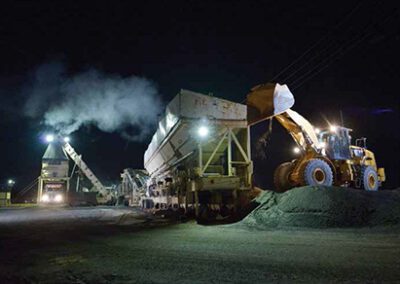
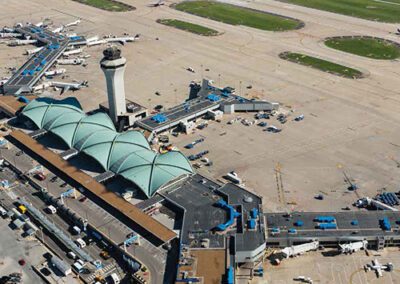
How does an airport with just one runway maintain operations while rehabilitating that runway' After nine months of intense and highly coordinated work on Runway 18-36, Myrtle Beach International (MYR) has some answers.
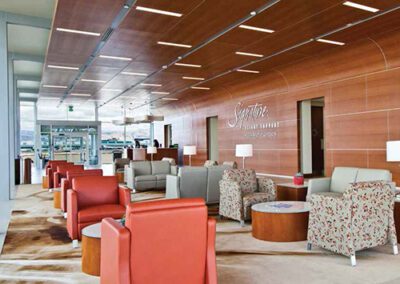
When Signature Flight Support opened a new $82 million corporate aviation facility at Norman Y. Mineta San Jose International (SJC) in early November, airport officials were thrilled to have a second fixed base operator on the field. They also viewed the new tenant as a larger symbol of what is and has been happening at the airport that serves California's Silicon Valley. One of the primary tenants at the new facility is Blue City Holdings, which represents the principals of Google. In fact, the company financed a significant portion of the hangar development, reports Signature.
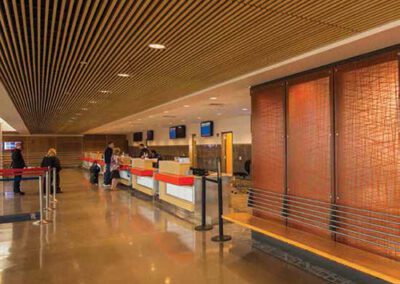
Central Wisconsin Airport (CWA) travelers are greeted these days by a newly renovated and expanded terminal. Updates were direly needed, reports Airport Director Tony Yaron; and the nearly $38 million multiphase project took five years to complete. "The terminal was overcrowded and aging," he explains, noting that the facility hadn't been updated since the mid-1980s. "After 9/11, we had to fit a CT-80 screening device into an old travel agency office between the ticketing offices and the street. Travelers had to schlep bags through the lobby."
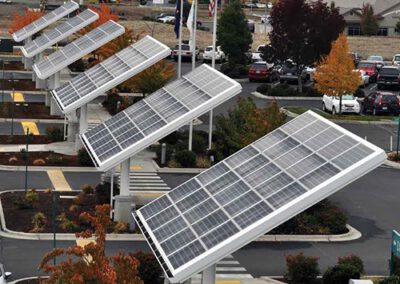
Two U.S. airports - one a major hub in the North, the other a small origin-and-destination facility on the West Coast - use barely any electricity to operate some of their parking facilities, thanks to solar panels and light-emitting diode (LED) lighting. Minneapolis-St. Paul International Airport (MSP) just turned on a $25.4 million solar array built on top of two parking garages at its Lindbergh Terminal. The 8,700 solar panels are expected to produce 3 megawatts of electricity per day.
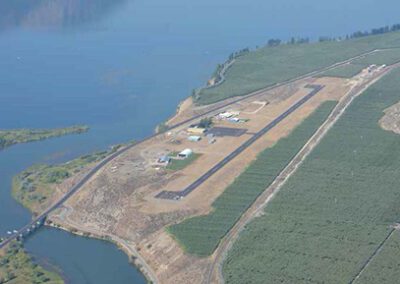
Most airport executives love the concept of having a solid long-term capital plan to follow, but creating one is often a significant challenge. The Washington State Department of Transportation (WSDOT) recently commissioned an unprecedented investment study to help it understand the 20-year capital infrastructure needs of the state's public airport system.
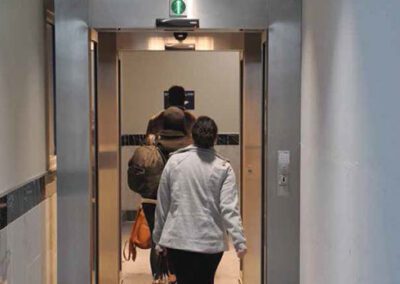
From Oregon to Virginia, U.S. airports are slowly embracing the idea of replacing human guards with automated systems to prevent and detect exit-lane breaches. Those who have made the switch report that automated systems improve landside-to-airside security and reduce ongoing operating expenses.
Many airport operators feel they have limited options when it comes to airfield pavements. As vital concrete and asphalt assets age and deteriorate, they repair areas as needed and wait for the field's pavement condition index to dictate a replacement project. When that day comes and goes, a new version of the same cycle begins again.
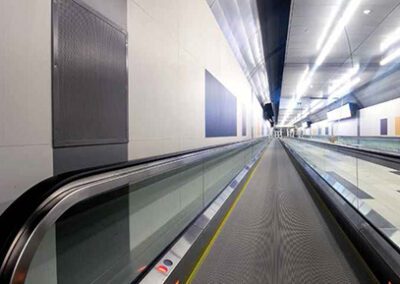
PortsToronto has gone to great lengths - and depths - to provide passengers with better access to Billy Bishop Toronto City Airport (YTZ) by building an underwater pedestrian tunnel between the island airport and Canada's largest city. Airport officials call the walkway a "game-changer for operations and customer service" and consider it YTZ's new primary access route.
There are certain moments in life that stick with you forever. I vividly remember my first AAAE annual conference at the Dallas Loews (or whatever it was called back in 1993). The airport industry was new to me, and it was quite intimidating to watch industry veterans interact so easily.
As I end almost two decades at Seattle-Tacoma International Airport - including 11 years at the helm - I reflect on three challenges that will shape the future of airports, aviation and the economy. The first is evolutionary and the second is redefining the U.S. airport system. But the third demands a revolution and, in fact, may be an existential threat to aviation.
In mid-October, Houston's William P. Hobby Airport (HOU) opened a new terminal, bringing the world of international travel to its passengers. The five-gate facility is the first international terminal for Southwest Airlines, which fully funded and led the development of the project.
When plans for Denver International Airport (DEN) were first conceived in the 1980s, airport executives knew a hotel and mass transit connection to downtown Denver would eventually be needed. Their foresight is now beginning to take shape, in the form of an on-airport hotel/conference center that opened in November, and a new transit center slated to open this spring.