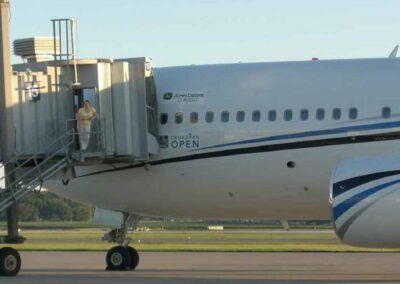
Ever since the heyday of Mississippi steamboats, the Quad Cities that straddle the mighty river have been a hub of agricultural, industrial and commercial activity. With Bettendorf and Davenport on the Iowa side of the river, and Moline and Rock Island on the Illinois side, transporting goods and people is a historic and current key to the area's prosperity.
Although Renton Municipal Airport/Clayton Scott Field (RNT) is classified as a small general aviation reliever airport, its traffic is unusually taxing on airfield pavements. Every 737 produced at the adjacent Boeing factory takes its maiden flight off RNT's single runway; and to access the runway, the heavy aircraft must traverse the airport's 3,500-foot Taxiway B.
Walk down the aisle of any flight lasting more than an hour, and you can probably guess what titles are topping the New York Times best-seller list with surprising accuracy. Airline passengers are highly vested in reading; and so are the airports they pass through.
Remarkable architecture can instantly telegraph specific locations. Show many people a certain famous opera house, arch and tower, and they'll easily name the cities of Sydney, St. Louis and Paris, respectively. Here in the airport industry, we have our own share of memorable architecture: Denver International's iconic white fabric peaks, the distinctive curved forms around the control tower at LAX, and even the blue-green carpeting at Portland International.
Air service development should be easy. In theory, all it takes is convincing an airline that it can make a profit serving your market; but that's really not enough. Given the limited amount of aircraft airlines have to deploy and the larger number of airports vying for service, you must also demonstrate that a carrier can make more money in your market than elsewhere. How this is done is very different from one airport to the next.
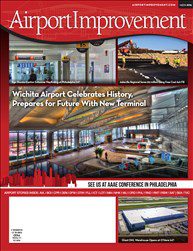
The winds of change are blowing in Kansas. In January, Wichita Mid-Continent Airport (ICT) announced its new name, Wichita Dwight D. Eisenhower National Airport; and officials plan to unveil a new $160 million passenger terminal building and $40 million parking garage/rental car center in May. Together, the projects create a new front door for the city that highlights its heritage as "air capital of the world."
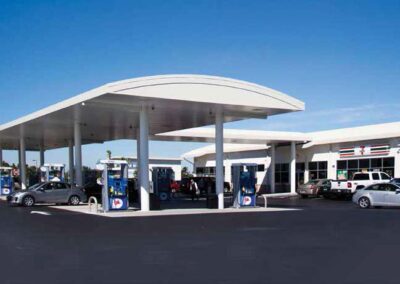
When Southwest Florida International (RSW) opened a 24-hour gas station/convenience store last summer, it became the first airport in the state to offer a turnpike-style travel plaza. Strategically located between RSW's entrance and exit roads, the facility sits on land that Lee County Port Authority set aside for that very purpose when it modernized the Fort Meyers airport with a new terminal that opened in 2005.
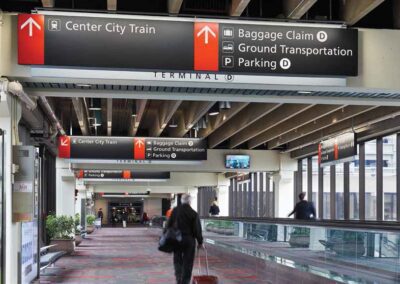
When it comes to the art and science of signage, connecting with 95% of your audience is like grabbing the brass ring, explains Mike McCartney, engineering manager at Philadelphia International Airport (PHL).
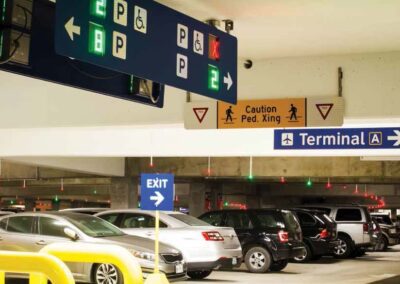
As Dallas/Fort Worth International Airport (DFW) moves further through its $2.69 billion Terminal Renewal and Improvement Program, customers parking at Terminal A will benefit from a completely rebuilt structure equipped with new technology.
Passengers touching down on Runway 4R at Detroit Metropolitan Wayne County International Airport (DTW) probably assume that the long, plain structure off the end of Runway 22L is a fence or billboard space ready for advertisers. (See photo)
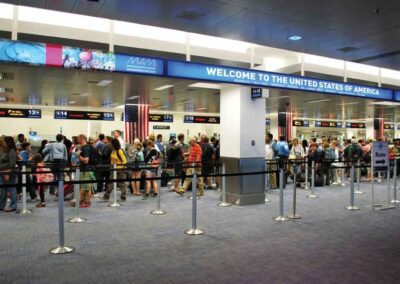
In February, customers at Miami International Airport (MIA) began using a new mobile app designed to ease long lines at U.S. Customs stations. Although data is still being collected, preliminary reports indicate that wait times have been cut in half.
Spotted recently at Reno-Tahoe International Airport (RNO): Business travelers breaking out in ear-to-ear grins and casual fliers chuckling in a combination of disbelief and delight. The cause' Simple acts of kindness such as a free bottle of water, an unexpected compliment or proactive offers of help from airport authority employees.
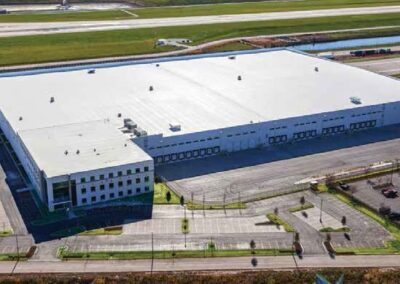
Chicago O'Hare International Airport (ORD) continues to progress toward its goal of becoming the North American leader in global air cargo with the recent opening of a $35 million landside warehouse and more airside development in the works.
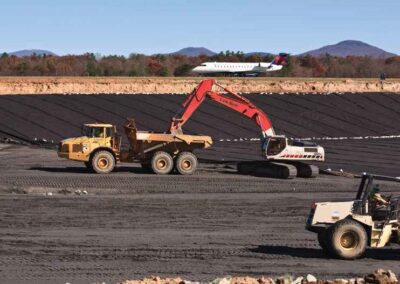
When it came time for Asheville Regional Airport (AVL) to reconstruct its only runway, the management team got creative. Instead of resigning to an extended shutdown that would have effectively put the North Carolina airport out of business for an extensive period, they decided to build a new taxiway and use it as a temporary runway while the existing runway is demolished and reconstructed.