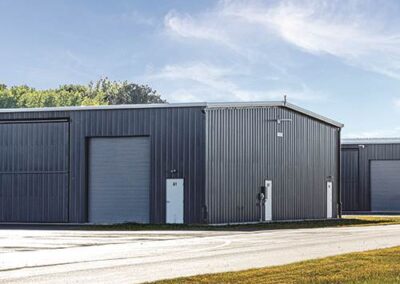
A renaissance is underway at Rocky Mount-Wilson Regional Airport (RWI) in Elm City, NC. And master plan improvements are propelling it forward. Airport Director Dion Viventi reports that several infrastructure projects executed in 2019 and 2020 are already boosting RWI's bottom line.
When Akron-Canton Airport (CAK) completed a $37 million gate modernization and concourse expansion last fall, the northeast Ohio airport also celebrated the culmination of its 10-year, $115 million capital improvement program. Together, the projects update the 1960s terminal, allow it to accommodate all current aircraft and right size the facility for future growth.
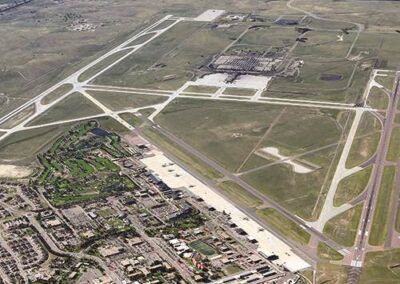
To-do lists at Colorado Springs Airport (COS) are no longer paperwork manila files, sticky notes or even email threads. Instead, maintenance tasks and work orders are managed in a sophisticated software program that tracks all aspects of general operations, from airfield and landside to terminal/facilities and information technology.
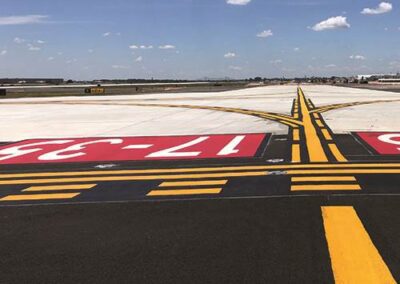
The multi-year $25 million East Airfield Rehabilitation at Philadelphia International Airport (PHL) was completed 71 days early'and that was after having to shut down due to COVID-19. 'With construction progressing so fast and money still in the budget, PHL even managed to take advantage of reduced airfield traffic from the pandemic to add extra taxiway overlays to the project scope.
Last August, Minneapolis-St. Paul International Airport (MSP) completed construction of an 11-story parking ramp and transit facility at Terminal 1. When the $443 million project broke ground three years earlier, MSP was in the midst of a 10-year growth trend that peaked with a record 39.5 million passengers in 2019. But by the time the project was finished, the airport was only serving about 25% of its normal volume due to the COVID-19 pandemic.
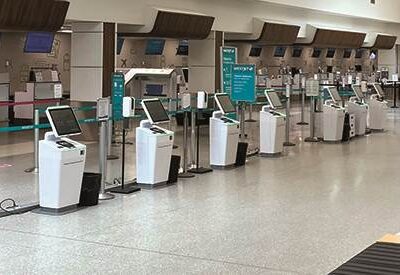
Well before the coronavirus pandemic intensified demand for contactless transactions, Los Angeles World Airports (LAWA) embarked on a quest to enhance the travel experience at Los Angeles International Airport (LAX) by creating a seamless digital experience from curb to gate.
Stephen Maybury, president and chief executive officer of Skyxe Saskatoon Airport (YXE), aptly proclaimed 2020 a year of 'resilience and fortitude.' At the low point in April, passenger volume at YXE was off fully 98%, and it remained down 69% through year-end.
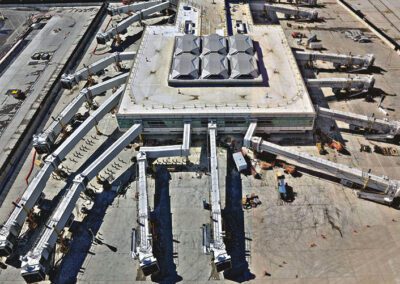
In April, the Washington, D.C., airport unveiled its new 14-gate concourse, a 230,000-square-foot facility built to replace its remote and cramped Gate 35X. Until recently, about 6,000 American Airline passengers rode airside buses every day to Gate 35X, where they boarded regional jets parked at 14 hardstand gates. The arrangement was the airport's way of continuing vital service while demand stretched beyond its contiguous facilities.
This May marks 75 years of the federal government providing grants-in-aid programs to build and enhance U.S. airport infrastructure; and the FAA Airport Improvement Program (AIP) is in its 40th year. What we now know as AIP began in 1946 as the Federal-Aid Airport Program.
As U.S. airports prepare to turn the corner on the pandemic and the harsh winter of 2020-2021, some still face a significant long-term challenge: the rise in sea levels resulting from climate change. Although the biggest risk is to airports located along the Atlantic, Pacific and Gulf coasts, experts predict secondary effects for inland airports as well.
Until recently, the common-use gates at Eisenhower National Airport (ICT) were a bit like Wichita's version of the Wild West. The system worked fine when gates were, in fact, open. But when two different airlines wanted to use the same gate, there was no clear way of deciding which had priority.
Fuel storage facilities at McCarran International Airport (LAS) in Las Vegas and California's Oakland International Airport (OAK) are using a new cloud-based asset management system to overcome obstacles that plague the entire industry'problems such as a lack of timely, accurate information and multiple software programs that don't speak to each other.
Maintenance personnel at McCarran International Airport (LAS) no longer put pen to paper when they log maintenance performed on runway lights. Instead, a digital asset management system uses GPS technology to track the work performed and pushes the information to a cloud-based platform to enhance the accuracy of maintenance records.
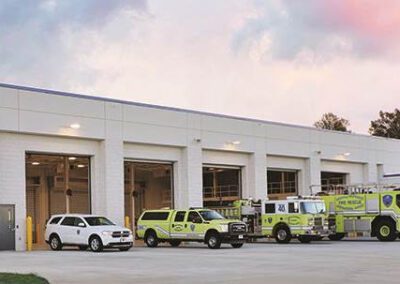
Firefighters at Greenville-Spartanburg International Airport (GSP) are thrilled with the new aircraft rescue and firefighting (ARFF) station they moved into last November. At 24,000 square feet, the facility is triple the size of the previous station, and also includes updated features and comforts for crews and equipment.