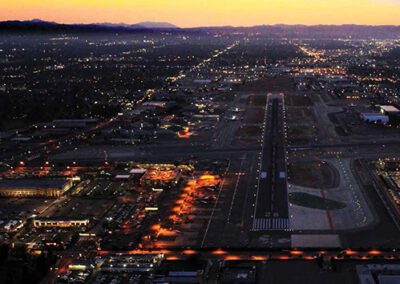
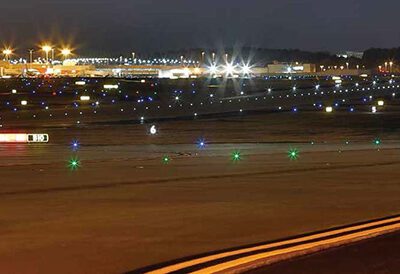
The lights are once again bright at Burbank Bob Hope Airport (BUR), thanks to three years of planning and teamwork, plus a giant dose of resiliency. After enduring a complete airfield lighting failure, the Southern California airport rallied to reconstruct an entirely new system.
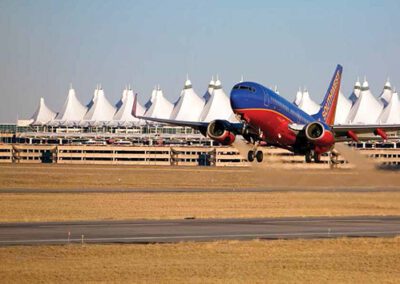
In addition to the standard noise abatement challenges all airports face, Denver International (DEN) has an additional layer of complexity: a stringent noise compliance agreement with its county that dates back to 1989. Each of the agreement's 101 points includes a $500,000 annual penalty; so noise infractions could potentially cost DEN more than $50 million every year.
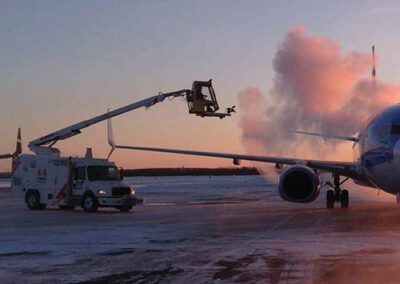
Halifax Stanfield International (YHZ) is staking its claim as an industry leader in environmental management with the commissioning of a glycol recovery and distillation facility built at the Nova Scotia airport last year. The new system not only collects spent glycol from YHZ's aircraft de-icing operations, it also recycles the liquid and uses it to produce Type I aircraft deicing fluid that is subsequently reused at the airport.
Recently, I read an article about the steps Pfizer has taken to shape its internal culture. It really caught my attention that the pharmaceutical giant explicitly uses the provocative phrase "no jerks" to convey how management expects employees to behave.
The name Advisory Circular (AC) is a bit of a misnomer, as many are more mandatory than advisory in nature. The latest version of AC 150/5340-26(C), Maintenance of Airport Visual Aid Facilities, is a clear example of an FAA document that does more than advise.
Hartsfield-Jackson Atlanta International Airport (ATL) recently completed two massive projects to relight and remark its airfield. Almost all of the work occurred simultaneously, from March 2014 to July 2015. Together, the improvements cost the airport about $34 million - with no outside funding.
It's no secret that aircraft and birds don't play well together. Dayton International (DAY), Ohio's third-largest airport and the historic birthplace of aviation, strives to keep the peace on its airfield by separating the two populations from one another.
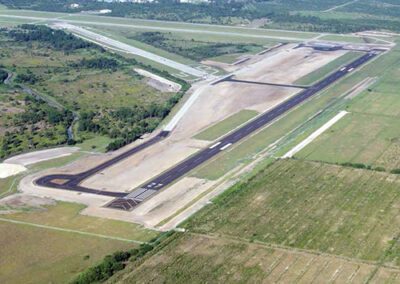
Justin Lobb, manager at Immokalee Regional (IMM) in Florida, doesn't mince words when he recalls how badly the airport's north-south runway needed a major makeover: "The pavements showed signs of water intrusion and longitudinal cracking. The maze of drainage ditches between the runway and Taxiway B also presented maintenance challenges. Irregular grading had resulted in unsafe ponding and wildlife attraction conditions, and the area was accessible for maintenance only during the dry season."
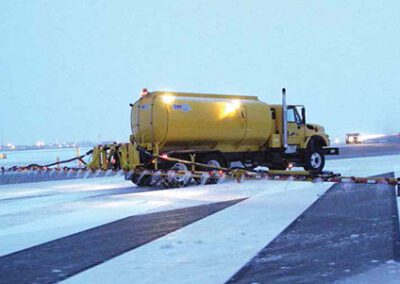
When environmental concerns prompted the FAA to ban ammonium nitrate (also known as urea) for pavement deicing, airports throughout the country had to find a replacement for the once-standard chemical. Salt Lake City International Airport (SLC) seems no worse for wear. Its crews now use three different deicing agents, and a revamped purchasing process helps the airport secure a competitive price for each one.
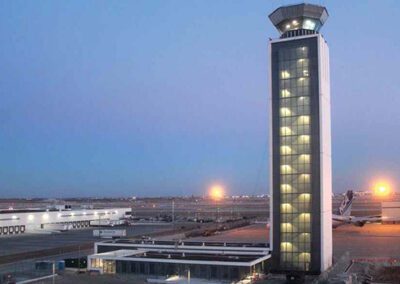
A new air traffic control tower is always a big deal; but the commissioning at O'Hare International Airport (ORD), scheduled for mid-October, is bound to garner extra attention. The tower's non-traditional angular design will undoubtedly turn heads within the industry, and those who look more closely will find notable eco-friendly elements. Internally, the opening of the new south tower and runway it will serve moves the Chicago Department of Aviation one major step closer to finishing its $8.7 billion airport modernization program.
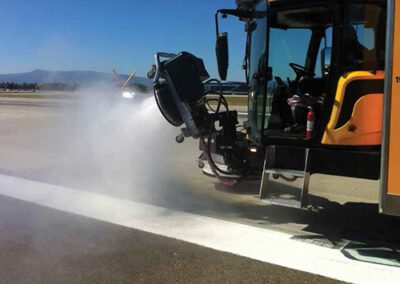
Removing rubber from runways is a significant maintenance expense at most big-city airports. As such, facility operators are continually debating the relative merits of outsourcing the job or investing in personnel and equipment to handle the ongoing task in-house. Given the cost and safety-sensitive nature of the work, it's a pivotal decision.
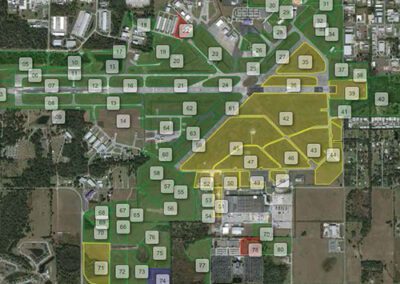
Mowing an airfield requires an organized process - especially in Florida, where grass grows quickly thanks to never-ending sun and ample moisture. Lakeland Linder Regional Airport (LAL), situated on 1,700 acres of land between Tampa and Orlando, enhanced its approach last summer by changing from one-dimensional paper recordkeeping to a more integrated cloud-based software system.
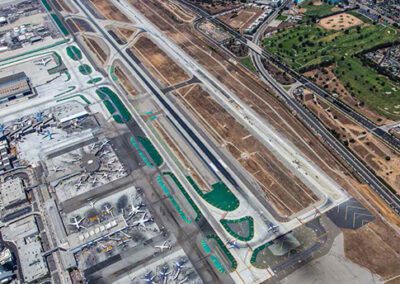
Los Angeles World Airports (LAWA) is nearly halfway through an ambitious three-year project to bring all four runways at Los Angeles International Airport (LAX) into compliance with FAA runway safety area requirements.