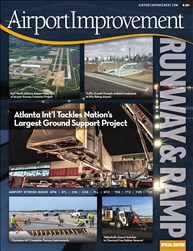
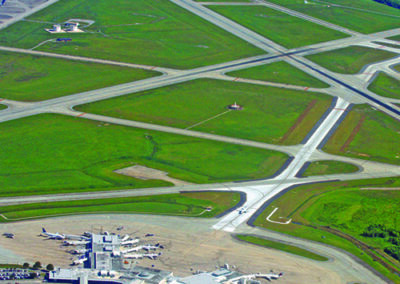
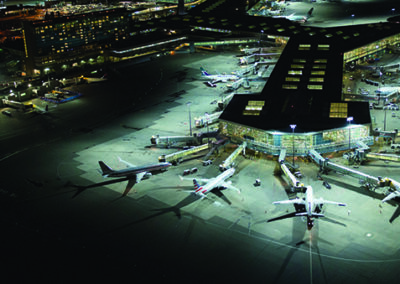
When Hartsfield-Jackson Atlanta International Airport (ATL) was built, it was the largest airport construction project of the time. Today, the airport is continuing that legacy with the single largest ground support project in the history of the United States.
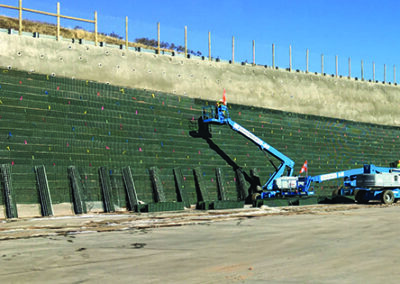
According to popular sentiment, it can be easier to move an entire airport rather than railroad tracks that run through or near it. But Fort Worth Alliance Airport (AFW) managed to move the tracks. And a state road as well.
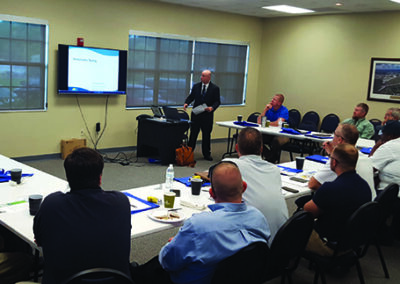
Florida is not just filled with beaches and tourist attractions. Thanks to the Florida Airports Council, it's also brimming with free professional development opportunities for maintenance and airfield personnel.
Closing a runway for any amount of time is hardly a popular idea. However, San Francisco International Airport (SFO) recently found that a series of weekend closures was the best way to perform necessary upgrades at its busy airfield safely and efficiently.
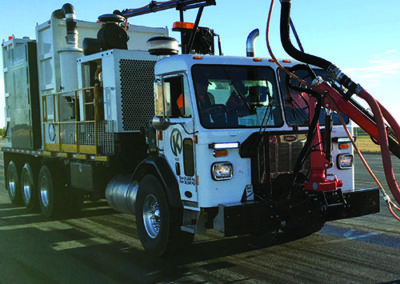
Repairing and maintaining runways without disrupting flight operations is a universal goal for airport operators. This summer, Yellowknife Airport (YZF), in Canada's Northwest Territories, managed to strip the rubber residue from its main runway and secondary runway in two days-without causing any interruptions to service or using harsh chemicals.
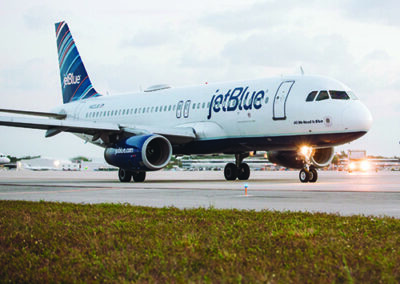
South Florida is a hot tourist area, with air traffic increasing steadily for the last few years. To cope with overall passenger growth and seasonal swings, Fort Lauderdale-Hollywood International Airport (FLL) is leveraging information technology and automation.
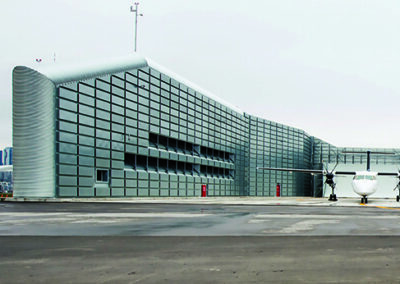
Last year, Billy Bishop Toronto City Airport (YTZ) served 2.7 million travelers-quite a jump from just 25,000 passengers in 2005. PortsToronto, which owns and operates the Ontario airport, has invested in several upgrades to meet the growing demand. Improvement projects began on the landside and are now migrating to the airfield.
After overcoming space constraints, geological challenges and complications associated with high altitude, Telluride Regional Airport (TEX) in Colorado is thrilled to have a new $7 million deicing pad ready to boost operational efficiency again this winter.
"Why did the chicken cross the road'" is always good for some giggles on the schoolyard. But it's no laughing matter when a deer, coyote or goose crosses a runway or flightpath to get to the other side. In the most serious cases, it can be a matter of life or death.
As a joint-use airport, Charleston International (CHS) serves a diverse mix of traffic. On any given day, the South Carolina airfield accommodates a variety of commercial airliners and U.S. Air Force aircraft, including mammoth C-17 transporters. It also has enough general aviation traffic to support two fixed-base operators and is home to Boeing's only final assembly plant for the 787 Dreamliner outside of Everett, WA. The unique blend of traffic at CHS is evident whenever a new Dreamliner taxis by the main terminal for a test flight or ground evaluation, and passengers in the boarding lounges buzz with excitement.
Earlier this year, Vancouver International Airport (YVR) flipped the switch on its new all-LED apron lighting system, the largest apron LED installation in Canada. The approximately $2.5 million ($1.97 million U.S.) lighting system also features an adaptive dimming system based on gate usage, a first among North American airports.
There are certain truths involving airports and the customers they serve. Public scares involving health and safety often seem to position airports front and center. It may not always be warranted, but it's something we need to deal with.
The Design-Build project delivery approach merits further consideration by more airports. Uncertainty and unfamiliarity are best overcome by education, experience and for some, a leap of faith into the relative unknown.