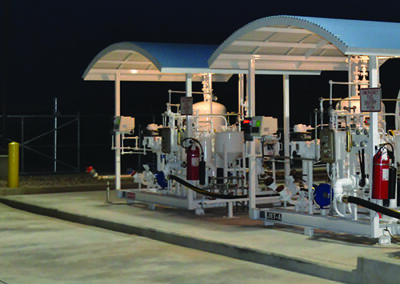
After a decade of surging traffic, South Texas International Airport (EBG) needed to upgrade its fueling operations to keep customers streaming in. So that's just what Airport Manager Debora Melvin did.
Completing airfield construction around the hustle and bustle of fully operational commercial service is challenging enough. But the margin for error is almost nonexistent when flights are grounded right before Christmas and the work window is just 15 days.
Orlando International Airport (MCO) is on track for continued growth and increased intermodality with the debut of its South Airport Automated People Mover System early this fall.
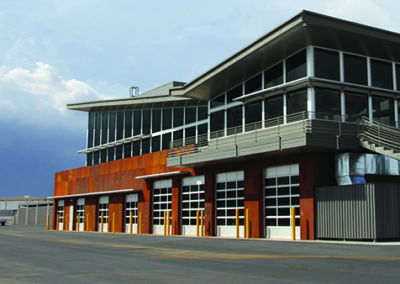
This spring, Scottsdale Airport (SDL) in Arizona received good news about its new Operations Center. The U.S. Green Building Council awarded the building silver certification for Leadership in Energy and Environment Design (LEED).
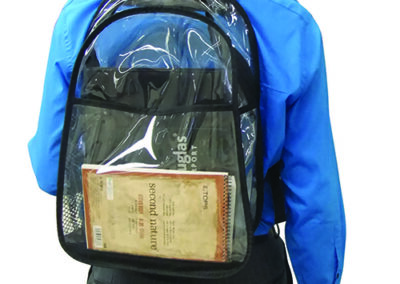
In February, Charlotte Douglas International Airport (CLT) began requiring workers to carry their personal items in clear bags when passing through security checkpoints on their way to work. The new policy began just as the House Homeland Security Committee released a report titled America's Airports: The Threat from Within, which highlighted a lack of employee screening and vetting at U.S. airports.
When Facebook launched in early 2004, I wasn't one of its earliest adopters. (I'm simply not that trendy-just ask my family.) But as it gained traction, I joined and Airport Improvement did, too.
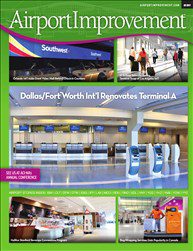
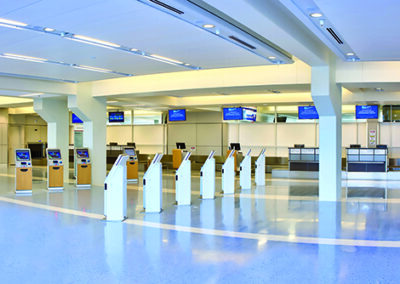
Dallas/Fort Worth International (DFW) celebrated another milestone of its $2.7 billion Terminal Renewal & Improvement Program (TRIP) in January, with the completion of renovations in Terminal A. The $650 million Terminal A project kicked off in 2011 and, like the entire capital program, centered around improving the customer experience.
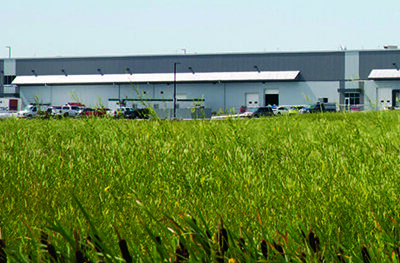
The business world loves a company in growth mode and gets downright giddy when projects bring several growth-oriented companies together. That said, the recently completed multi-tenant complex at Edmonton International (YEG) could be a poster child for concurrent expansion by airport service companies.
When you hear the word "Orlando," you probably think of vacation attractions: Disney World. Sea World. Beaches. Golf. Or perhaps you've attended an event at the Orange County Convention Center, the second-largest convention complex in the United States.
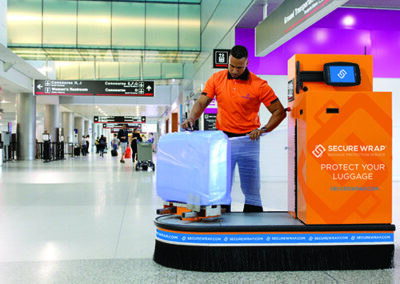
Already commonplace in South and Central America, bag-wrapping services are gaining a foothold in the North American marketplace, with a high concentration in Canadian airports.
A challenging management issue is emerging at many U.S. airports: As increasing numbers of long-time senior executives prepare to retire, their next-in-line successors typically don't have the business, management and leadership skills the top positions demand.
People outside the industry sometimes think of airports as nothing more than places for airplanes to land and take off. Halifax Stanfield (YHZ) in Nova Scotia aspires to be much more-for passengers and its community.
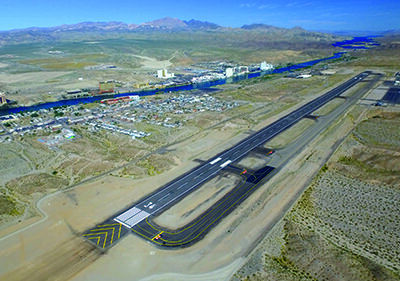
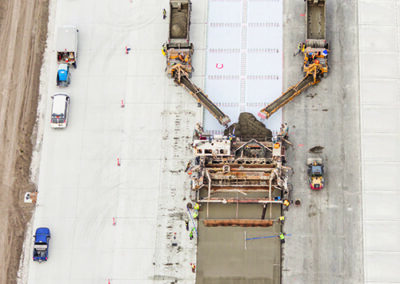
Aéroports de Montréal recently rehabilitated the primary runway at Montreal-Mirabel International (YMX), one of the three largest aeronautical centers in the world and a major hub for Quebec's economy that serves 24 cargo airlines and a host of corporate and military tenants.
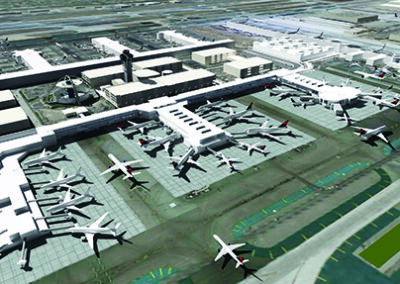
Los Angeles International (LAX) recently experienced a monumental shift that had nothing to do with seismic activity or regional fault lines. It was a self-induced shift to relocate Delta Air Lines that ultimately affected more than two dozen carriers.
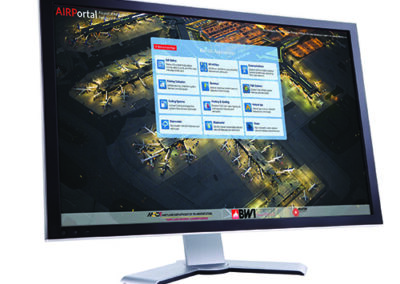
The Maryland Aviation Administration is transforming the way it manages the volume of facility documents and geographic information system data generated and used at its two airports.
In May, Raleigh-Durham International Airport (RDU) received a giant shot in the arm when it was named the best-connected medium-sized airport in the United States. Industry analyst William S. Swelbar cited 47 nonstop routes and a diverse group of carriers as major factors in the North Carolina airport's top ranking. (See sidebar on Page 62 for more details.)