The location of Tampa International Airport (TPA) is both a blessing and a curse. Being near the upper shore of Tampa Bay provides sought-after views and a convenient location in the middle of the Tampa Bay region. By the same token, though, it also puts the airport at risk for flooding and other damage when extreme weather moves up Florida’s Gulf Coast.
When Hurricane Milton hit the Tampa area in 2024, TPA officials were dismayed by how much water breached the airfield. “We saw the bay get to the highest levels we’d seen in quite a long time,” remembers TPA Construction Director Dan Seeley. “Floodwaters approached the west airfield, the section near the bay, and we’d never seen that.”
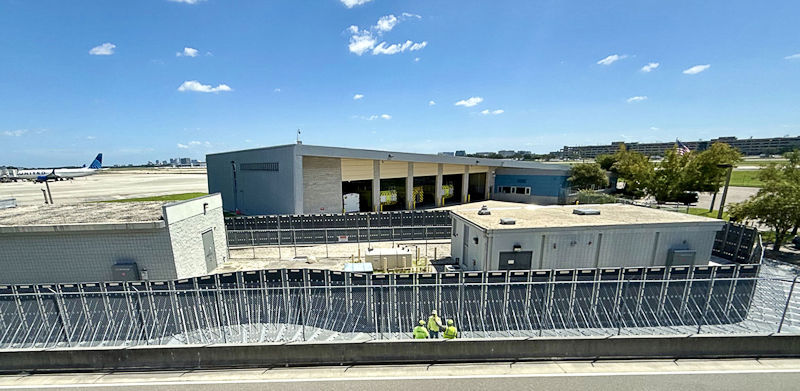
While TPA was anything but flatfooted when Milton hit, having water on the airfield highlighted the region’s severe storms and revved up management’s long-term efforts to adapt to changing climate conditions. Personnel immediately reassessed the vulnerability of crucial airport infrastructure, particularly two airfield electrical vaults beside the Aircraft Rescue and Firefighting Station. Although the vaults have never flooded, waters associated with Hurricane Milton came too close for comfort.
 facts&figures Project: Protecting Airfield Electrical Vaults Strategy: Location: Cost: $1.9 million Funding: Airport capital funds; $55,177 Airport Improvement Program grant Product: Clima Armour FloodWall, from AquaFence Size: 9 ft. tall; 150 panels Construction & Maintenance: Product Purchased: Related Construction: Early Aug. 2026 to early Sept. 2026 Climate Change Resilience Assessment & Modelling: 2019, by RS&H Key Benefits: Protecting key assets that support operational continuity; system can be removed from storage & assembled in hours when major storms are predicted |
For TPA, the major issue was torrential rains—more than 11 inches in just a few hours. The event “opened our eyes to sea level rise, storm surge and that things have changed,” Seeley says. “Older [weather] models didn’t reflect what the environment was doing now.”
In the aftermath of any storm, keeping the airfield lights operating is crucial to keeping the airport operating and aiding recovery efforts. Electrical vaults protect the equipment that powers the airfield, therefore TPA officials were intent on protecting them.
To do so without adding significant permanent infrastructure, the airport purchased a deployable barrier system from AquaFence last year. TPA’s Clima Armour FloodWall is designed to protect its electrical vaults during sustained winds up to 140 mph, the kind Category 4 hurricanes include. In contrast, Milton pounded Tampa with sustained winds of 58 mph and gusts reaching 93 mph.
The $1.9 million project was paid for with airport capital funds, including a $551,117 Airport Improvement Program grant from the FAA.
Increasing risks associated with extreme weather have been underscored in recent years by storm damage at all three of TPA’s sister general aviation facilities, also owned and managed by the Hillsborough County Aviation Authority. Tampa Executive Airport (VDF), Plant City Airport (PCM) and Peter O. Knight Airport (TPF) each sustained varied combinations of flood, hangar, power and other damage from Milton. The brunt was especially hard felt at South Tampa’s TPF, which sits directly on the waterfront and had also been hit the previous month by Hurricane Helene.
One More Tool for the Box
Even though TPA was spared significant damage from Milton, officials felt more had to be done to protect the airport’s infrastructure. And it needed to happen straightaway. Leaders felt compelled to augment what had already been accomplished over the last decade.
In 2014, the airport assessed its weather-vulnerable infrastructure and established new structural hardening standards. That effort initiated a series of runway and ramp rehabilitation projects, and also prompted construction of a solar array to reduce dependence on the local electrical grid during power outages from storms. In 2019, a Climate Change Resilience Assessment and Modelling study by RS&H created a flood map based on roughly 1,000 possible weather scenarios through the years 2050 and 2100.
Influenced by those initiatives and in the course of a Master Plan Update, TPA constructed a new office building that includes the airport administration hub called SkyCenter One, a nine-story facility separate from the Main Terminal that is hardened to withstand storms and flooding. Additionally, the airport developed a Sustainable Management Plan and updated its Master Plan accordingly in June 2024.
Seeley explains that the previous studies and weather modelling helped TPA assess its critical infrastructure based on operational value and risk of damage in order to set priorities for bolstering various pieces against potential storm damage in the future. Using those metrics, the airfield electrical vaults were ranked as the “No. 1 asset.”
 “We really needed to do some sort of flood barriers to protect the vaults from flooding due to a hurricane,” Seeley emphasizes.
Smitha Radhakrishnan, TPA’s chief development officer, puts the overall effort at TPA in context: “As a major regional economic driver and transportation hub, we must continually evaluate how our ability to serve the community could be disrupted and how best to prepare for those risks. That means considering a wide range of scenarios and vulnerabilities across our facilities and operations.
“While AquaFence is a direct response to the threat of storm surge, our overall approach to resiliency goes beyond any single solution. It is embedded in how we plan, design and operate the airport, with careful attention to how we can anticipate, respond to, and recover from potential disruptions. This approach is part of TPA’s culture and informs everything we do.”
More specifically, when storm surges occur, “it’s imperative that we be able to operate the way an airport should operate, and that includes having a functional airfield lighting system,” she says.
Many Strategies
Airports around the U.S. have implemented a diverse range of responses to increasing storm risks. They include permanent perimeter floodwalls, as at LaGuardia Airport; floodgates and a system of earthen levees at San Francisco International; and gates, levees and a perimeter dike at Oakland San Francisco Bay Airport. Taking yet another tack, Philadelphia International and Louis Armstrong New Orleans International have elevated key infrastructure.
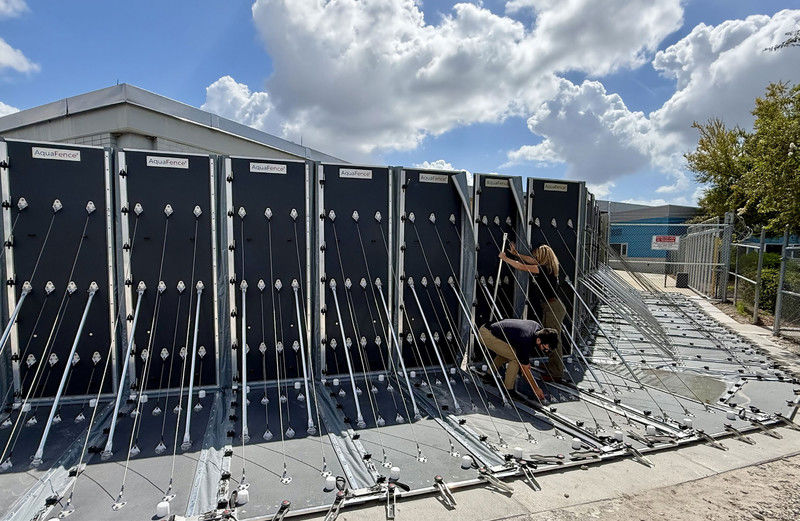
The 150-panel flood barrier is stored on site and assembled only when needed.
Like TPA, Boston Logan Airport added an AquaFence system to its overall resilience program. It was deployed in and around Boston Harbor before a March 2018 nor’easter.
As various airports explore their options, Patrik Hansson, president of AquaFence, is noticing more of an inclination toward action. “We’re seeing a real shift in how airport leaders approach flood protection, moving from discussion to active planning and budgeting,” he reports. “Decision makers are looking for real-time, proven solutions that can be quickly deployed, with protection and business continuity being the driving forces.”
 Leaders at TPA discovered their preferred option in 2024, when Tampa General Hospital deployed an AquaFence system to protect its facilities during Hurricane Helene. Discussions ensued with the Norwegian company’s Tampa office, and TPA bought a Clima Armour FloodWall in August 2025.
The Aviation Authority awarded H.L. Pruitt Corp. the contract for construction and ongoing maintenance. From early August to early September 2026, its crews poured concrete pads and embedded anchoring systems within them to secure the barrier during the extreme weather for which it is designed. A pump system also was installed to divert water from heavy rainfalls away from the vault area.
The vaults’ proximity to one of the airport’s satellite boarding areas created challenges for project designers and construction crews alike. “We had to be sure that we took extra care to make sure that the buried electrical conduits were taken into consideration and not struck while they placed the foundations for the barrier,” Seeley explains. As a precaution, H.L. Pruitt used hydrovaccing/hydro evacuation when digging and clearing away onsite debris. The method leverages high-pressure water and a vacuum system to expose obstructions such as utility lines without damaging them.
“They did a fantastic job,” says Seeley, noting that crews didn’t hit any conduits or other utilities.
A Contingency That Can be Stored
Clima Armour FloodWall, the particular model TPA selected, is 9 feet high and the tallest version AquaFence sells. The panels are made of marine-grade stainless steel and Baltic birch plywood covered in Clima Armour™, the company’s proprietary surface coating for added durability; polyvinyl sheeting and gaskets help seal out floodwater.
According to AquaFence, the system can be set up in eight to 12 hours. When not in use, the panels are stacked and stored at the airport. TPA had an existing contract with Belfor for remediation and storm response services, and is now negotiating an additional clause to cover the deployment of its new flood barrier. Radhakrishnan and Hansson both emphasize the importance of having trained personnel to deploy a barrier correctly and quickly.
Hansson also stresses that AquaFence systems are not a cookie-cutter solution. “Each one is engineered and customized to a site’s specific vulnerabilities and flood protection needs,” he explains. Company personnel assessed the location and dimensions at TPA before its system was produced.
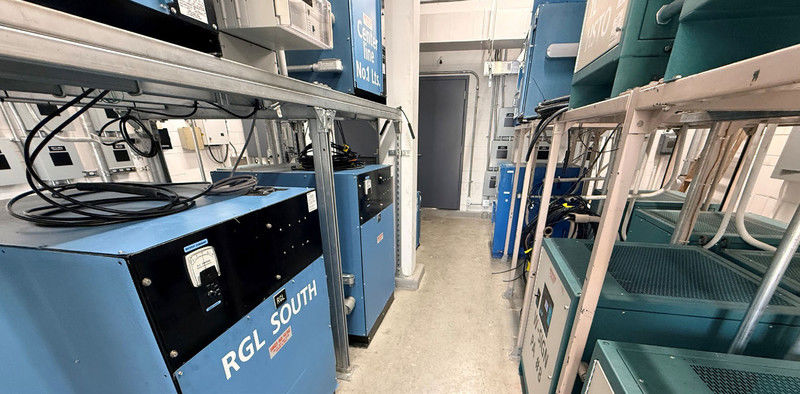
Protecting the electrical vault against floodwaters is essential to maintain flight operations after heavy storms.
Airport officials unveiled the results to local media at an on-site event in mid-September. The barrier’s 150 panels were in place and braced, and AquaFence crews demonstrated how to assemble and bolt together the pieces.
“We have a high degree of confidence in its ability to perform as intended,” says Radhakrishnan.
Changing Risks, Consistent Goals
No matter what product or strategy an airport chooses to fortify its campus against extreme weather, safeguarding infrastructure and ensuring operational continuity are common motivating factors.
 Radhakrishnan’s perspective on the process at TPA is informative. She says evaluating critical assets, assessing their vulnerabilities, and developing a detailed implementation plan were pivotal steps. “Rigorous planning and strong stakeholder collaboration throughout the process were key to making the solution successful,” she adds.
Effects on the guest experience were also central in her mind. (Last year, the airport served 24.8 million passengers.) “Maintaining our level of service is always our top priority,” says Radhakrishnan. She points to the deployable floodwall as a prime example of how TPA doesn’t just look for ways to get through a challenge; it looks for solutions that help the airport prevail in an “expedient and exemplary manner.”
Hansson emphasizes that today’s weather events require modern innovation. “Sandbags and other flood mitigation tactics can only take you so far,” he remarks. “While it may sound cliche, the common phrase ‘better safe than sorry’ is especially applicable to flood mitigation.”