This spring, a reimagined concessions program emerged at Terminal 8 in John F. Kennedy International Airport. The $125 million project more than doubled the terminal’s commercial footprint and delivered dozens of new places for passengers to eat, drink, shop, relax and be entertained. The massive effort was a collaboration among the Port Authority of New York and New Jersey (which operates the entire airport), American Airlines (the terminal operator and largest carrier), ASUR Airports (terminal commercial developer and manager) and Phoenix Infrastructure Group (ASUR’s equity partner for the project).
The comprehensive commercial redevelopment follows the broader $400 million expansion and modernization of Terminal 8 led by American that added five widebody gates, four new widebody parking positions, a larger and upgraded baggage handling system and 130,000 square feet of new and refurbished space.
Cultural Identity
The concessions redevelopment initiative was led by ASUR Airports, which has managed the commercial program at Terminal 8 since the building opened in 2007. It added more than 60 new food/beverage, retail and duty-free locations—all designed to elevate the passenger experience by blending local and global favorites with unique new concepts. There are also experiential concepts for entertainment, relaxation or a quiet place to work in the ever-busy terminal.
| facts&figures
Project: Comprehensive Commercial Redevelopment Location: John F. Kennedy International Airport, in Queens, NY Terminal: 8 Airport Owner: City of New York Airport Operator: Port Authority of New York & New Jersey Terminal Operator: American Airlines Terminal/Commercial Management: ASUR Airports Equity Partner: Phoenix Infrastructure Group Key Benefit: Enhancing the passenger experience Scope: 60+ new food/beverage, retail & experiential concepts Footprint Expansion: From 7,000 sq. ft. to 16,000 sq. ft. Budget: $125 million Completion: April 2026 Programs to Broaden Business Participation: ASUR Accelerator Program; Port Authority’s Institute of Concessions Lead Developer: ASUR Airports Contractor: Holt Construction Food Hall Joint Venture: MERA US, Tsion Enterprises, Food Cycle LLC, South River Partners Duty-free Operator: Avolta North America (Dufry) Digital Activation: The Show Screen Size: Architect: Mancini Duffy Audio-Visual Designer: WJHW, a PMY Group company Technology Advisors: System Integrator: Norcon Communications |
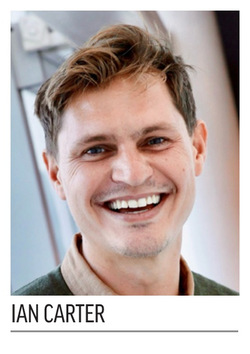
Reflecting the diversity and cultural identity of Queens and New York City was a key priority, and about one-third of the dining and retail tenants are local brands. “We really placed an emphasis on locally owned, diverse businesses that could create economic opportunities for the community, showcase New York’s culinary scene and really establish that all-important sense of place for our travelers coming through the building,” says Ian Carter, the ASUR vice president who focuses on JFK. “And all of that while creating upwards of 300 new concessionaire jobs at the terminal itself.”
ASUR tapped into its long-term experience at JFK as it worked with project partners to “reimagine what this terminal could look like for the next era of travelers,” Carter explains. Information from passenger surveys and community outreach played a prominent role in curating offerings that meet current and evolving traveler needs, trends and expectations, he adds.
“Terminal 8 and its new, locally inspired commercial program will create a unique sense of place that elevates the travel experience to what is now an enjoyable part of the journey,” says Port Authority Chairman Kevin O’Toole. “As we’ve done at Newark Liberty International Airport’s Terminal A, at LaGuardia Airport and now at JFK, the Port Authority is making historic investments with our private partners to create a passenger experience that will be among the best in the world.”
Post-COVID and not long after the investments made by American Airlines in 2022, Carter says the time was right to redevelop and modernize Terminal 8’s concessions program. “We had an opportunity to right-size the program based on the number of enplanements, but also refresh the national brands and the incredible products that are available here in New York and really make this program shine.”
Project designers more than doubled the commercial footprint by identifying and activating previously vacant or underutilized spaces and converting them into retail and dining areas. “We really wanted to make sure that we were maximizing the potential of this building by converting every square inch that we were able to capture,” Carter says. “We were fortunate enough to have great partners in American Airlines and the Port Authority of New York and New Jersey who shared the vision for what this terminal was capable of.”
The Ideal Blend
Amplifying the sense of place was emphasized throughout the program redevelopment, and the project team also worked to provide passengers with variety as well as familiar favorites. Terminal 8 now features a blend of national and local brands. Highlights include the first U.S. airport locations for Eataly and Peach Palace by Momofuku, as well as New York staples like Bowery Meat Company, Black Tap Burger, Dos Toros Taqueria, and Zaros Family Bakery.
Just beyond the TSA checkpoint, passenger traffic moves naturally into the commercial core, which was expanded from 7,000 square feet to 16,000 and serves as a vibrant hub for travelers. The Boroughs Food Hall is operated by a joint venture of MERA US and three small businesses: New York City-based Tsion Enterprises, Food Cycle LLC from Texas and South River Partners of Massachusetts. Together, they offer a mix of local specialties, street food, upscale dining, health-conscious options and
comfort food.
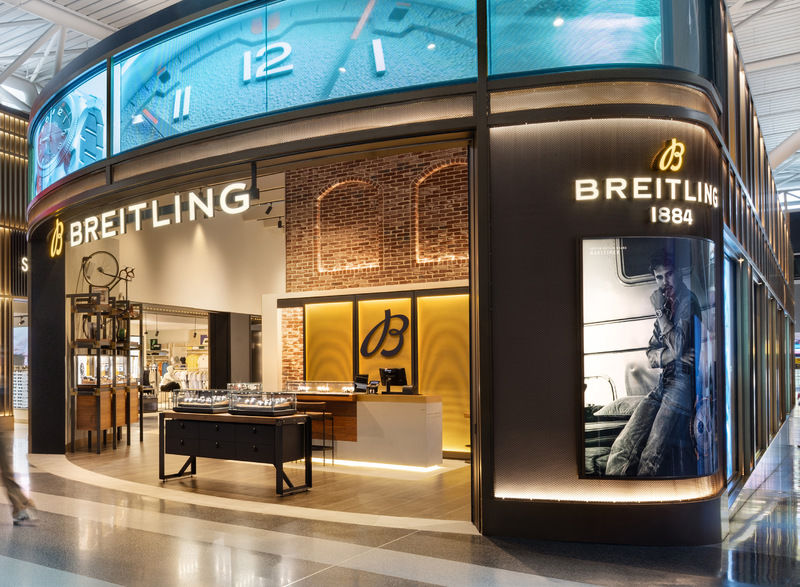
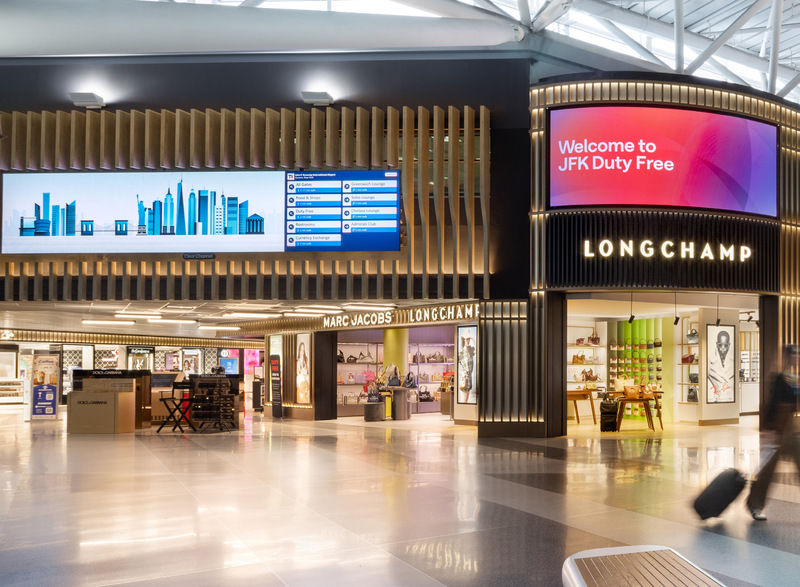
A fully redesigned duty-free environment operated by Avolta’s Dufry includes a collection of luxury boutiques modeled after neighborhood shopping and open-air markets in New York City.
“This program has done a really good job of injecting New York’s identity into the terminal, rather than just [presenting] another generic airport experience,” Carter remarks.
The addition of upgraded amenities provides passengers with new ways to relax, work or be entertained during their travels. Minute Suites offers passengers without premium lounge access an opportunity to disconnect and relax or work in a private space. Gameway’s immersive video lounge is a hit with all ages of gaming enthusiasts.
Each tenant space was developed by the operator working hand-in-hand with ASUR and its design and technical teams to ensure consistency with established design guidelines. Design criteria established by ASUR ensure a cohesive look and feel throughout the terminal, even as individual concessionaires incorporate their own brand identity, says Joshua Mandel, the company’s vice president of Development.
 In addition to overhauling commercial offerings, the project redesigned passenger flow and overall aesthetics. “Passengers really expect the terminal to be part of the experience, not just a waiting room,” Carter notes.
The use of warmer materials, improved lighting and organic design elements helped transform the terminal from a cold, institutional space to a more welcoming and human-centered environment, Mandel explains. “We wanted to destress the experience,” he says. “It’s much more comfortable, warm, human, inviting. You definitely feel it.”
Changes that improve both form and function include the removal of moving walkways to create soft seating areas, and increasing the availability of comfortable and functional spaces for passengers to work or unwind, Carter adds.
Offering a variety of seating options throughout the terminal creates a comfortable, inviting and flexible environment for families, solo travelers and business travelers alike, Mandel agrees.
A digital activation area known as The Show adds opportunities for unique passenger engagement. Strategically located along a high visibility corridor with clear sightlines from the TSA Great Hall and directly across from The Boroughs Food Hall, The Show is designed for retailers and brands to bring their stories to life in vibrant, immersive and engaging ways.
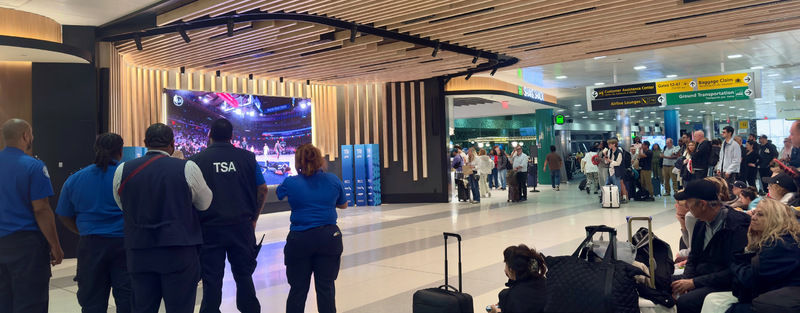
A new digital activation runs content ranging from retail messages to major sporting events.
The LED screen is roughly 13 feet wide and 7 feet high, and is activated for experiences like early morning sound baths, interactive pop-ups, music performances or communal celebrations like watching the Knicks clinch the 2026 NBA Championship and this summer’s FIFA World Cup. Carter describes The Show as a true activity hub within the terminal. “It has unlocked our ability to activate and connect with passengers that we have only dreamed about in the past,” he raves. “It was incredible to see this area come to life.”
Uplifting Support
Initiatives and partnerships designed to help lower barriers for local businesses to enter the airport retail environment are broadening the concessions lineup in Terminal 8. ASUR’s Accelerator Program offers short-term leases (one or two years) that give operators the opportunity to “try their hand at airport concessions and see if it’s really a fit for them,” he explains. “We work with them constantly to improve their sales and understand airport operations.”
The Institute of Concessions, part of the umbrella JFK transformation program, is a specialized training and support program launched in 2023 by the Port Authority intended to increase the number of local and diverse airport concessionaires.
Providing technical assistance, fostering joint ventures between established brands and local operators and, in some cases, offering innovative leasing opportunities benefits the airport, local businesses as well as the passenger, Carter relates. “Much of what makes New York incredible is the small and local businesses, especially here in southeast Queens.”
Mandel says the multi-pronged approach uplifts the community. “[ASUR takes] great pride in nurturing and supporting businesses to get them up and running in this new setting,” he observes. “That is very different than the street world that they come from.”
Five graduates of the Port Authority’s Institute of Concessions are operating in Terminal 8 through licensing deals, product placement and joint venture partnerships: BKLYN BLEND, Rincón Salvadoreño, Harisa Hot Honey, Beautiful Amore Skincare and Neir’s Tavern.
Compressed Schedule
Originally planned as a four-phase project, construction for the concessions redevelopment was compressed into two overlapping phases to meet accelerated timelines. The new timeline required agility and bold decision making to minimize disruption and maintain a minimum of essential passenger amenities to meet the delivery date, Mandel recalls.
 “We had vastly more barricades up at the same time than we had initially imagined, but, as a group, we understood the necessity and were agile enough to pivot and make that happen,” he relates.
Throughout the project, efforts were made to minimize the impact on passengers, says Alan Bates, project director for Holt Construction. Contractors used branded barricades to communicate ongoing improvements and performed much of the necessary demolition and heavy construction overnight.
While renovating the existing terminal, crews uncovered unforeseen field conditions and deficiencies in the legacy building. Bates notes that close coordination with airport operations was crucial to ensure safety and compliance—particularly regarding fire life safety systems and emergency telephony. He also points to innovative tactical strategies, such as removing sections of the curtain wall to allow concrete to be delivered into the building.
Mandel says the project highlights the value of clear and consistent communication, transparency, partnership, bold but kind leadership, and the ability to adapt plans quickly in response to changing circumstances. He specifically highlights the team’s ability to deliver the project with minimal operational impact. Only one flight was delayed, and only by 11 minutes, during the entire project, he reports.
Looking Ahead
Carter says the Terminal 8 concessions project demonstrates how legacy terminals can be transformed to meet modern expectations. It aligns with the Port Authority’s vision for a best-in-class JFK experience and sets a benchmark for future terminal upgrades that are locally inspired and economically and culturally enriching, he adds.
He cites stakeholder collaboration for creating an environment of responsiveness, flexibility and continued innovation during the large-scale leasing effort. Operators are “hungry to find success and really hit the mark” in offering passengers what they want, Carter says. “It takes true partnership, and we feel confident that we’ve established incredible relationships with talented operators.”
With future flexibility in mind, the food hall was designed with the base infrastructure to support changing trends. “There’s always opportunities to rethink, reinvigorate and reimagine the spaces in which we serve,” Carter reflects. “As the aviation industry continues to evolve, we built a strong foundation that we are incredibly excited to continue to build upon and raise the bar for what the passenger experience looks like.”
Since the grand opening in April, he notes ASUR has already seen a “material impact” to its passenger satisfaction scores. “We’re very bullish that this is going to translate into very strong financial success, not only for us, but also our incredible brand and local operator partners that have worked with us to deliver this incredible product.”
Amanda Zhang, vice president of corporate real estate at American Airlines is similarly bullish. “From the beginning, the transformation of Terminal 8 was driven by a vision to modernize our international gateway at JFK and create a more seamless, welcoming journey for our customers and those of our partners,” Zhang recounts. “Together, we’ve delivered a best-in-class experience—from check-in to lounges to more than 60 new dining and retail concepts that bring an authentic New York sense of place to life. The result is a more comfortable and connected end-to-end journey.”
The overall expansion and modernization of Terminal 8 is one of five main components of the Port Authority’s $19 billion JFK Vision Plan.
“Nearly a decade ago, the Port Authority unveiled its Vision plan for the transformation of JFK International Airport into a world-class global gateway that would once again be worthy of the city it calls home,” says Port Authority Executive Director Kathryn Garcia. “With the completion of Terminal 8’s modernization and expansion, including its diverse, locally inspired commercial program, we are giving passengers their first glimpse into what a new JFK will represent with a best-in-class experience from curb to gate.”