This winter, Fargo Hector International Airport (FAR) in Fargo, ND, will begin the aircraft deicing season with a new system for collecting, holding and treating glycol effluent before it is released to the city’s nearby wastewater lagoons.
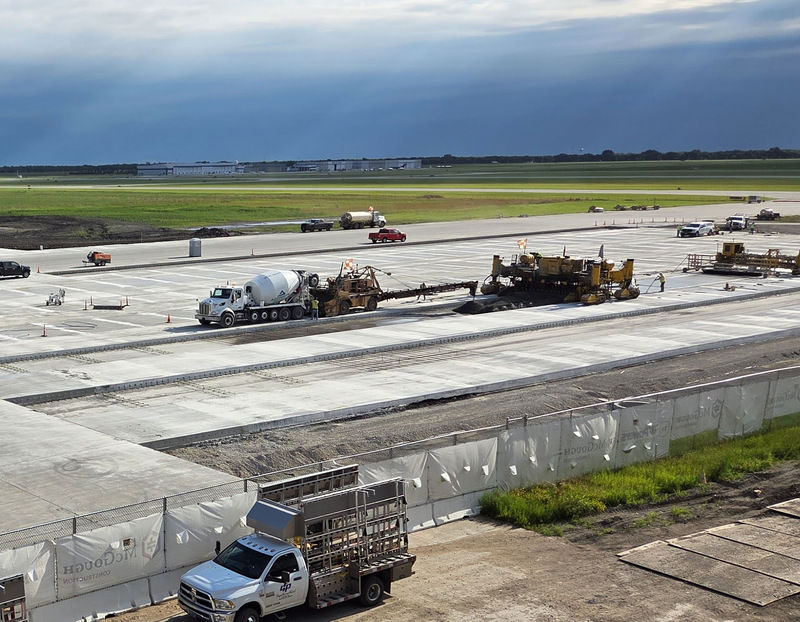
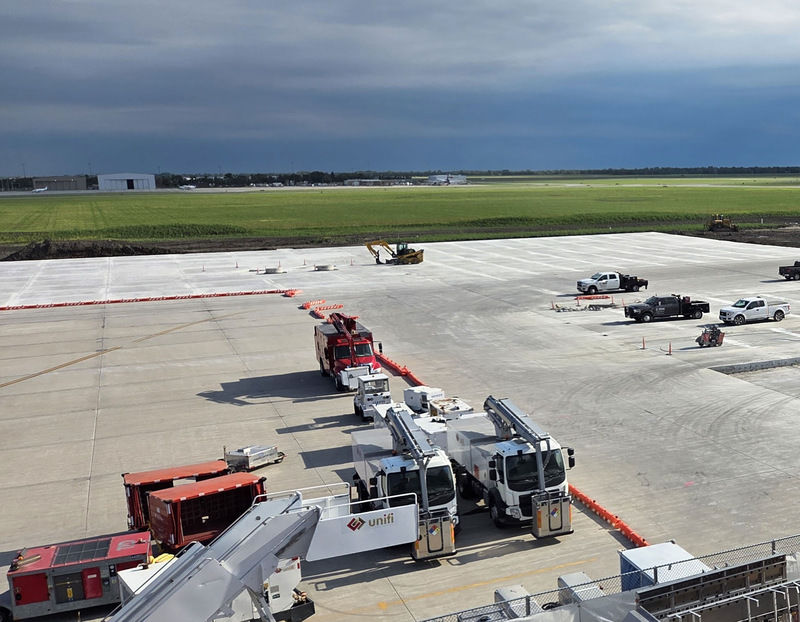
The $13.78 million project was prompted by two apron expansions completed lasted fall: the addition of 87,000 square feet of pavement to make operations at FAR’s five existing gates more efficient, and another 189,000 square feet installed to serve four new gates that opened last spring. Both expansions were needed to accommodate the significant growth in traffic FAR has experienced over the past several years. In 2025 alone, the airport served 1.17 million passengers, surpassing its own previous record.
The addition of so much new airside pavement and associated aircraft traffic required FAR to upgrade its storage and treatment infrastructure for aircraft deicing runoff and general stormwater management.
| facts&figures
Project: Underground Detention/Treatment System for Stormwater & Glycol Runoff Location: Hector Int’l Airport in Fargo, ND Cost: $13.78 million Funding: 90% Airport Improvement Program & discretionary airport improvement grants; 5% state grants; 5% local (design cost covered by CARES grant) Catalyst: Addition of 275,000 sq. ft. of apron pavement Project Timeline: Storage and piping installed Sept. 2024-fall 2025; pumping station completed summer 2026 Key Components: 2,283 linear ft. of piping; steel-reinforced polyethylene tanks with Supervisory Control & Data Acquisition systems; hydrodynamic separators to pretreat runoff Engineer: Mead & Hunt Underground Tanks: DuroMaxx® by Contech Engineered Solutions; TrueNorth Steel Piping: Aluminized corrugated metal piping from Contech Engineered Solutions Water Treatment Device: CDS® Hydrodynamic Separators from Contech Engineered Solutions Construction & Installation Contractors: KPH Inc.; Park Construction Noteworthy Challenges: Excavating through earthen levy to install piping; burying detention system adjacent to an active taxiway |
“With a project like this, being better stewards of the environment is a main objective,” says FAR Executive Director Shawn A. Dobberstein.
In a nutshell, the solution developed by project engineer Mead & Hunt was to slope the pavement on the north apron where aircraft deicing occurs so spent deicing runoff drains into new collection and treatment infrastructure.
Jeff Klein, project manager with Mead & Hunt, notes that all runoff is directed to the same inlet throughout the year. When aircraft are not being deiced and glycol isn’t an issue, the airport can open diversion valves so runoff is discharged into the storm sewer system. When aircraft deicing fluid is being sprayed during winter, valves are changed to direct all runoff to the deicing runoff collection system, where it is pretreated before ultimately getting pumped to municipal treatment lagoons located north of the airport.
Going Underground
Construction of the new underground storage and piping system began in September 2024 and was completed last fall. Installation of the pumping station that transports stormwater and deicing runoff to the city’s nearby treatment lagoons was completed this summer.
The project cost $13.78 million, with 90% funding from Airport Improvement Program and discretionary grants. The remaining 10% of the cost was split between state and local sources.
Engineers from Mead & Hunt worked closely with city engineers when excavating through a crucial levy to install the needed piping. The elevated earthen levy protects the lagoons from overland flooding and helps prevent wastewater from leaking onto adjacent property.
“Excavating through this certified levy was a challenge due to the compaction standards necessary to make certain the levy maintained the required certification,” Dobberstein notes. “The city was great to work with on this aspect of the project.”
Getting Started
Airport officials and the project team considered multiple strategies, including the option to continue hauling away spent deicing runoff, before settling on Mead & Hunt’s system for underground storage and controlled release to the sanitary system. The airport had already installed similar infrastructure adjacent to the original terminal apron and cargo apron, notes Dobberstein.
The first two phases of the recent project addressed FAR’s increased stormwater runoff volume resulting from the increased amount of pavement. Aluminized corrugated metal pipe from Contech Engineered Solutions was buried in two greenfield areas: one north of the terminal, another to the east. One detention system required 1,512 linear feet of 66-inch pipe. The second used 771 feet of 96-inch pipe.
CDS® Hydrodynamic Separators from Contech Engineered Solutions were installed upstream from both systems to provide pretreatment. The continuous deflective treatment devices use swirl concentration and indirect screening to capture and remove contaminants such as trash, debris, soil particles, sediment and hydrocarbons before stormwater runoff is pumped to the city’s lagoons.
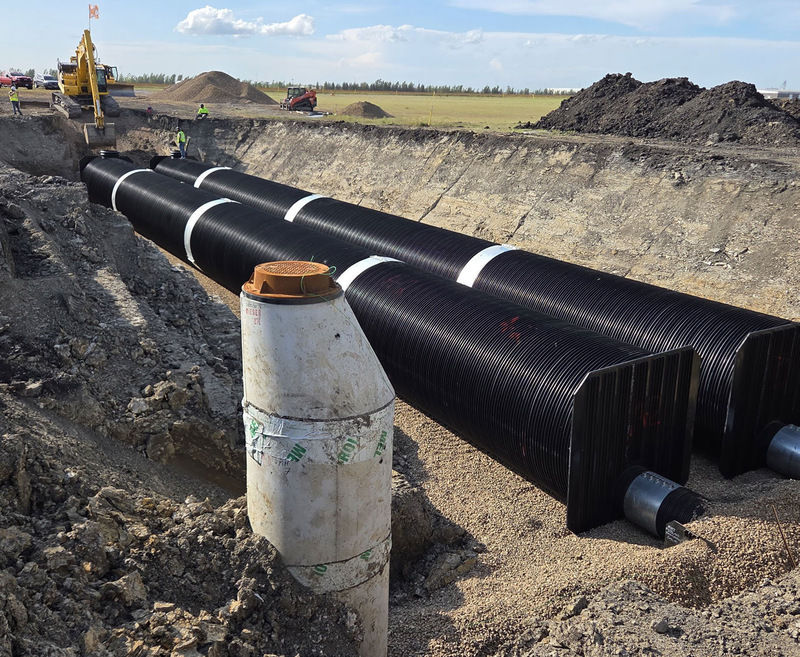
Construction of the new underground system was completed in fall 2025.
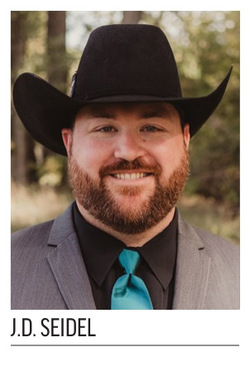
J.D. Seidel, sales engineer at Contech Engineered Solutions, was frequently onsite throughout the project. “The glycol containment tanks we supplied are the first of their kind in North Dakota that we’re aware of,” he notes.
Efficiency and careful scheduling were particularly important when the second detention system was installed because crews needed to bury it adjacent to an active taxiway that serves one of the airport’s main runways.
“We had to close down the main entrance to the terminal apron while this was going on, but fortunately, we have an alternate route to the ramp,” Dobberstein relates. “We orchestrated everything as best we could, working with the airlines and the control tower to make sure it was the most efficient operation possible.”
Seidel notes that Contech installs hundreds of underground detention systems throughout the Midwest annually, including storage for new or spent deicing fluid at dozens of airports throughout the years.
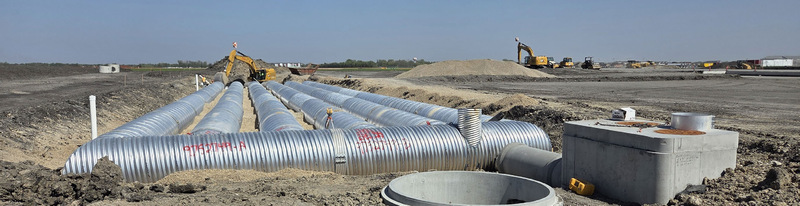
During the first two phases, crews installed more than 2,000 linear feet of Contech aluminized corrugated metal pipe.
Storage and Treatment
During the third phase of the project, crews buried two steel-reinforced polyethylene (DuroMaxx® SRPE) tanks northwest of the terminal. These black barrel-like tanks supplied by Contech, each 120 inches in diameter, are equipped with Supervisory Control and Data Acquisition systems that collect data in real time. The information is monitored remotely, allowing airport staff to discharge spent runoff at controlled discharge rates to comply with the city’s limits for deicing runoff.
“Airport managers have an extremely difficult job. They want systems that, to the extent that is practical, are self-operating,” says Bryan Wagoner, senior environmental planner at Mead & Hunt. “It’s better that this runs smoothly on its own behind the scenes so airport staff can concentrate on airfield and terminal issues.
“The lagoon option with a treatment plant is unique,” he adds. “There is no single silver bullet series of options that allow SADR [spent aircraft deicing fluid runoff] to be managed. It’s always a mixed bag, using different tools from different toolboxes.”
At FAR, an underground system that provides storage and treatment before controlled release to the city’s treatment lagoons prevailed as the preferred option.