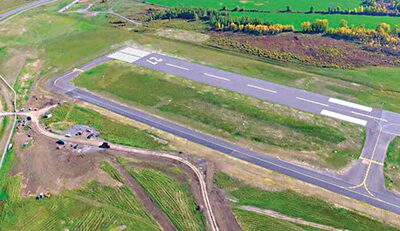
Gene Olson enjoys gazing from the sweeping windows in his office at General Wayne A. Downing Peoria International Airport (PIA). Too often, however, the picturesque view is spoiled by birds-more specifically by thoughts of the damage they could cause to aircraft operating at the central Illinois airfield.
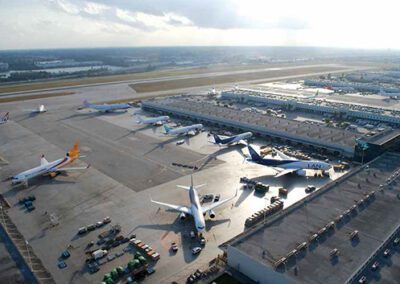
Already a dominant player in the cargo sector, Miami International Airport (MIA) is working to boost business further with three new initiatives. Two are up and running: a new ocean-to-air shipping program and specialized operations as a pharmaceutical hub. The third, a foreign-trade zone, is pending federal approval, with a decision expected early this year.
Thanks to its location in south-central Maine and an extra-long runway from its early days as a military base, Bangor International Airport (BGR) plays a critical and high profile role in the worldwide aviation network. Depending on the direction of travel, BGR is the first or last major U.S. airport for trans-Atlantic flights to make emergency stops.
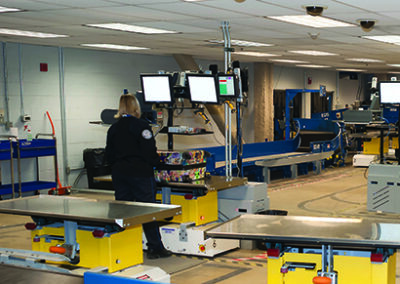
Chasing away unpleasant memories from massive backups at TSA checkpoints last spring, Chicago's O'Hare International Airport (ORD) opened five new automated screening lanes in November.
Like blind dates and family vacations, airport projects don't always go as originally planned. Case in point: the new rental car service center at Bismarck Municipal Airport (BIS) in North Dakota.
These days much of what you see in the press is negative. And part of the blame lies squarely on the shoulders of my brothers and sisters in the media. Some feel that it's easier to sell subscriptions and ads with outrageous or negative headlines, stories and images. I think that's just lazy.
The United States may boast the world's top economy, but that's not evident when travelers arrive at our front door. Sadly, U.S. airports do not impress international travelers. In fact, not a single one made the top 25 in Skytrax's 2016 survey of the world's best airports.
Passengers traveling through Terminal 3 at Phoenix Sky Harbor International Airport (PHX) are getting through check-in faster, navigating the TSA screening process more easily and relishing new views of the desert and city-and more improvements are on the horizon.
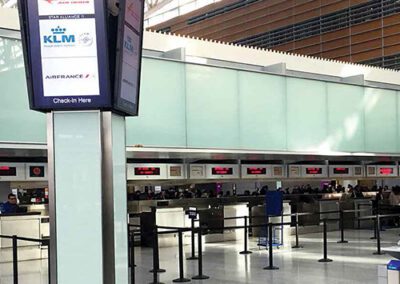
As part of an ongoing effort to improve the passenger experience, San Francisco International Airport (SFO) recently debuted more than 80 new common-use self-service units (CUSS) in its International Terminal.
Who would have thought that Detroit Metropolitan Airport (DTW) and Harley-Davidson could have much in common' As it turns out, the Motor City airport and famed motorcycle-maker use the same robotic delivery carts to improve ergonomic safety for their workers.
As snow removal equipment continues to become more sophisticated and complex, more airports are relying on manufacturers to help train their crews to operate and maintain it. Some are even contracting equipment makers to perform major repairs for them.
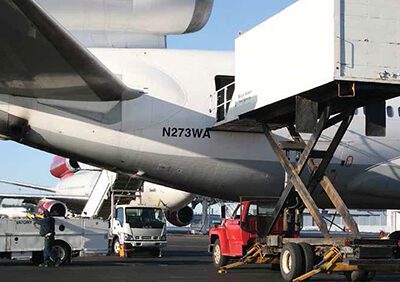
Montreal-Pierre Elliott Trudeau International Airport (YUL) has spent the past two decades honing its aircraft deicing operations into a centrally located eight-pad facility that recycles and reuses spent deicing fluids. It also transitioned to using a single common-use service provider. Together, the two entities have invested approximately $61 million since 1997 to improve the safety, efficiency, cost effectiveness and environmental sustainability of deicing operations at the Quebec airport.
As manager of environmental programs for the authority that operates T.F. Green Airport (PVD), Jay Brolin is intimately familiar with all things, well, "green." Broadly versed in a wide variety of sustainability methods, his vast knowledge base recently expanded to include a thorough understanding of-and unique alliance
with-bugs.
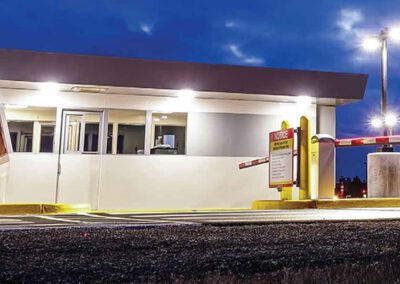
Airport security is like a vexing jigsaw puzzle: There are many unique pieces, and all must fit together seamlessly to achieve a cohesive overall design.
It was a momentous occasion for Ogdensburg International Airport (OGS) when Allegiant Air Flight 1711 took off for Florida on New Year's Eve. The small upstate New York airport was finally breaking the critical 10,000-enplanement threshold to qualify for $1 million of Airport Improvement Program entitlement funding.
It wouldn't be wise to manage a grocery store by stocking an impressive array of fresh produce while skimping on the quality and variety of meats or baked goods. All departments must be strong.