While business across most industries has screeched to a halt or slowed to a crawl amid the COVID-19 outbreak, executives at airports across the U.S. are pushing forward with billions of dollars in construction and improvement projects.
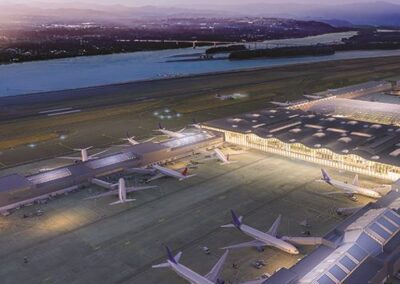
Portland International (PDX) regularly ranks among the nation's top airports for amenities, customer service and traveler satisfaction. Travel + Leisure magazine has rated PDX the best U.S. airport for seven consecutive years. Money magazine ranked it No. 1 in 2019, up from second place in 2018.
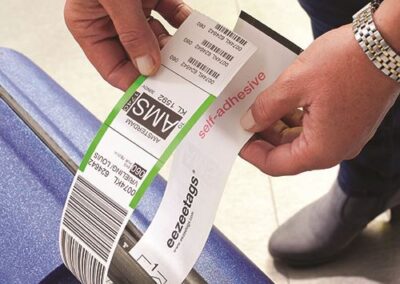
The ticketing lobby at Daniel K. Inouye International Airport (HNL) on the island of Honolulu was transformed late last year with fresh finishes and updated check-in kiosks that print a new breed of bag tags. Podium panels now feature custom graphics designed by a Maui tattoo artist. The new self-service kiosks, 54 in all, allow passengers to check themselves in and print their own tags for checked baggage. But you won't find backing paper from the tags strewn about the floor or overflowing from garbage cans.
What used to be a standard 1990s food court in Terminal 1 at Minneapolis-St. Paul International Airport (MSP) is now a rustic Northwoods getaway, complete with cabin-like seating enclosures and a faux forest.
Washington, D.C. is experiencing an especially mild winter this year. In fact, it is on track to be the fifth warmest on record for the past 150 years. (Fingers crossed, it doesn't prove to be a jinx.)
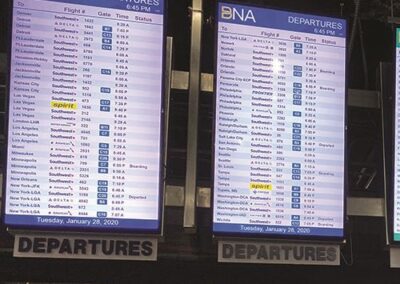
Flight information display systems (FIDS) are a passenger's lifeline. With all the crucial information travelers need to get to their gates on time, they're bound to create an impression on visitors. The real question is whether that impression is positive or negative.
First it was smartphones and smart TVs, then smart cars and watches. What's next, smart restrooms' In a word, yes. And Hartsfield-Jackson Atlanta International Airport (ATL) has them. Last summer, ATL became the first facility in the world with a fully connected smart restroom.
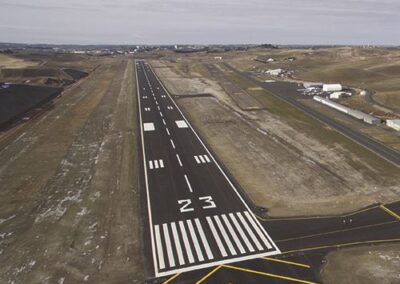
When Pullman-Moscow Regional Airport (PUW) in Pullman, WA, cut the ribbon on its new $154 million runway last October, officials celebrated much more than a major capital improvement. They celebrated one of the last steps in a complicated venture that spanned more than 10 years and required cooperation among a long list of key stakeholders.
TravelPulse magazine recently named Jackson-Medgar Wiley Evers International (JAN) Mississippi's best airport in 2018; but management is not taking the title for granted.
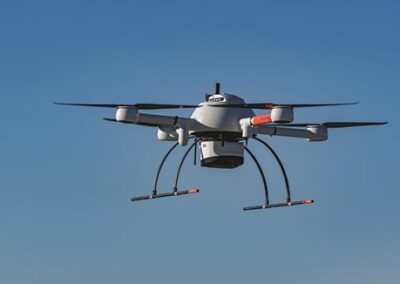
For years, airport operators categorically derided drones as a safety risk and general nuisance. Now, many are putting them to work for security surveillance, wildlife management and other operation-enhancing purposes.
Dallas Fort Worth International Airport (DFW) is doing the Infrastructure Shuffle. You know the drill: In order to improve one area, you first have to modify another.
Anytime an airport outgrows part of its infrastructure, it's challenging to keep operations running smoothly. When that component is the outbound baggage handling system, it can cause a cascade of other operational inefficiencies.
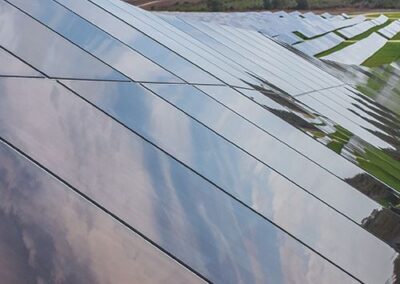
Building the world's largest airport-based solar farm doesn't come without challenges. But the team developing the new 320-acre, 42-megawatt (MWac) solar farm at Tallahassee International Airport (TLH) prevailed'and also shattered previous records for renewable energy production for airport sited solar farms. When the new facility became operational in January 2020, it joined TLH's other solar farm that came online in 2018. Together, the two solar farms span 400 acres and produce 62 MWac per year, vaulting the Florida airport well ahead of other industry standouts.