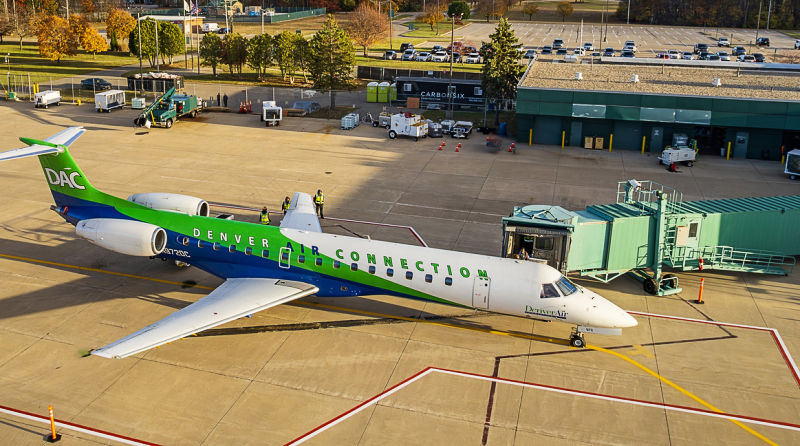
Five years ago, Muskegon County Airport (MKG) was close to shutting its doors to commercial service. The FAA was preparing to pull the West Michigan airfield’s Part 139 operating certificate, and there hadn’t been a leader on hand to manage the declining situation for one and a half years. The small airport that once anchored its community’s air connection to the rest of the country and world was quietly slipping toward irrelevance.
Today the story reads very differently. A dependable carrier provides daily roundtrip service to Chicago O’Hare International (ORD) from a freshly renovated terminal with a new roof. The café that sat dark for a decade is serving breakfast again. An air show that locals sorely missed for 17 years is back on the calendar. Hangars for general aviation planes are almost full, and overall passenger numbers are climbing at a rate that would make most small airports green with envy.
Getting from the first paragraph to the second took the better part of five years, a rotating cast of managers, and a long list of projects tackled one at a time.
| facts&figures
Project: Multi-year Operational & Facility Turnaround Location: Muskegon County Airport, in MI Owner/Sponsor: Muskegon County Key Components: Return to FAA Part 139 compliance; new essential air service carrier; $3 million terminal roof & renovation project Associated Improvements: Reopening shuttered restaurant; reviving annual air show; free public parking; 2 electric maintenance trucks; $21.3 million full-length taxiway replacement; self-serve fuel system (in process) Funding: $3.1 million in state & federal Bipartisan Infrastructure Law grants; $96,000 grant for electric maintenance trucks Terminal Renovation & Roof Replacement: Carbon Six Construction Taxiway Engineering & Design: C&S Companies Prime Contractor: M&M Excavating Asphalt: Reith-Riley Fuel Farm Engineering & Design: C&S Companies Prime Contractor: Carbon Six Construction Aircraft Operations: 30,000/yr Annual Passenger Volume: Nearly 101,500 (15% commercial, 85% general aviation) Commercial Carrier: Denver Air Connection |
Operating Certificate at Risk
When Rick Taig arrived in October 2020, the situation was about as serious as it gets. The FAA was only a few steps away from pulling the airport’s commercial operating certificate.
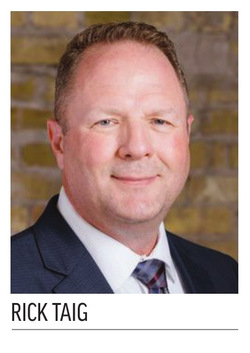
Muskegon County, which owns and operates MKG, hired Taig as an independent airport management consultant at the urging of the Michigan Department of Aeronautics. He brought 27 years’ experience in airport maintenance, operations, and security by the time he retired in 2020 as director of Willow Run Airport, which is owned by Wayne County, MI, and operated by the Wayne County Airport Authority.
Channeling his other experience as a retired U.S. Air Force F-16 crew chief, Taig suspected the root problem was leadership—more specifically, a lack thereof. “MKG hadn’t had an airport manager for 18 months,” he explains. In that vacuum, a five-person maintenance crew and one administrator had been trying to keep the airport running. No one was designated with full responsibility for ordering, procurement and scheduling. Nearly every airport employee was behind on required training, which Taig recalls was the FAA’s single biggest concern: people moving around an active airfield without current credentials.
Taig’s first moves were organizational and regulatory. He promoted one of the maintenance workers into a manager’s role so the FAA could see a clear chain of command. “Somebody needs to be in charge so that the inmates aren’t running the asylum,” he quips. He also rebuilt the airport’s training program from the ground up and completed major updates to its Part 139 Airport Certification Manual—wildlife hazard management, snow removal, etc. After meeting with FAA personnel, county administration and state aeronautics officials about every two weeks, regulatory compliance eventually settled.
Although that immediate threat was addressed, the stakes had been nothing short of existential. At one point, the county considered letting MKG’s commercial certificate go and converting it into a general aviation field—a path Taig believed would have been unsustainable and, eventually, fatal for the airport. Instead, the certificate was preserved.
Stabilizing the airport was one issue; running it was another matter. Taig was a consultant on a five-month contract; MKG needed a permanent manager. The first hire, brought in from an airport in Hilton Head, SC, had a strong year steadying the operation before family circumstances required a move to remote work. Then, just as Taig and the county worked through a thin stack of résumés, the candidate who would define the airport’s next chapter walked in.
An Outside-the-Box Hire
Ken Efting did not look like a promising airport executive on paper. He was just finishing a 20-year career in the U.S. Air Force as a munitions systems specialist working with bombs, missiles and explosives supporting combat aircraft. None of his military service was spent in commercial airport administration. Regarding the list of traditional credentials for the job at MKG, “I checked relatively few of those boxes,” Efting acknowledges.
What he did have going for him was local roots and a knack for solving problems. Efting was originally from the Muskegon area and wanted to settle with his family back home, which appealed to a county board that had watched other managers cycle in and out. Efting also framed his military background as an asset rather than a gap.
“Military people are very adept at just figuring out problems,” he says. “They’re very good at securing resources and finding a very pragmatic and efficient solution to complex problems.”
Being a military veteran himself, Taig immediately recognized and appreciated this quality in Efting.
That Air Force outlook shaped how Efting approached MKG’s daunting to-do list after he was hired in November 2022. Rather than being overwhelmed by the scope, he broke it down into manageable pieces. “If you can simplify it to be a series of solvable problems that you can attack individually, things start to come together over time as you tick away at those tasks,” he explains.
A lack of civilian experience did cut both ways. Efting had never worked in air service development or navigated the Essential Air Service program and candidly admits he did not fully grasp how big some of the problems were when he took the job. But the operational leadership—being in charge of people—was familiar ground, and he considered it the heart of the work.
Rowing Together
Having inherited a staff that had been through years of turnover and uncertainty, Efting made teambuilding a top priority. His hiring philosophy was simple and, by his own account, non-negotiable.
 “I’m big on hiring for attitude and then training for aptitude,” he says. “I’ll take a guy that knows nothing about Part 139, but has a rock-solid attitude and is A+ reliable. I’ll take him over a fully certified guy that’s burning through his sick time.”
There was churn the first year while employees adjusted to a new work standard, but the culture soon shifted. “With the help of our Operations and Administrative managers, it didn’t take long for us to all be rowing in the same direction,” Efting reports. At a small essential air service airport, where budgets and headcount are tight, that alignment is not a nicety; it’s the difference between functioning efficiently and always feeling short-handed. Get it wrong, he notes, and no amount of hiring will ever make the operation feel fully staffed.
With the crew settled, Efting turned to a question that would organize everything that followed: What to fix first? Ultimately, he used a military decision framework called the “O.O.D.A. Loop,” which is short for observe, orient, decide, then act. “My first year I was in the observe phase,” he says.
His year of observation revealed two distinct categories of problems. One group was infrastructure—taxiway replacements, runway repairs, the failing terminal roof and other facility shortcomings. Efting saw these projects as critical to operations, but also knew the public might not see the value in them. The other category included issues the community actually noticed and cared about: the air show, the restaurant and, above all, airline service.
Because securing funds for a taxpayer-supported airport depends on public opinion, Efting made a deliberate decision to prioritize the visible, public-facing projects. He needed to change perception. “That took time,” he shares. Everything downstream—grants and funding for unglamorous infrastructure—flowed from winning the minds of cautious locals.
New Airline Partner
Nothing shapes public perception of a small airport more than its passenger service. “At any commercial airport, your existence is defined by your air carriers,” Efting says. “And in our case, air carrier—singular, not plural.”
MKG’s recent history with air service had been rough. SkyWest Airlines previously flew 50-seat regional jets twice a day to ORD, but stopped in fall 2022, citing the industrywide pilot shortage. The next carrier serving MKG, Southern Airways Express, took over the same routes, but its single-engine Grand Caravans struggled in early and late winter when icy conditions are common on the airfield. The airport’s location on the eastern shore of Lake Michigan also played a role because single-engine airplanes carrying passengers over open water must be able to glide back to land in the event of a midflight malfunction. That meant Southern Airways flights in and out of MKG could not cut straight across Lake Michigan. They had to fly around it. Extensive cancellations and delays piled up, and so did passenger frustration, Efting explains.
Southern Airways’ last flights at MKG were in late October 2024. That opened the door for Denver Air Connection, the Part 121 arm of Denver-based Key Lime Air. It brought jet service back to MKG in November 2024, roughly two years into Efting’s tenure. The improvement was immediate and measurable. Denver Air’s on-time reliability ran about 5% higher than competitors, which Efting notes can add up to about 100 more on-time flights per year. In addition, the carrier’s regional jets can fly straight across the lake and perform well year-round in Muskegon’s temperamental winter conditions.
Just as important is the airline’s culture. “They have a great reputation for just not cancelling flights,” Efting reports. “They fight tooth and nail to make sure that they fly when they say they’re going to fly.” In a community scarred by unreliable service in the past, that mattered.
Securing service from Denver Air was the airport’s first big high-visibility win. The airline did more than move passengers, it gave the public a reason to look favorably at the airport again. From there, Efting says, the county board’s posture shifted from skepticism toward commitment and investment—the foundation the rest of MKG’s turnaround would eventually stand on.
But there was plenty of work still to be done.
Fixing the Roof
The terminal dated back to 1994 and still had its original roof. Roughly 70% of the exterior walls were made of glass; so needless to say, the building leaked badly. During Taig’s stint, a good portion of the ceiling caved in under water damage. For Efting, improving the terminal was necessary to establish basic credibility.
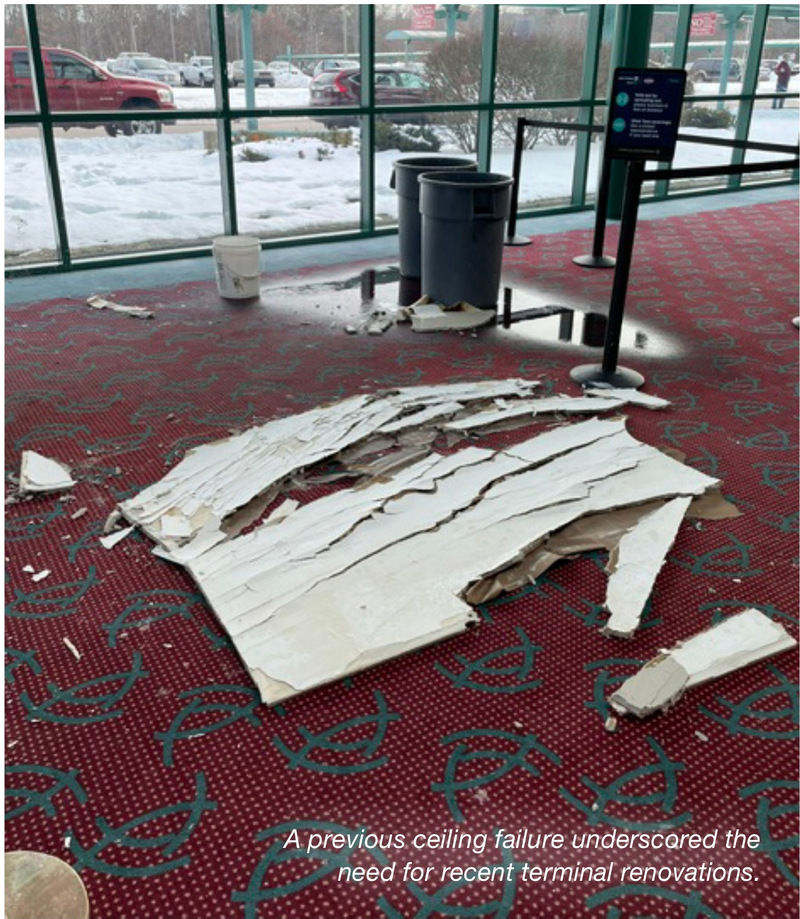
 “If you want to be viewed as a legitimate option for a regional air service, it has to look like quality regional air service,” he reasons. “You can’t have people walking in the door and seeing a bucket catching a leak. It had to get fixed.”
The roof and terminal renovations were combined in an approximately $3 million project that received both state and federal funding support. Work took the better part of a year and went well beyond weatherproofing. The renovation refaced the building exterior and modernized the interior, which Taig says had been stuck in an earlier era of glass curtainwalls and awkward climate control—too hot in summer, too cold in winter. It also solved smaller indignities that added up. The new design added restrooms behind the security checkpoint. For the first time since the post-9/11 advent of TSA, passengers no longer had to exit and be re-screened simply to use the restroom before their flights.
In 1994, travelers didn’t have the constant need to charge cellphones, laptops and other personal electronics, so the terminal had only a handful of available outlets. Knowing what a rub this was for passengers, Efting brought in an electrical contractor to wire the curtainwalls. “Here we are in 2025 solving a problem that we should have solved a decade ago,” he muses.
To Efting, none of these were isolated fixes. The terminal set the stage for every tenant to fail or succeed, and its condition rippled outward to the airline counter and beyond, creating a first impression for travelers.
The Restaurant Returns
For a full decade, one of the most visible signs of the airport’s decline sat just inside the terminal doors: a shuttered restaurant. The Brownstone had operated for 24 years before it closed, and it didn’t so much wind down as vanish. “They just shut down one night in November 2016 and never opened again,” Efting marvels.
Reopening the restaurant became one of the airport’s heaviest lifts, and one of its most personal victories. Because everything in the space carried 24 years of wear, most of the food service equipment had to be replaced, and the county paid for it—an unprecedented move in Taig’s experience. “That’s how confident they were in our momentum,” he emphasizes.
The airport maintenance staff handled much of the restaurant buildout in-house—painting, pulling carpet, replacing equipment, laying new flooring over three fiscal years to save the cost of hiring outside contractors.
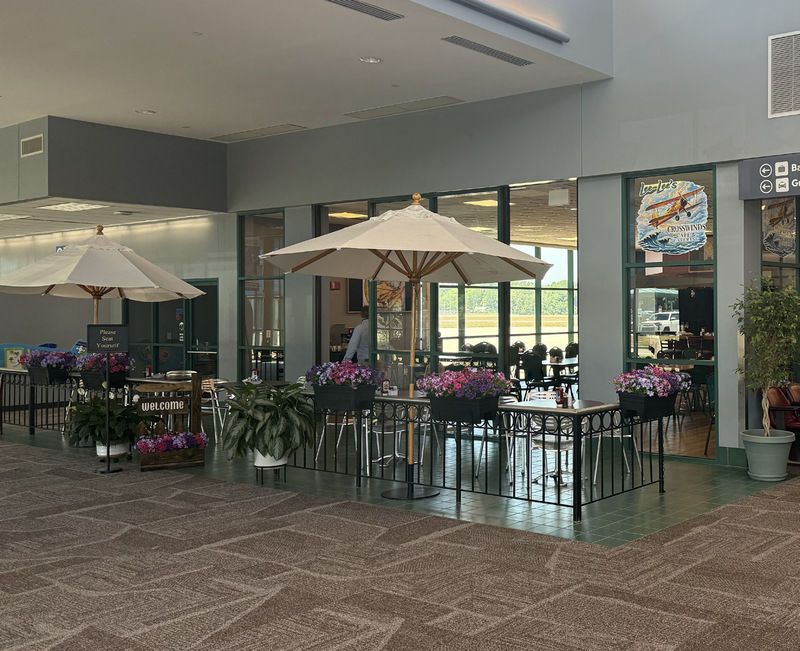
Lee-Lee’s Crosswinds Café opened this spring, ending a 10-year span without restaurant service at the airport.
The new concessions operator is Lee Ann French, who runs a restaurant at Owosso Community Airport (RNP), also in Michigan. French learned about MKG’s bid proposal through a pilots’ group, and her visions for it went far beyond standard food service. She sources roughly 90% of her ingredients from Michigan—locally roasted coffee, locally butchered meats, made-from-scratch jams and freshly baked preservative-free breads.
 French refers to the restaurant more as a community hub than a business. “Everybody I’m talking to [is] so excited after 10 years to have a restaurant back,” French says. And she loves hearing the stories customers tell when they return, including one woman who met her husband at the airport 50 years ago. That connection with customers is the point for French. “That’s where family starts—around a dinner table,” she says. “And if we can bring that here, then our families can get bigger by the community getting to know each other.”
To foster that spirit, she has added shared seating at long tables, calling it “the best way to get a community to grow.”
French plans to add outdoor seating on the tarmac side and is also cooking up other ways to bring airfield action closer to customers. One idea is live video feeds of the flightline on televisions inside the restaurant. “If we can do little imprints on the kids at a younger age, there’s a good chance that we can keep the aviation flowing and going,” she remarks.
Bringing Back the Air Show
Few things announced the airport’s return more clearly and publicly than the sound of historic warbirds, military aircraft and fireworks during Wings Over Muskegon.
The Muskegon Air Fair had run every year from the early 1980s until 2006, and its absence after that really stuck with the community. When Taig was getting to know people in town, many would immediately ask whether he would bring back the popular event. “They had been without their beloved air show for 17 years,” he commiserates.
As it happens, Taig had an ace up his sleeve. After spending two decades on the planning team for the Thunder Over Michigan air shows, he knew that leaders at the Michigan Flight Museum wanted to bring their show to new markets. Planning to bring it to MKG began during Taig’s tenure, and the first show (branded as Wings Over Muskegon) took to the skies in 2023, with Efting carrying the effort across the finish line. Not surprisingly, it was an immediate hit. The show skipped a year during the full-length replacement of Taxiway A in 2025, but has since returned to the community’s calendar—a recurring, highly visible reminder that the airport is worth paying attention to once again.
Free Parking
Efting’s idea to stop charging for parking seemed counterintuitive to some people, but he had two solid reasons behind it. The first was cost. Continuing with paid parking would have required the airport to maintain gate arms and point-of-sale equipment, and also keep employees available around the clock to deal with associated problems. Efting did the math and discovered these overhead costs ate into the revenue that parking generated and left only slim margins.
Marketing was his other reason. He saw free parking as an investment in attracting travelers rather than a lost revenue opportunity.
His strategy was rooted in how he wanted the airport to make passengers feel. When passengers returned from an expensive trip, maybe one with flight delays, Efting didn’t want to hit them with a $50 to $200 bill for parking. “It’s like salt in the wound,” he explains. Removing that friction, he reasons, reduces the total cost of travel in a price-sensitive regional market and gives people one more reason to choose MKG.
Free parking also plays directly against the pull of larger airports within easy driving distance. As Taig points out, the convenience is tangible: “It’s a two-minute walk from the parking lot to our TSA checkpoint, and you’re right there at the gate.”
Betting on General Aviation
Despite all the positive attention about scheduled service from Denver Air, Efting has spent recent months making a case that runs counter to how small commercial airports usually think.
Once again, he points to the math. MKG logs roughly 30,000 takeoffs and landings a year, and about 29,000 of them are general aviation operations. No matter how FAA classifies the airport, Efting says it’s actually a general aviation field that happens to host a couple commercial flights a day. He acknowledges that MKG’s value for most Muskegon County residents is airline service—their connection to somewhere else. “But the reality of it is that 99% of the usage of the airport is that last 1%,” he explains. “That’s the general aviation community.”
Airport stats and local economic reports back him up. Of the 101,487 passengers and aviators who used the airport last year, only about 15% travel on scheduled commercial flights; the other 85% are transient or based general aviation customers such as charter passengers and private pilots. And those customers tend to spend. General aviation users often generate a disproportionately higher local economic impact through fuel purchases, maintenance, lodging and dining than their headcount alone would suggest.
Growth in general aviation traffic is comparatively predictable, he adds. His plan to attract more of that traffic is to be competitive on fuel prices and offer hangar space. While every airport within 50 miles has a waiting list for hangars, MKG still has some space available. And it’s building a new self-serve fuel farm funded by the county. This will allow Efting to market the airport as a sensible stop on the Lake Michigan shoreline for aircraft making cross-country flights. Fuel is, after all, the single largest revenue source at most general aviation airports.
Signs of momentum are visible elsewhere, too. Hangar occupancy is near capacity. And the airport recently added Enterprise to its rental car lineup, alongside Budget and Avis. For the first time in eight years MKG has multiple rental company options for passengers. On the operations side, the airport secured a zero-emission vehicle grant of $96,000 to purchase two electric Ford Lightning pickups for airfield maintenance.
Back to a (Better) Baseline
Ask Efting to sum up the progress made since his arrival in 2022, and he tends to undersell it.
“We’ve been working hard the last three years to just get back to a solid baseline,” he says. Deferred facility maintenance had piled up since the 2008 market crash, and a lot of the effort has been directed at meeting standards customers reasonably expect: a roof that doesn’t leak, post-security restrooms, outlets to charge their phones, and a good place to get a bite to eat.
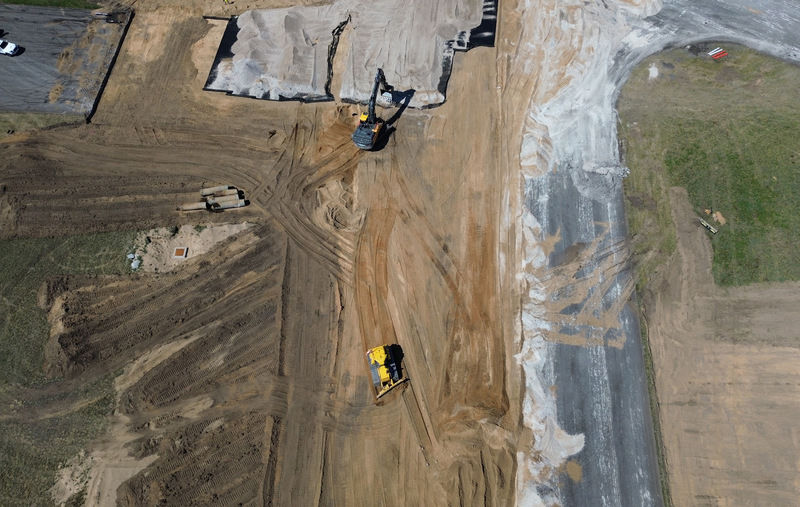
Recent airfield improvements include a full-length taxiway replacement.
If there’s one single idea that connects recent improvements, it is something Efting repeats to anyone who will listen: “Everything affects everything.” The restaurant draws people through the front door who then notice the new airline counter. The renovated terminal makes the air service look legitimate. The air show reminds a skeptical community that things have changed at the airport. Each piece makes the next one possible, he explains.
For Taig, who still visits a few times a year and volunteered at the first resurrected air show, the transformation is hard to overstate. He calls it “one of the coolest turnaround stories for a small airport that was just getting ready to be buried.”
But Efting and his crew are just getting started. There’s a new self- and full-service fuel farm to build, general aviation traffic to grow and years of terminal improvements still ahead to help win back even more commercial passengers.
Just like the winds along the shore of Lake Michigan, MKG’s trajectory is changing. The airfield at risk of closing just five years ago is, once again, a place the county is proud to call its own.