It’s the United States’ 250th birthday this year, and TSA is sending presents to celebrate.
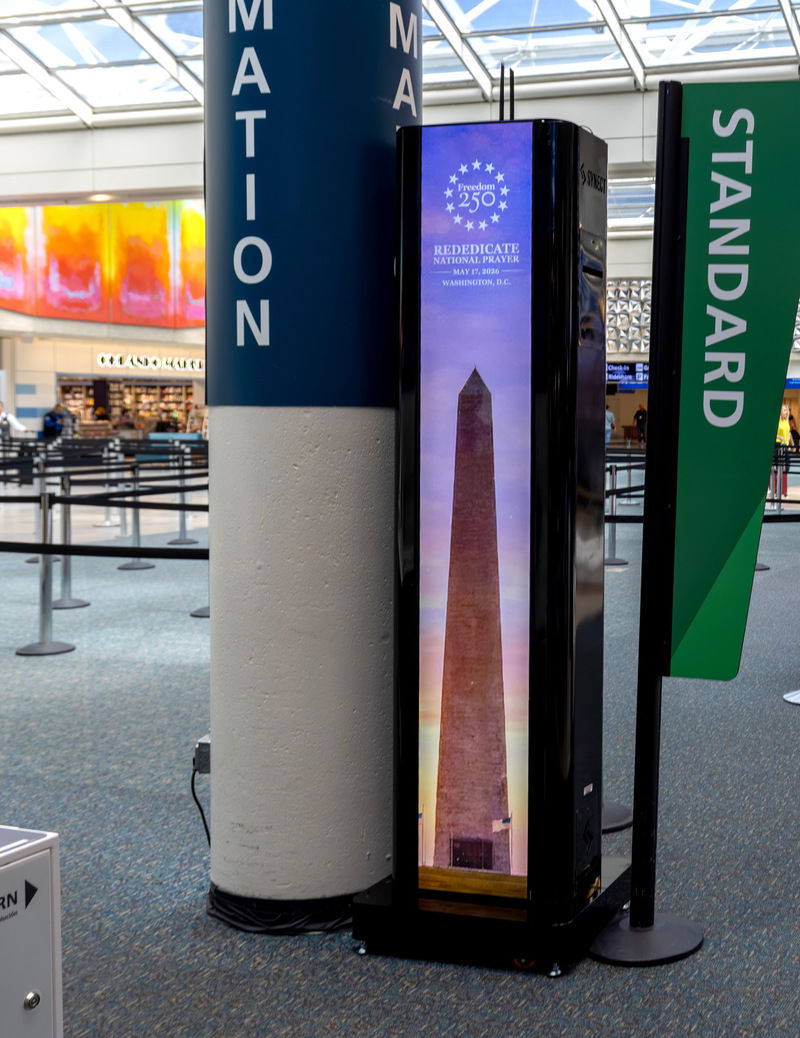
The federal agency is providing digital towers that display patriotic messaging along with instructions to help guide passengers through security checkpoints. Installations have occurred at 12 major airports in 10 cities nationwide (see list on Page 75), with most locations receiving three units each. Key players involved with the initiative expect it to grow significantly.
The program is a Freedom 250, LLC event produced by Event Strategies Inc., with 17 pieces of associated content. One features illustrations of five key Founding Fathers with a quotation from each statesman. Others present quick U.S. history lessons, including the fact that Philadelphia served as the country’s first capital, and the Louisiana Purchase doubled the size of the budding nation overnight.
| facts&figures
Project: Special Event Messaging at TSA Checkpoints Strategy: Provide digital displays that present patriotic content related to 250th birthday of U.S. Program: A Freedom 250, LLC event produced by Event Strategies Inc. Other Events Supported: 2026 FIFA World Cup, 2028 Summer Olympics, etc. Initial Deployment: 12 major airports in 10 U.S. cities Possible Expansion: 100+ airports Cost: Undisclosed Funding: TSA/U.S. Dept. of Homeland Security Timeline: Initial discussions with vendor in Aug. 2025; content creation began early 2026; onsite deployment May-early July 2026 (most completed in time for World Cup kickoff) Typical Installation: 2-3 days Digital Towers: ReadySeeGo® Vision™ from Synect Technology & Display Support: LG Electronics; MX Maven; TSI Touch Content Creator: Synect Project Management & Equipment Deployment: K2 Security Screening Group Engineering, Infrastructure & Network Support: Faith Group/Saefix Equipment Training & Ongoing Remote Support: Synect |
Content creation and the display equipment were funded by the U.S. Department of Homeland Security.
Orlando International Airport (MCO) was in the first wave of airports to receive the new checkpoint displays.
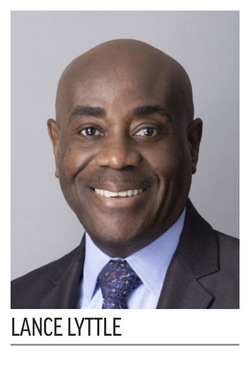
“Installing the monitors is effective for directing passengers and is simply a nice customer experience touch,” says Lance Lyttle, chief executive officer of the Greater Orlando Aviation Authority, which owns and manages MCO. “By providing real-time information and targeting messages to these specific passengers, it offers a smoother journey and can help to answer questions guests may have.”
The two-sided units and the digital content they display are provided by Synect. The ReadySeeGo® Vision™ messaging towers stand about 7½ feet tall and connect via Wi-Fi or cellular wireless.
The displays being added to TSA checkpoints are not one-trick ponies just for the nation’s 250th birthday. Synect also created content related to the FIFA World Cup for airports in U.S. cities that hosted matches in June and July. The tournament attracted millions of soccer fans from around the world, many visiting U.S. airports for the first time, and related soccer content was presented to make them feel more at home. Future plans include using Synect equipment and content to help welcome massive crowds of international and domestic passengers during the 2028 Summer Olympics and 2034 Winter Olympics.
“For TSA, the objective is to modernize the way they deliver messages while generating passenger excitement for these events by blending operational efficiencies with the overall passenger experience,” says Montee Fiely, head of strategic engagement for Synect. He explains that the interactive messaging towers are more engaging than static signage on boards, which means they get noticed more.
Research completed with Synect at MCO during the COVID-19 pandemic showed that thoughtfully designed digital messaging can improve people’s willingness to follow guidance about recommended behaviors. In the study, digital signage promoting safe social distancing guidelines was turned on and off in gate areas for non-consecutive 24-hour periods. Researchers found that graphic visuals accompanied by informational nudges highlighting personal and public benefits of social distancing increased social distancing practices between 9% and 16%.
Synect digital displays are controlled remotely, and messaging can be changed at any time. Content can be the same at numerous airports, as it is for the patriotic elements, or tailored to meet a specific airport’s needs. In fact, the company’s creative studio is already working on digital content for the 2028 Summer Olympics in Los Angeles.
Development and Deployment
TSA initiated discussions with Synect about developing the event-based program in August 2025, and content creation began early this year. Freedom 250, LLC and Event Strategies Inc. led the program.
 “Every message had to align with DHS and TSA guidance, screening procedures, and communication priorities,” says Gina Marie Paquette, Synect’s business development director. “At the same time, we wanted the content to capture attention, help passengers prepare for screening and bring some energy to the checkpoint. Doing that across 39 displays at 12 airports on a compressed timeline took close coordination from the entire team.”
“We needed a big team to pull this off in the timeframe they wanted,” Fiely adds. “All kinds of things that you don’t think of behind the scenes have to occur.”
For instance, the ReadySeeGo display towers were assembled onsite, and deployment involved specialists from three companies as well as close coordination with TSA and each airport team.
 Synect subcontracted Faith Group for engineering and infrastructure support, including network analysis and pre-installation site inspections to ensure connectivity would be possible. Faith Group also managed the permitting process, coordinating all stakeholders and documentation necessary to gain approvals to install the system at each airport.
Saefix LLC, a sister company of Faith Group, supplied, tested and configured integrated cellular networks that allow the displays to receive data at airports where Wi-Fi was not a feasible option. Saefix Chief Technology Officer Rick Adams emphasizes that site inspections at each airport were vital because the installation conditions were very diverse, connecting through the airport’s Wi-Fi network or via cellular service.
“We had to develop a flexible solution for connectivity, sometimes relying on cellular wireless as a backup to Wi-Fi if it made sense to avoid the challenges of onboarding a new system onto an airport’s existing network,” Adams elaborates. “We also had to be conscious of cybersecurity constraints and ensuring proper controls are in place to mitigate risks for the airport.”
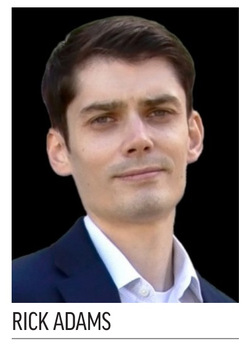 Connecting via the Wi-Fi network proved to be the best option for MCO. “It’s well suited for dynamic environments like security checkpoints because there is no need for data cabling and it makes deploying messages easier,” says Lyttle.
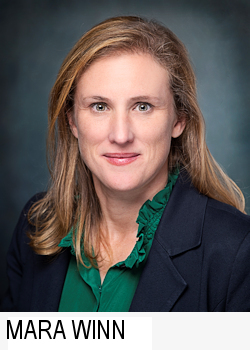 K2 Security Screening Group provided project management services for the nationwide program, including assembling and installing the tower displays. “Even though these systems are relatively small, there are very important conversations to have with local TSA officials at each airport as well as airport authority representatives to make sure when we actually come to deploy, we have a safe and appropriate way to get the system set up,” says Mara Winn, vice president of aviation for K2.
The idea, Winn explains, was to be comprehensive about the prep work so installations could be as plug-and-play as possible. According to Paquette, most installations were completed in two to three days.
 K2 hosted weekly calls with program partners to share information and ensure participants had details for installations at each location. Synect created an online team site for sharing notes and documents.
“There were a lot of balls in the air and a lot of communication happening,” Winn relates. “There were, inevitably, side conversations, and we had to make sure all that knowledge was fed into the community notes.”
Expected Impact
Fiely notes that TSA’s nationwide program could have a significant effect, likening the message exposure to that of a Super Bowl ad that runs day after day.
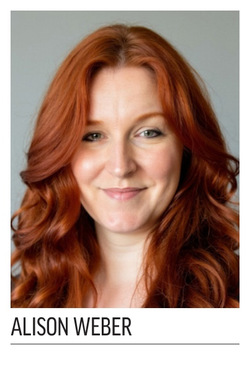 Synect Marketing Director Alison Weber stresses the functional impact for airports and passengers. “TSA screened more than 18.5 million people during Independence Day week, and passenger volumes will continue to rise, especially with a mega-decade of major events coming to the U.S.,” says Weber. “Engaging passengers and helping them prepare for screening can have a significant operational impact. Imagine if we could save just a few seconds per passenger. Across millions of travelers, those seconds could add up quickly.”
“You don’t have to spend tens of millions of dollars to have an impact,” adds Faith Varwig, managing principal at Faith Group. “With the right approach, the right team of people, and the right products and services, you can deliver a huge impact.
 “For our company and Synect, this is a small project that will have a big impact,” she continues. “We design thousands of digital displays at airports across the country on a regular basis, but the impact this will have in terms of TSA’s messaging is huge. It’s something that millions and millions of passengers around the world are going to see.”
Growing Its Footprint
Collaborating on this Freedom 250, LLC event produced by Event Strategies Inc. expands an existing business relationship between Synect and TSA. The organizations initially worked together in 2018 to install digital displays at a few high-volume airports to help passengers navigate the screening process more efficiently and with less anxiety.
With the addition of new locations included in this project, Synect currently has digital systems at 27 U.S. airports. In addition to checkpoint messaging, the company’s content and display equipment provide flight information, baggage details, wayfinding assistance and more.
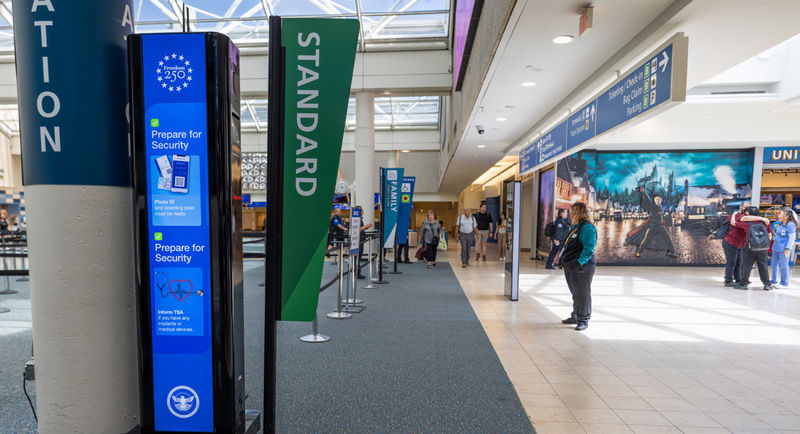
The displays also provide information to help guide passengers through TSA checkpoints.
Fiely reports that TSA intends to install Synect messaging towers at 100 or more airport checkpoints over the next few years.
Editor’s Note: Airport Improvement magazine reached out to TSA with questions about its new checkpoint display program but did not receive any information.
| Have Your ID Ready and Enjoy the History Lesson
The following U.S. airports received Synect digital communication towers from TSA to present passengers with patriotic content commemorating the nation’s 250th birthday along with information and tips about clearing security checkpoints.
The federal agency selected high-volume airports that would be most affected by busy summer travel and increased traffic associated with nationwide birthday events. The program is a Freedom 250, LLC event produced by Event Strategies Inc. that is funded by the U.S. Department of Homeland Security. |