For years, Boston Logan International Airport (BOS) faced a problem many airports would relish: too much passenger demand. Now, BOS can accommodate three of the world's largest passenger jets simultaneously, and plans are set to add more gates in a few years. The fix, a $168 million expansion and renovation to Terminal E, debuted in late January.
Amid billions of dollars in passenger-oriented enhancements occurring inside Los Angeles International Airport (LAX), substantial improvements are also occurring for airlines out on the ramp-especially in Terminal 7, which is used exclusively by United Airlines.
Creating a security system is a lot like constructing a new building-it needs to be built properly to be strong, stable and function as intended.
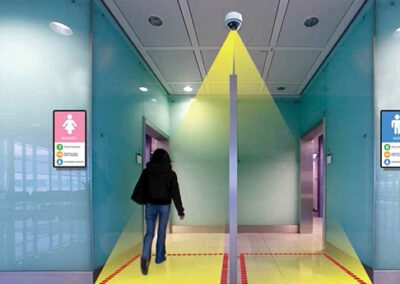
In the last issue of Airport Improvement, we covered various foundational elements of the recent $53 million security system upgrade at Portland International Airport (PDX): a new identity management system and card readers, perimeter security upgrades, additional cameras, etc. This issue, we examine the relocation and automation of PDX's exit lanes-the roof that tops off the security system construction to protect the airport's workers and 20 million annual passengers.
Like many airports, Grand Junction Regional (GJT) performs its airfield repairs late at night and early in the morning to avoid disrupting flight operations. Naturally, this stretches projects across more days because crews work in shorter shifts.
When Tim Bradshaw took the helm as executive director at Roanoke-Blacksburg Regional (ROA) in 2014, the Virginia airport didn't have a ground transport policy. These days, ROA not only has a formal policy in place, it also has a new system that uses low-cost beacons to track activity and revenue.
Los Angeles International Airport (LAX) is no stranger to construction projects. Since 2009, Los Angeles World Airports (LAWA) has been hard at work on a $14 billion capital improvement program at LAX and garnering the distinction as the largest public works program in the city's history.
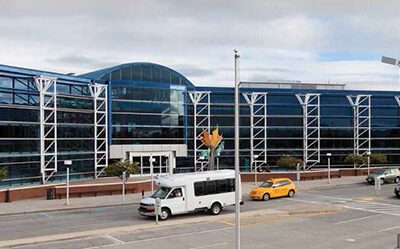
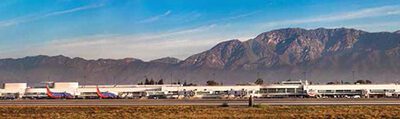
Nov. 1, 2016, marked a new era for Ontario International (ONT), as ownership, management and operation of the Southern California airport returned to local control. The Ontario International Airport Authority (OIAA), formed through a joint powers agreement between the city of Ontario and San Bernardino County, assumed control from Los Angeles World Airports (LAWA) after a successful campaign to "Set Ontario Free."
When some people fly, they bring along lots of heavy baggage-literally and emotionally. On any given flight, there's probably more than one white-knuckle flyer, people en route to potentially life-changing job interviews or business meetings, and still others traveling for funerals or other sad events. Overstimulated children and weary seniors can also be particularly vulnerable.
The airport market is red-hot, serving more passengers in 2016 than ever before. The Department of Transportation recently reported that U.S. airlines served a record 823 million passengers in 2016, up 3.1% from the 798 million served in 2015.
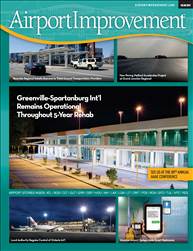
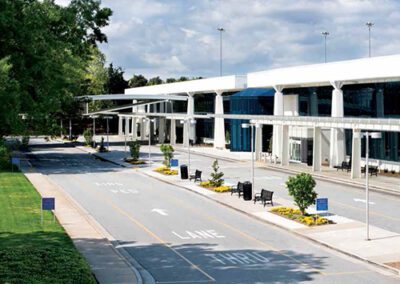
Greenville-Spartanburg International Airport (GSP) recently put the finishing touches on its $127 million Wingspan project, the largest capital improvement initiative ever undertaken at the South Carolina airport. In essence, GSP completely rebuilt its terminal from the ground up, expanding from 225,000 to 375,000 square feet.
Our fast-paced economy makes us increasingly interconnected, and the number of business travelers relying on business aircraft continues to grow. This has led to gains for the both general and private aviation industries, which are increasing their role as major contributors to our economy. It has also heightened the focus for airports to choose the best flight support providers.
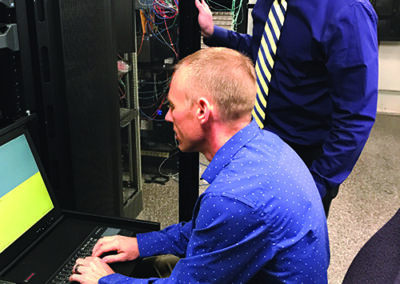
As director of Information Technology at Tulsa International Airport (TUL), James Rockholt knows a thing or two about cybersecurity. It's what he doesn't know that keeps him awake at night.
The scope of potential problems that fall under his domain is mindboggling, ranging from inside threats mounted by disgruntled employees or tenants to attacks from outside forces such as professional cyber criminals, politically motivated attackers (hacktivists), state-sponsored aggressors from foreign countries, "script kiddies," and even customers passing through the terminal.
Five years ago, Chick-fil-A was in four U.S. airports. By the end of 2017, company officials say they'll have nearly 30 restaurants in more than 25 airports throughout the country and one at Calgary International in Alberta, Canada.
From driverless cars to online stock trading by individual investors, technology continues to transform industries. Airports are no exception. In fact, a recent survey from SITA indicates that airports worldwide spent a record $9+ billion on information technology (IT) projects last year.
Last fall, amid the final flurry of campaign activity before the U.S. presidential election, New York's LaGuardia Airport (LGA) experienced a runway incident that briefly closed the entire airfield and thrust its safety systems and response procedures onto center stage. When the dust settled, it also reaffirmed the airport's policy of putting safety first and proved that planning ahead can make all the difference.
There's more to the new $8 million main runway at Porter County Regional Airport (VPZ) in Valparaiso, IN, than meets the eye. Its point of difference lies beneath the surface in a sub-base built primarily with materials recycled from the previous ailing runway via a process called full-depth reclamation.
In metropolitan Atlanta, locals commonly refer to the complex roadway intersection where Interstate 85 meets Interstate 285 as Spaghetti Junction. But it's not the only interchange to earn the descriptive moniker.