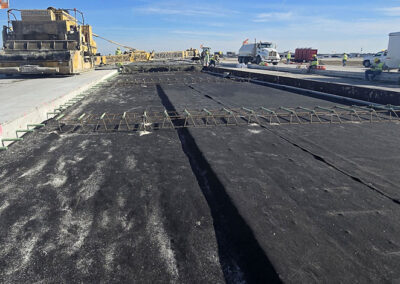
San Antonio International Airport (SAT) used construction manager at risk delivery to rehab Runway 13R-31L in eight weeks with minimal military disruption.
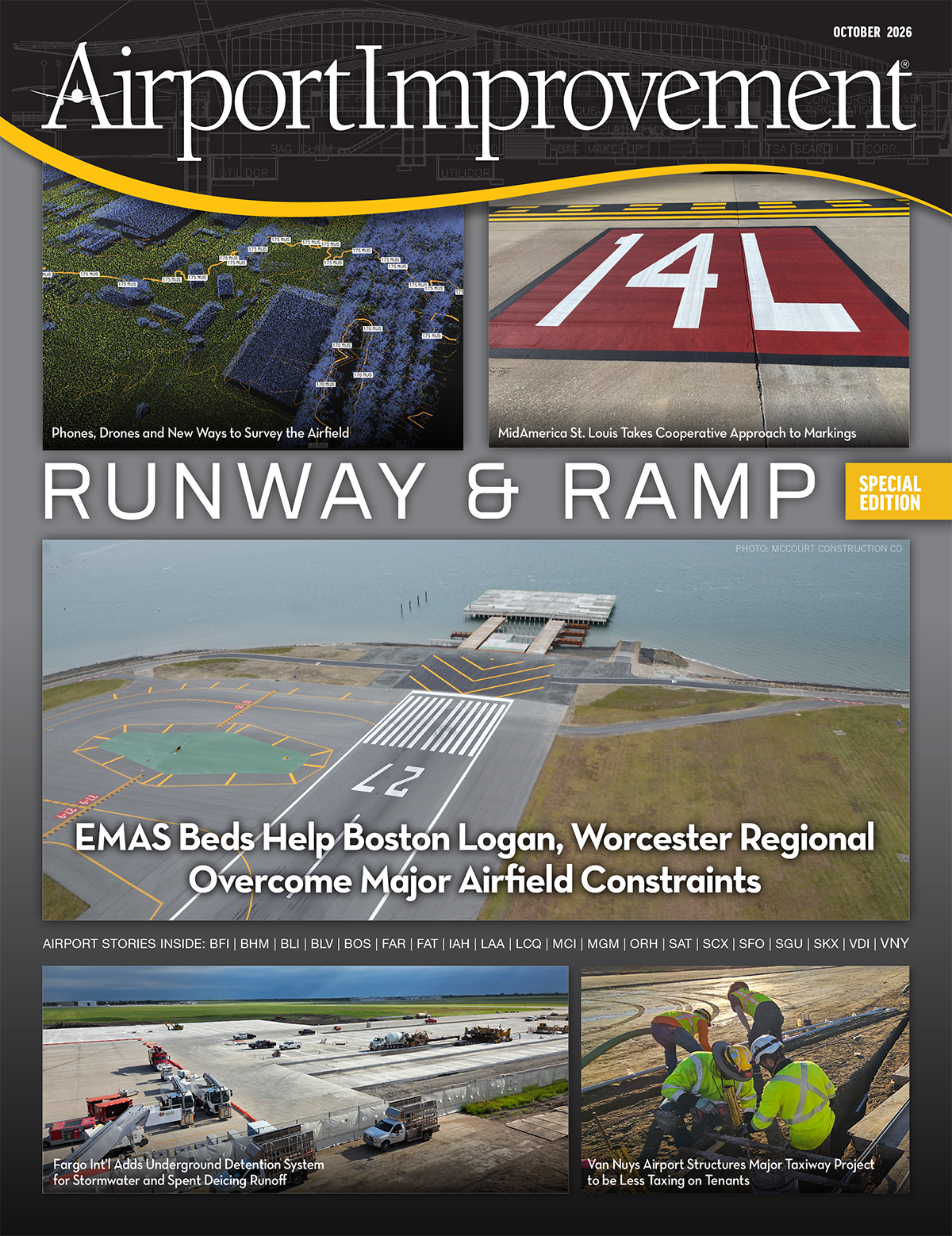
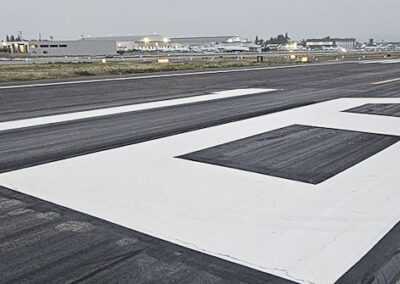
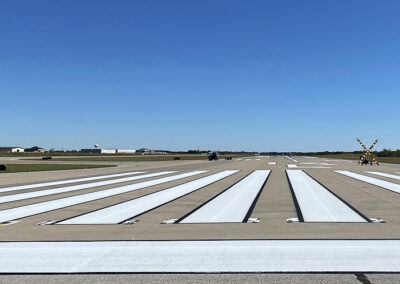
MidAmerica St. Louis Airport (BLV) used cooperative purchasing and specialist contractors to assess, clean and repaint airfield markings at its joint-use field.
Airports are preserving asphalt runways with early seal treatments and crack repair to extend pavement life, control costs and delay major reconstruction.
Engineered material arresting systems at two Massachusetts airports improve runway overrun safety despite tight airfield footprints and construction needs.
King County International Airport-Boeing Field (BFI) added hybrid electric vehicles as part of its carbon neutrality goal, balancing cost and operational needs.
Bellingham International Airport (BLI) overhauled Veoci software forms, improving recordkeeping, regulatory reports and staff workflows at no extra cost.
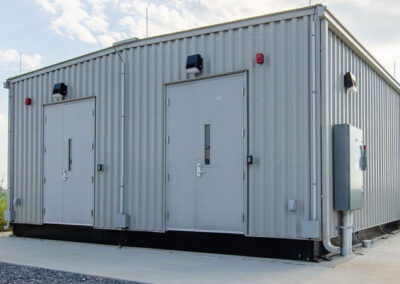
Montgomery Regional Airport (MGM) installed a prefabricated airfield electrical center to speed construction and limit disruption during a lighting upgrade.
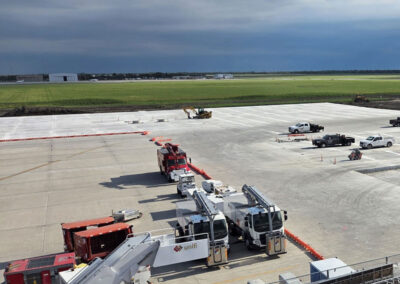
Fargo Hector International Airport (FAR) added underground storage and treatment for deicing runoff and stormwater after major apron expansions increased flow.
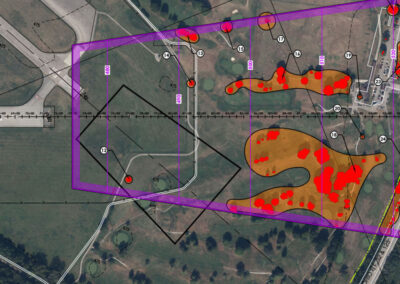
Cellphone mapping and LiDAR drones are helping airports assess aging runway pavement and stormwater drainage faster, with less disruption to flight operations.
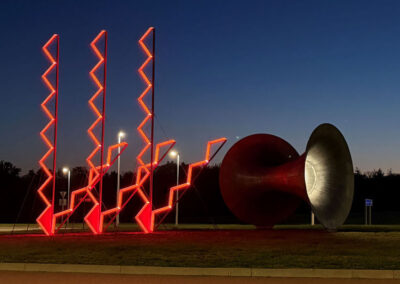
Kansas City International Airport (MCI) restored Strange Attractor, the striking airfield sculpture by Alice Aycock, with new lighting and repaired acrylic.
San Francisco International Airport (SFO) developed a flexible contracting method to speed specialized Part 139 work and strengthen airfield compliance.